.svg)
.png)


AI is moving fast, and 2026 is proving to be a turning point. Experts think that the agentic AI market will grow from $7.8 billion to more than $52 billion by 2030. For a comparison of the firms shipping this work into production, see our ranked guide to the top AI development companies.
More enterprise software is now being built with AI agents included from the start, and many organizations are partnering with an AI development company to help with these initiatives. This is a big shift from just a year ago, when AI was mostly added as an extra feature rather than a core part of applications.
For CTOs, engineering leaders, and product managers, this means decisions around AI matter more than ever. The tools you look at today may improve or change within months. Many companies are already building AI agents to automate work and support decision-making. Waiting too long can make it harder to catch up.
In this article, we’ll break down major AI updates, explain the technologies gaining attention, and highlight AI/ML trends shaping enterprise strategy in Q1 2026.
Major AI Updates from Leading Companies: What Are the New AI Capabilities in Winter 2026?
Big tech companies are moving fast to lead the AI race. Each company is building AI in its own way, reflecting the latest AI and ML trends. Understanding these differences matters when you’re choosing tools or platforms and evaluating new AI capabilities for your products.
1. Google: From Gemini Models to Smarter Search and Devices
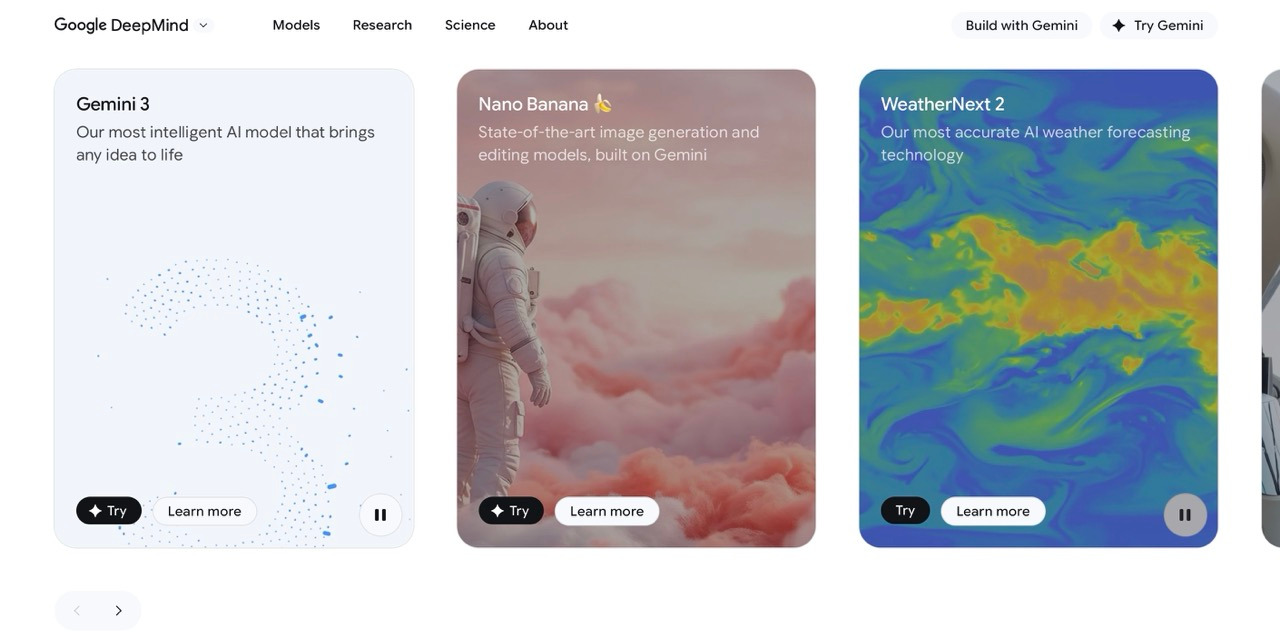
Google has made a lot of progress in AI this year, especially with its Gemini models.
How Gemini 3 Raises the Bar
In early 2026, Google released Gemini 3 Pro, its most advanced AI model so far. It can understand text, images, and other inputs together, reason through complex problems, and support AI agents that can take actions instead of just answering questions.
Google also introduced Gemini 3 Flash as its default model across many Google products. This shows Google is confident enough to put this AI in front of millions of users every day, competing directly with both proprietary models and fast-moving open source LLMs used by developers and enterprises.
Gemini now allows AI systems to handle real-world tasks across multiple domains, such as reasoning through documents, assisting in research, and performing actions in software interfaces. Businesses can leverage these capabilities for automation, smarter search, and integrated AI across devices, going beyond simple chatbot interactions.
Get Better Voice Capabilities with Gemini 2.5
Google also improved voice features in Gemini 2.5 Flash Native Audio, especially for live voice interactions. It follows instructions more accurately and works better with functions and tools. Developers can use it through Google AI Studio and Vertex AI, and users already see it in Gemini Live and Search Live.
Text-to-speech also got upgrades. Google released improved versions focused on speed and sound quality. Voices now sound more natural, expressive, and better paced, making conversations feel smoother and more human.
How AI Comes to Your TV
At CES 2026, Google showed how Gemini will power new features in Google TV. Users will be able to talk to their TV using natural language, ask for show summaries, get recommendations, or find content more easily.
This kind of built-in, everyday AI is a sign of where technology is heading: AI quietly helping across devices without needing special commands.
Choose the AI That Can Use Computers
One of the most important updates for developers is Gemini 2.5 Computer Use, released through the Gemini API. This allows AI agents to interact directly with software interfaces.
In simple terms, AI can now click buttons, fill out forms, navigate websites, and complete tasks that normally require a human. It works quickly and performs well across web and mobile apps, opening new possibilities for automation.
How Replacing Google Assistant Takes Time
Google is still working on replacing Google Assistant with Gemini. The company extended its timeline to make sure features work properly, especially in cars and smart home devices.
This shows that moving from older assistants to smarter AI systems is challenging, but Google remains committed to making the transition successful.
For businesses integrating Google Cloud AI services, the Gemini family offers unmatched options. At Azumo, we help clients navigate these AI updates for optimal implementation.
2. OpenAI: Smarter Models and Video Innovation
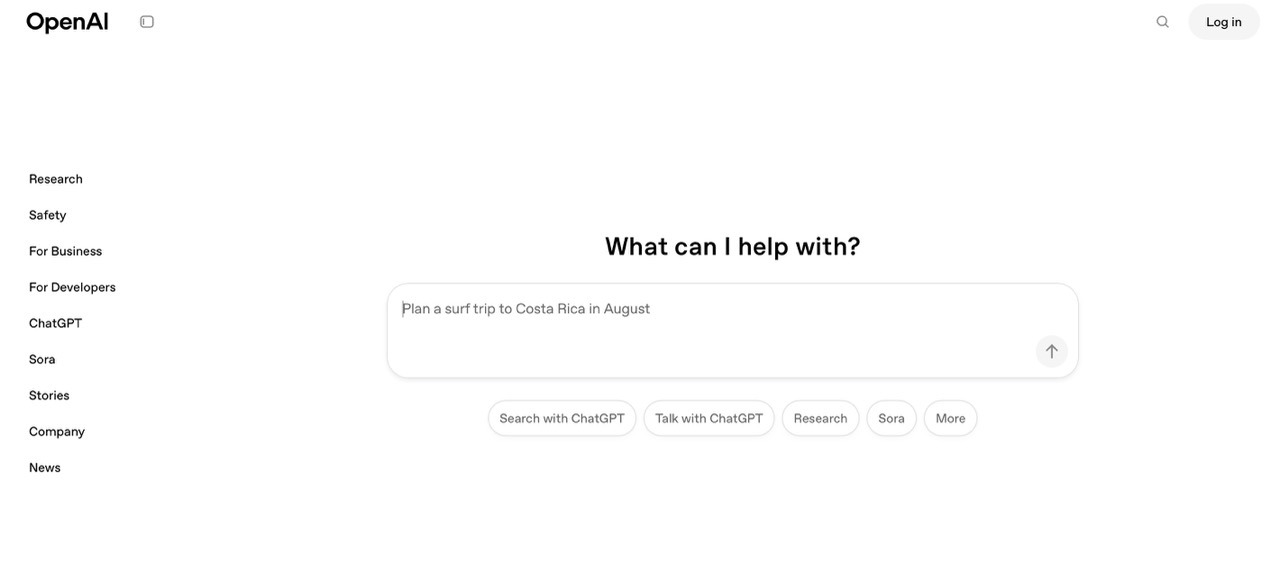
OpenAI is moving quickly, bringing new AI tools that can do more than ever.
How is GPT-5 Different?
OpenAI released GPT-5, which performs well across coding, math, writing, health, and visual understanding. This aligns with broader current trends in AI, showing how AI is moving from text-based tasks to multimodal content generation.
What makes GPT-5 different is its structure. A smart, efficient model handles most questions, while a deeper reasoning model called GPT-5 Thinking tackles more complex problems. A real-time router decides which model to use. You get fast answers when you just need them and more in-depth reasoning when necessary.
Use GPT-5.2 for Enterprise Work
GPT-5.2 allows teams to automate routine knowledge work, analyze data, and generate insights quickly, while allowing humans to focus on strategic decision-making. ChatGPT development companies can deploy these capabilities to improve productivity, collaboration, and workflow efficiency across enterprise applications.
How Sora 2 Brings Video AI to Life
Sora 2 can model complex movements in video accurately. Disney partnered to use characters from Marvel, Pixar, and Star Wars in AI-generated videos, highlighting generative AI trends in content creation.
Disney is already on board as a content partner. Their three-year agreement allows users to generate short videos using characters from Disney, Marvel, Pixar, and Star Wars. They also made a one billion dollar equity investment in OpenAI, showing how seriously they see AI-generated content shaping the future of entertainment.
The Developer Platform Evolves
OpenAI’s platform now handles multimodal inputs and outputs. Text, images, audio, video, and PDFs all work naturally. The Video API allows developers to generate and edit video as easily as text or images, making video a first-class AI capability.
For businesses building on OpenAI, Azumo offers fine-tuning and AI agent development services. This helps teams move from prototype to production faster while avoiding common mistakes.
3. Microsoft: Expanding the Copilot Ecosystem
Microsoft is taking a different approach. They are not just building AI models, they’re embedding AI into the tools hundreds of millions of people already use.
What is Microsoft Copilot Becoming in Winter 2026?
Microsoft Copilot is transforming into an autonomous agent platform. It now lets organizations automate multi-app workflows, protect digital assets with autonomous security agents, and improve cloud management. These capabilities allow teams to act faster, reduce human error, and maintain consistent operational oversight without manual intervention.
This is more than a helper who writes emails. It is a system that can take independent action to protect your organization.
How Does Agent Mode Change the Way You Work?
Copilot Chat now includes Agent Mode. Users can work iteratively with Copilot to create and refine documents, spreadsheets, and presentations. The AI understands your inbox and calendar, allowing multi-app workflows that feel natural and save time.
How Is Security Getting Smarter?
Security Copilot agents are being rolled out to all M365 E5 tenants. They have access to more than 70 Microsoft and partner-built agents. These tools speed up investigation, remediation, and policy enforcement. Security teams that are stretched thin now have AI backup that actually helps.
What Can Azure Copilot Do for Cloud Management?
Azure Copilot is a new interface for orchestrating specialized agents across cloud management. Migration, optimization, troubleshooting, and other tasks can be handled automatically. For teams managing cloud infrastructure, this changes the day-to-day operations significantly.
Are There Pricing Updates for Winter 2026?
Microsoft announced expanded AI, security, and management capabilities for Microsoft 365 in 2026, with commercial pricing updates starting July 1. Copilot Chat continues to roll out across Word, Excel, PowerPoint, Outlook, and OneNote, with tighter integration across all apps.
For organizations building custom solutions on Azure and M365, Azumo offers expertise in Copilot integration and enterprise application development to help teams implement these tools efficiently.
4. Apple: Introducing Apple Intelligence
Apple is taking a privacy-first approach to AI. Their updates focus on keeping data secure while making AI more useful across devices.
What Devices and Languages Support Apple Intelligence?
Apple Intelligence is available with iOS 26.1, iPadOS 26.1, and macOS 26.1. It works in 16 languages, including English, French, German, Spanish, Chinese, Japanese, Korean, and Vietnamese.
What’s New with Siri 2.0?
The full release of Siri 2.0 is planned for March 2026. This version gives Siri true on-screen awareness and personal context. Using the improved App Intents framework, Siri can now perform multi-step actions across different apps. This means Siri isn’t just answering questions anymore, it can complete tasks across your device.
How Does Apple Handle AI Processing and Privacy?
Apple Intelligence lets people and developers run AI directly on their devices. This keeps data private and lets AI do things like translate in real time, suggest text, and perform tasks inside apps. Users can use AI without sending personal information to the cloud.
How Does Live Translation Work?
Live Translation is available in Messages, Phone, FaceTime, and even Apple Watch when paired with a compatible iPhone. It works in multiple languages, making real-time communication simple across devices.
How Can Developers Use Apple Intelligence?
At WWDC25, Apple released the Foundation Models framework. Developers can now build AI-powered apps that work offline, protect privacy, and use Apple’s AI inference for free. This removes a major barrier to creating intelligent apps.
Why Does This Matter for Apple’s Market Position?
Apple regained the top spot in global smartphone market share by the end of 2025. The AI improvements in the iPhone 16 and 17 series contributed to this comeback, showing how integrating AI into devices drives user value.
For teams building iOS apps, Azumo’s mobile development expertise can help leverage Apple Intelligence to create smarter, privacy-focused experiences.
5. Amazon: New Tools, Devices, and AI Agents
Amazon is focusing on building the infrastructure layer for enterprise AI, making it easier for businesses to deploy intelligent systems.
What Is Nova 2, and How Does It Compare?
Amazon introduced the Nova 2 family, including Nova 2 Lite for fast, cost-effective reasoning, and Nova 2 Pro, their most intelligent reasoning model. Nova 2 Pro matches or beats Claude Sonnet 4.5 on 10 out of 16 benchmarks and GPT-5.1 on 8 out of 16 benchmarks. This shows Amazon is no longer playing catch-up in AI capabilities.
How Does Nova Act Help Businesses Automate Tasks?
Nova Act is now available as a service on AWS for building and deploying AI agents. Amazon’s AI solutions allow enterprises to automate complex web-based workflows, deploy customizable AI agents, and integrate hybrid reasoning models like Claude for advanced decision-making. These capabilities reduce operational overhead and accelerate process automation at scale.
Which Claude Models Are Now on Amazon Bedrock?
AWS added Claude Opus 4.5 to Amazon Bedrock, joining Claude Haiku 4.5 and Claude Sonnet 4.5. These hybrid reasoning models set new standards for coding, advanced reasoning, and multi-step workflows in enterprise applications.
Can Businesses Build Their Own AI Models?
Yes. With Nova Forge, customers can create their own frontier model and deploy it on Amazon Bedrock. This offers enterprise-grade security, scalability, and data privacy while letting teams customize AI for their unique needs.
For enterprises implementing AWS AI services, Azumo brings expertise in Bedrock integration and custom AI agent development to make these solutions practical and reliable.
6. Adobe: Redefining Creativity
Adobe is making AI more accessible to creative professionals and giving them more control over how they use it.
Which AI Models Can You Choose in Photoshop?
Photoshop now lets users select between Firefly, Nano Banana Pro (Google’s Gemini 2.5 Flash Image), or Flux.2 AI image generators for Generative Fill. Different models are better suited for different tasks, so Adobe gives you the choice depending on your creative needs.
How Popular Is Generative Fill?
Generative Fill has become one of Photoshop’s five most-used features. Millions of images have already been generated using Nano Banana alone, showing how integrated AI is in daily workflows.
What About Video Editing?
Adobe has released the public beta of the Firefly video editor, which supports prompt-based video editing, AI upscaling to 4K, and third-party models like FLUX.2 from Black Forest Labs. Adobe’s AI capabilities now empower creatives to generate images, video, and visual effects automatically, accelerate content iteration, and collaborate on projects in real time. This allows teams to focus on conceptual creativity while AI handles repetitive or technical production tasks.
Is Adobe Firefly Safe for Commercial Use?
Yes. Firefly is built on licensed content, not photos scraped from the internet. This makes it safe for commercial projects and avoids legal copyright issues, which is a major concern for professional creators.
Are Creatives Actually Using These AI Tools?
Yes. Two out of three Photoshop beta users leverage generative AI in their daily workflows. Lightroom’s AI tools, including masking and denoising, are used by over two-thirds of its users. Adobe has even integrated Photoshop tools into ChatGPT, allowing creative work to happen outside Adobe’s own platforms.
7. Anthropic: Claude and the Rise of Safer Agentic AI
Anthropic is focused on building AI systems that are powerful but controlled. Claude is designed to handle complex work while following clear safety rules, which makes it appealing for enterprise and regulated environments.
What Makes Claude Different from Other AI Models?
Claude is built around the idea of helpfulness, honesty, and safety. It is designed to explain its reasoning clearly, refuse harmful requests, and stay within defined boundaries. This makes it easier for teams to trust Claude in real business workflows.
How Does Claude Support Agentic AI Workflows?
Claude can plan tasks, break them into steps, and carry them out over longer sessions. This allows it to act more like an AI agent rather than a simple chatbot. For example, Claude can analyze documents, write code, review outputs, and adjust its approach based on feedback without starting over each time.
What Are Claude’s Strengths in Enterprise Use?
Claude performs especially well with long documents, policies, legal text, and technical writing. It can read and reason over very large context windows, which helps teams work with contracts, reports, and internal knowledge without constant summarization.
How Does Anthropic Approach AI Safety?
Anthropic uses a method called Constitutional AI. This means the model follows written principles that guide how it responds, instead of relying only on human moderation. The result is more predictable behavior and fewer unexpected outputs, which is important for companies using AI in sensitive areas.
Where Is Claude Being Used Today?
Claude is available through platforms like Amazon Bedrock and is used in customer support, research, coding assistance, and internal knowledge tools. Many companies choose Claude when safety, clarity, and consistency matter more than flashy output.
Why Does Claude Matter in 2026?
As agentic AI becomes more common, businesses need systems they can rely on. Claude shows that advanced AI agents can take action while still following rules and limits. This balance is becoming a key requirement as AI moves deeper into enterprise systems.
For organizations exploring safer agentic AI systems, Azumo helps teams evaluate, integrate, and deploy Claude-based solutions that align with real business and compliance needs.
What Are The Emerging Trends in AI and Technologies in Winter 2026?
AI is evolving fast, and the latest trends in artificial intelligence are reshaping how organizations use it.
What Is Agentic AI and Why It Matters?
Agentic AI does more than answer questions. It can reason, plan, execute tasks, and maintain context across sessions. For example, instead of just helping with one email, an agentic system can manage an entire customer support queue, categorizing messages, drafting responses, and escalating complex issues automatically.
By the end of 2026, we predict 40% of enterprise applications will embed AI agents, up from less than 5% in 2025. Multiple agents can now collaborate on tasks, sharing context and coordinating decisions in real time, reducing errors, speeding up work, and lowering costs.
Why Is On-Device AI Becoming Important?
On-device AI is growing due to privacy, speed, and offline functionality. It keeps data on your device, reduces delays, works without internet, and lowers costs. Devices like the iPhone 17 series are optimized for this with more RAM and stronger Neural Processing Units. Real-world applications include real-time translation, photo editing, voice processing, and predictive text.
How Is AI Transforming Science and Healthcare?
AI is accelerating discoveries in research and healthcare. Healthcare organizations can save billions by using AI for monitoring patients, predicting health issues, and improving operational efficiency. In drug discovery and climate modeling, AI reduces processes that once took years to weeks or months.
How Are Creative Professionals Using AI?
Generative AI has moved into daily workflows. Two out of three Photoshop beta users now rely on AI daily. Creative teams use it for ideation, rapid prototyping, iteration, and collaboration. AI doesn’t replace creativity, it strengthens it.
What’s Happening with Smart Devices and Industrial AI?
AI and IoT are merging to create smarter homes and workplaces. Smart devices learn patterns to automate energy use, security, and daily routines. In industry, AI helps with predictive maintenance, quality control, process optimization, and safety monitoring, making operations more efficient and intelligent.
For organizations building AI-powered solutions, Azumo offers expertise in autonomous systems, on-device AI, healthcare-safe AI, creative tools, and IoT integrations, helping teams bring these innovations into real-world applications.
How Is AI Changing Industries and Infrastructure?
AI is changing not just software but the entire infrastructure that supports it. These shifts reflect broader AI trends, as companies across different industries invest heavily in AI, hardware, data centers, and compliance systems. From healthcare and finance to manufacturing and retail, organizations are adapting their operations to use AI effectively.
How Is AI Hardware Evolving?
AI models are getting larger and smarter, so they need far more powerful computers. NVIDIA’s Rubin platform combines six new chips capable of 50 petaflops of compute power. Major cloud providers like AWS, Google Cloud, and Microsoft will use these chips to run AI at scale without businesses needing to build their own supercomputers.
Hyperscale data centers now combine hundreds of thousands of GPUs into giant clusters that function like a single supercomputer. Global data center capacity is expected to grow by almost 100 GW by 2030, creating around $1.2 trillion in real estate value.
How Are Data Centers Managing Heat and Energy?
Powerful AI chips produce a lot of heat. New facilities are adopting liquid cooling for 80 percent of racks, and average rack density is tripling. For example, xAI’s Colossus supercomputer spans 2.5 million square feet, runs nearly 1 million GPUs, and likely represents a $35 billion investment. These upgrades ensure AI models can process more data faster and more reliably.
Azumo helps companies optimize these systems across AWS, Azure, and Google Cloud, ensuring high performance and cost efficiency.
What Are the Key AI Regulations?
Governments are creating rules to ensure AI is safe and transparent. The EU AI Act becomes fully enforceable in August 2026. It requires providers of general-purpose AI models to:
- Publish summaries of training datasets
- Maintain detailed records of data sources
- Respect copyright protections
- Clearly label AI-generated content
Other countries, including the U.S., Canada, and Japan, are introducing similar rules focused on transparency, accountability, and risk management. Azumo helps enterprises comply with these regulations through SOC 2 certification and GDPR/CCPA expertise.
How Is AI Changing Job Roles?
The role of AI at workplace is growing quickly. ls in prompt engineering, workflow management, and AI oversight are becoming essential for employees to supervise AI tools and ensure correct results.
What's Next for AI: Predictions for 2026
Looking at the second half of 2026, several developments stand out.
Siri 2.0 Launch (March-April 2026)
Apple's most significant software update since the iPhone launch. Personal context awareness and cross-app intelligence will set new expectations for what AI assistants can do.
Agentic AI Scaling
Enterprise adoption will jump from 5% to 40%. Pilots become production deployments. Multi-agent orchestration becomes standard practice.
Regulatory Compliance Deadline (August 2, 2026)
EU AI Act full implementation forces global compliance investments. Organizations that build compliant systems now gain a trust advantage over competitors scrambling at the deadline.
Compute Infrastructure Matures
Rubin platform deployments begin. Liquid cooling becomes standard. Energy efficiency improves as the industry addresses sustainability concerns.
Model Commoditization Accelerates
More models become available on major platforms. Price competition intensifies. Differentiation shifts from model selection to implementation quality.
The organizations that succeed won't be those with the most AI, but those with the most strategic AI implementations. At Azumo, we help enterprise clients focus on measurable business outcomes, not just technology adoption.
Ready to integrate the latest AI innovations into your enterprise applications? Contact our expert AI development team, and we can help you build solutions that deliver measurable business value while meeting compliance requirements and preparing for long-term AI evolution.
Frequently Asked Questions

About the Author:
Founder & CEO | Azumo
Chike Agbai, Founder & CEO of Azumo, leads a nearshore software development firm that builds intelligent applications using top-tier Latin American talent.


.avif)