.svg)
.png)



The technology industry is obsessed with model capability benchmarks. New frontier models arrive every few months with splash announcements highlighting improved reasoning, longer context windows, better instruction-following, and expanded multimodal capabilities. These improvements are real and technically significant.
A model that reasons through complex problems more reliably than its predecessor is genuinely valuable. A model that processes longer documents and maintains coherence across that context is a meaningful improvement. These advances represent the cutting edge of what researchers achieve in training sophisticated neural networks at scale.
And yet, watching these announcements accumulate over the past two years reveals something increasingly obvious: the gap between what models can do and what organizations can actually deploy into production systems is not narrowing. If anything, it's widening. The asymmetry has become stark.
This growing gap is ultimately a problem of AI infrastructure deployment, specifically, the practical challenges of turning capable models into reliable, production-ready systems.
A research lab announces a breakthrough model that produces remarkable outputs, and that same model might spend months in an organization's infrastructure planning stage before it gets anywhere near production.
A smaller company with real customers cannot afford to spend six months building infrastructure to support a new model that their research team wants to evaluate.
A larger organization with more resources does build that infrastructure, but the cost and timeline are often shockingly longer than anyone expected.
This gap is the real last mile of artificial intelligence. It is not a problem of intelligence or model capability. It is a problem of infrastructure, operations, and the practical challenge of taking a trained model and integrating it into production systems in a way that is reliable, efficient, and economically sustainable.
The infrastructure last mile is where the real friction lives. It is where many organizations discover that deploying AI is not actually a technological problem; it is an operational and organizational problem. It is where sophisticated models meet real-world complexity, and where actual value delivery happens or doesn't happen.
The problem is not widely discussed because it is less dramatic than benchmark announcements. No one publishes press releases about "successfully provisioning GPU infrastructure in the third quartile of expected timeframes."
The infrastructure last mile is unglamorous work. It happens in infrastructure teams, DevOps organizations, and platform groups that do not attract the same attention as research teams publishing model breakthroughs. But for organizations attempting to actually deploy AI systems at scale, the infrastructure last mile is often the limiting factor on how much value they can extract from advances in model capability.
Why AI Infrastructure Is the Primary Constraint in Deployment
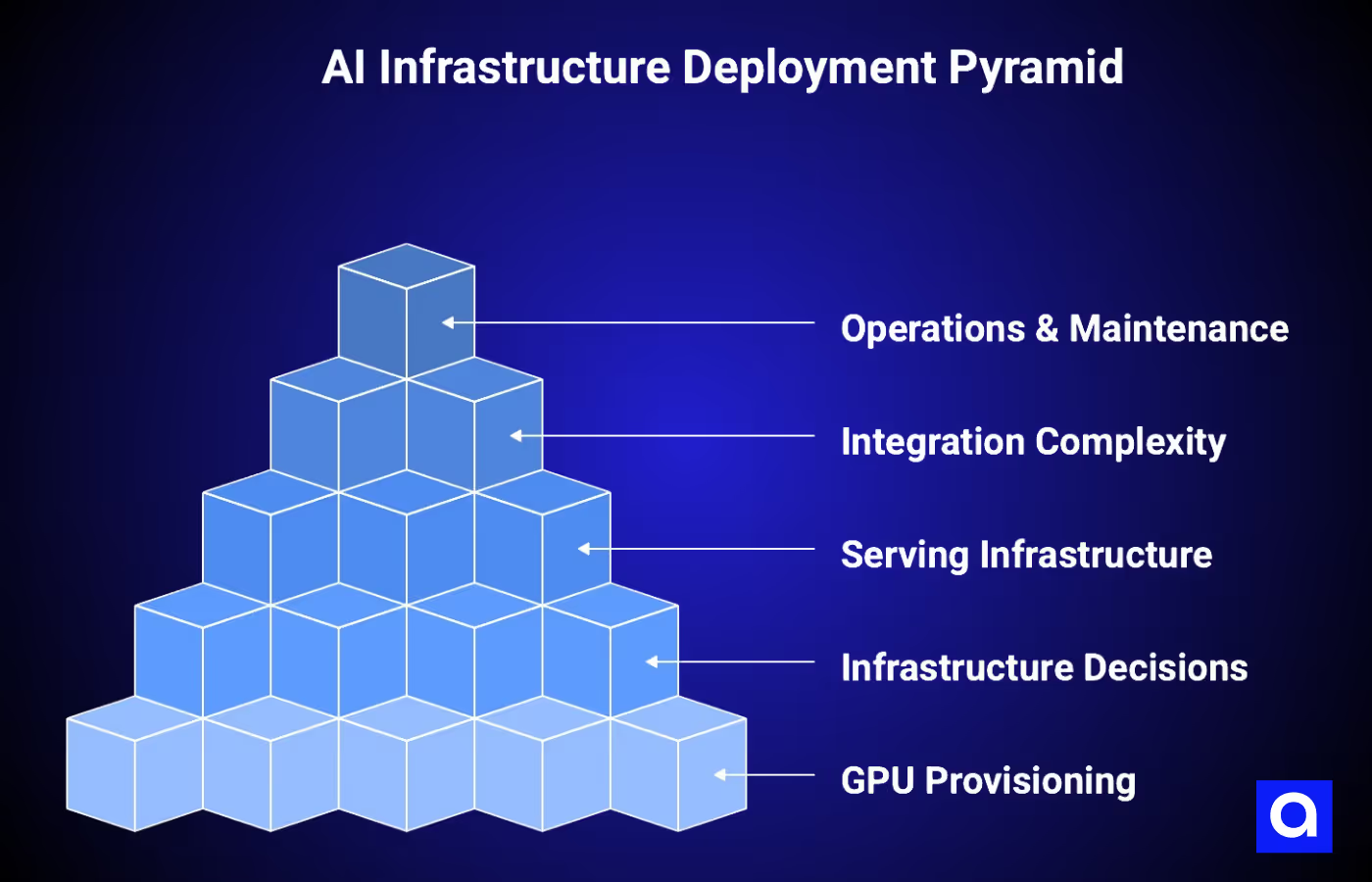
The infrastructure bottleneck for AI workloads exists across multiple dimensions, and understanding where actual constraints live is essential for building realistic deployment strategies. The bottleneck is not equally distributed across all organizations, but the dimensions are consistent.
GPU provisioning remains stubbornly difficult, despite GPU availability improving from the crisis conditions of 2022-2023. Obtaining GPU capacity in the required configuration remains difficult for many organizations.
A research team needing 100 H100 GPUs for a particular experiment might find them at one provider but not another. A company wanting to use newer GPU architectures like the H100s or emerging L4 GPUs might face multi-month lead times depending on provider and region.
A smaller organization with limited negotiating power might find the pricing it can access is substantially higher than what large cloud customers pay.
An organization attempting to run specialized inference workloads might need specific GPU combinations that providers don't offer in standard instance families. GPU provisioning is nominally solved by cloud providers but remains operationally constrained for many organizations.
The constraint extends beyond just acquiring capacity. Making that capacity reliably available requires infrastructure decisions that are not simple. Should you use reserved instances for expected baseline capacity and rely on spot instances for overflow? Reserved instances lock you into capacity commitments, which means you need to predict demand accurately. Get it wrong and you waste money on reserved capacity you don't use or pay expensive on-demand rates for overflow. Spot instances are cheaper but can be interrupted, which means your workloads need to handle interruption.
These trade-offs illustrate why AI infrastructure deployment is not just a capacity problem but an operational one.
A training job in progress cannot tolerate interruption without losing work. A batch processing job might be more resilient. An inference workload might route to alternative instances. The operational approach to GPU provisioning needs to account for these constraints, and getting that right is more complex than hourly resource cost.
Serving infrastructure represents another critical bottleneck dimension. Training models is one problem. Serving those models to applications is a different problem with its own constraints. A model that performed well during training might have different performance characteristics in production.
Latency requirements that seemed reasonable during development might be hard to hit at scale when serving many concurrent requests. Memory requirements that fit within development environments might balloon when you need to replicate models across multiple GPU instances for load balancing.
Managing model versions and gradual rollouts requires infrastructure designed for it, not bolted on afterward. Organizations frequently discover that their serving infrastructure, hastily built to get initial model deployment working, becomes a serious bottleneck as they attempt to scale. Rebuilding serving infrastructure once it is production-critical is a painful process.
Integration complexity is often underestimated in infrastructure last-mile analysis. A model doesn't exist in isolation. It needs to receive input data from somewhere. It produces output that needs to go somewhere. It needs to be called by application code that expects specific interfaces. It might need to interact with other systems, databases, monitoring infrastructure, and logging systems.
Building an end-to-end integrated system that takes raw input, processes it through the model, handles errors gracefully, logs relevant information, and produces output requires more infrastructure than just running the model itself.
For organizations that have only built toy systems that run models in notebooks, the amount of integration infrastructure required for production systems is often surprising. Database connections, queuing systems, authentication, authorization, rate limiting, request batching, response caching, and error handling all need building and debugging.
This work is not technically difficult but it is time-consuming and represents a significant portion of the total infrastructure effort.
Operations and maintenance represent one of the most persistent AI infrastructure challenges after initial deployment. Once a model is deployed to production, it needs monitoring. Is it still performing correctly or has model drift degraded output quality? Are GPU instances still available or have provider maintenance events changed your infrastructure? Are costs tracking within expected bounds or has usage drifted? What happens when a model crashes or an instance fails? How are new versions deployed without causing service disruption?
These operational questions are not solved by model training or serving infrastructure. They require operational maturity, observability infrastructure, and processes designed around the specific requirements of AI workloads.
Organizations frequently discover that they have invested heavily in getting a model running but have underinvested in operational infrastructure needed to keep it running reliably over months and years.
For many teams, AI infrastructure deployment does not fail at launch, it degrades over time due to insufficient operational investment.
Why Better AI Models Don’t Solve Infrastructure Deployment Challenges
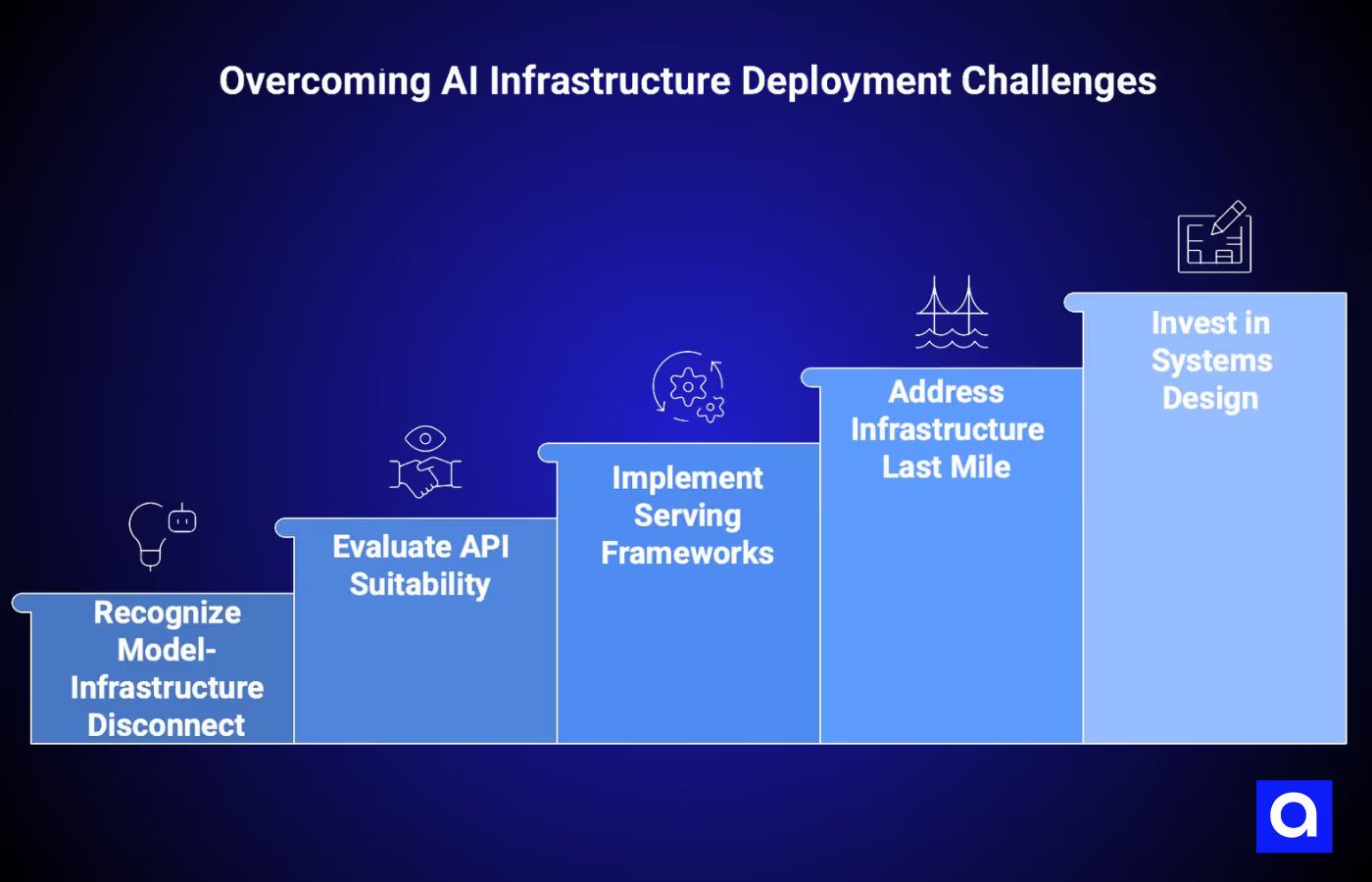
A central misconception in organizations approaching AI deployment for the first time is the assumption that improvements in model capability will naturally translate to easier deployment. This assumption is understandable but incorrect. Capability improvements and infrastructure requirements do not move in tandem.
Better models still need infrastructure. If anything, more capable models often require more sophisticated infrastructure.
A model that produces higher quality outputs might be larger, require more GPU memory, or need more complex serving infrastructure to achieve acceptable latency.
A model that can process longer context windows might need different batching strategies and memory management approaches.
A model that supports multimodal input might need different preprocessing pipelines. The capability improvements happen in the model; the infrastructure challenges remain. If anything, more capable models often increase infrastructure demands.
API improvements do not help organizations that want to self-host models or run them on proprietary infrastructure. The industry narrative sometimes suggests that organizations can simplify their infrastructure by using managed APIs instead of self-hosting models. This is true for organizations willing to send data to external APIs and accept the costs and latency characteristics of that approach.
For organizations with strict data privacy requirements, large-scale inference demands that make API costs prohibitive, or specialized requirements around model behavior, self-hosting remains necessary. When self-hosting is required, improvements to managed APIs do not reduce the infrastructure burden at all. They are simply not relevant to the deployment problem.
Optimization improvements in serving frameworks like vLLM, TensorRT, or specialized serving platforms reduce the infrastructure resource requirements for a given model and performance level. This is genuinely valuable. A model that can be served with lower latency and better throughput using a better serving framework requires less GPU infrastructure and is less expensive to operate.
But these improvements help move the efficiency curve; they do not eliminate the infrastructure challenge. An organization that was struggling to serve a model efficiently with Hugging Face’s basic serving tools can do better with vLLM. But they still need to solve the provisioning problem, the integration problem, and the operational problem. Better serving frameworks make the infrastructure problem 20% cheaper or 30% more efficient, which is valuable, but it does not eliminate the category of problem.
The asymmetry of progress means organizations can fall into a trap of perpetually waiting for infrastructure challenges to be solved by better models or better frameworks.
They think, "Maybe the next model architecture will have lower latency" or "Maybe next year's serving infrastructure will be easier to operate." Sometimes this is true. Sometimes waiting is the right call.
But more often, the correct response is to solve the infrastructure problem with current tools rather than postponing deployment indefinitely. The infrastructure last mile is not a technological problem that will be solved by future advances. It is a systems problem that requires intentional design and operational investment.
The AI Infrastructure Skills Gap Slowing Deployment
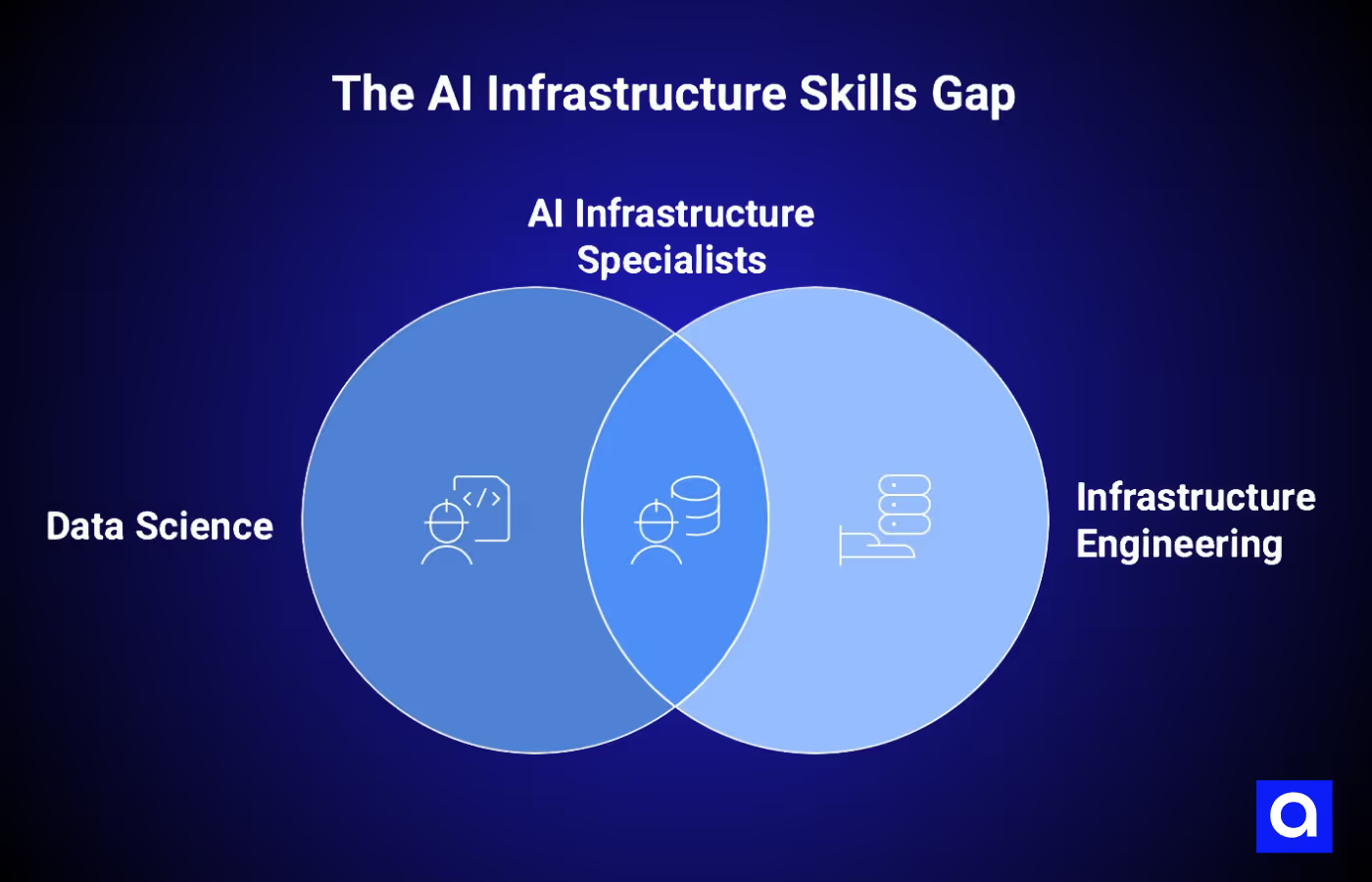
A critical dimension of the infrastructure last mile is the skills gap between the expertise required to build models and the expertise required to deploy them at scale. These are not the same skill sets and there is surprisingly little overlap.
A data scientist expert at training sophisticated models is not automatically skilled at designing scalable infrastructure or managing production systems.
An infrastructure engineer expert at cloud infrastructure and operational systems is not automatically skilled at understanding unique characteristics of GPU workloads or model serving requirements.
The intersection of both skill sets is narrow and the people who live at that intersection are in high demand.
Organizations frequently attempt to bridge this gap by asking data scientists to own deployment infrastructure or by asking infrastructure engineers to own model serving. Both approaches typically result in suboptimal outcomes.
A data scientist focusing on deployment infrastructure is spending time on work they didn't train for and would probably not enjoy.
An infrastructure engineer trying to optimize model serving is making decisions without understanding the nuances of how different batching strategies or quantization approaches affect model behavior.
The deployment infrastructure ends up being either over-engineered by someone who doesn't understand what is actually needed or under-engineered by someone who doesn't understand the requirements.
The skills gap creates organizational friction that is often underestimated in deployment timelines. A research team produces a model and asks the infrastructure team to deploy it. The infrastructure team asks reasonable questions about production requirements, performance requirements, data volumes, and expected scaling.
The research team, focused on the model and not accustomed to thinking about infrastructure, provides incomplete answers or does not yet have answers. Neither team is operating in bad faith.
The gap in expertise and perspective just makes communication harder. Questions that seem obvious to an infrastructure person are unfamiliar to a researcher. Constraints that the researcher considers fundamental might not be obvious to someone thinking about it for the first time.
Bridging the skills gap requires either hiring people with both skill sets (expensive and hard to find), creating cross-functional teams with good communication (easier in theory than practice), or building platforms that abstract away some infrastructure complexity so that either skill set can operate relatively independently.
Many organizations attempt all three approaches to varying degrees of success. Hiring people with both skill sets helps but is not a complete solution because demand for these skills exceeds supply. Cross-functional teams help if the people on those teams are good communicators with genuine curiosity about how the other side operates. Platforms that abstract complexity help, but they impose constraints on flexibility and require someone to maintain the platform itself.
How Infrastructure Abstraction Helps Overcome AI Deployment Challenges
Infrastructure platforms exist to bridge the gap between raw infrastructure and what applications actually need. A database platform abstracts the complexity of running databases behind a managed interface that applications can use without understanding underlying distributed systems complexity.
A Kubernetes platform abstracts container orchestration so that application developers can describe what they want to run without understanding load balancing, scaling, and orchestration. The same principle applies to GPU infrastructure for AI workloads. A platform that abstracts the complexity of GPU provisioning, serving infrastructure, and integration can move the deployment last mile from a multi-month systems engineering effort to a much shorter timeline.
Managed GPU infrastructure services provide the foundational abstraction. Rather than an organization needing to navigate cloud provider offerings, understand instance types, manage provisioning and deprovisioning, these services handle that work. A platform that manages GPU provisioning across multiple providers provides even more abstraction.
We've worked with organizations deploying through platforms like Valkyrie, which provide multi-cloud GPU brokering across AWS, Google Cloud, Azure, RunPod, and Vast.ai.
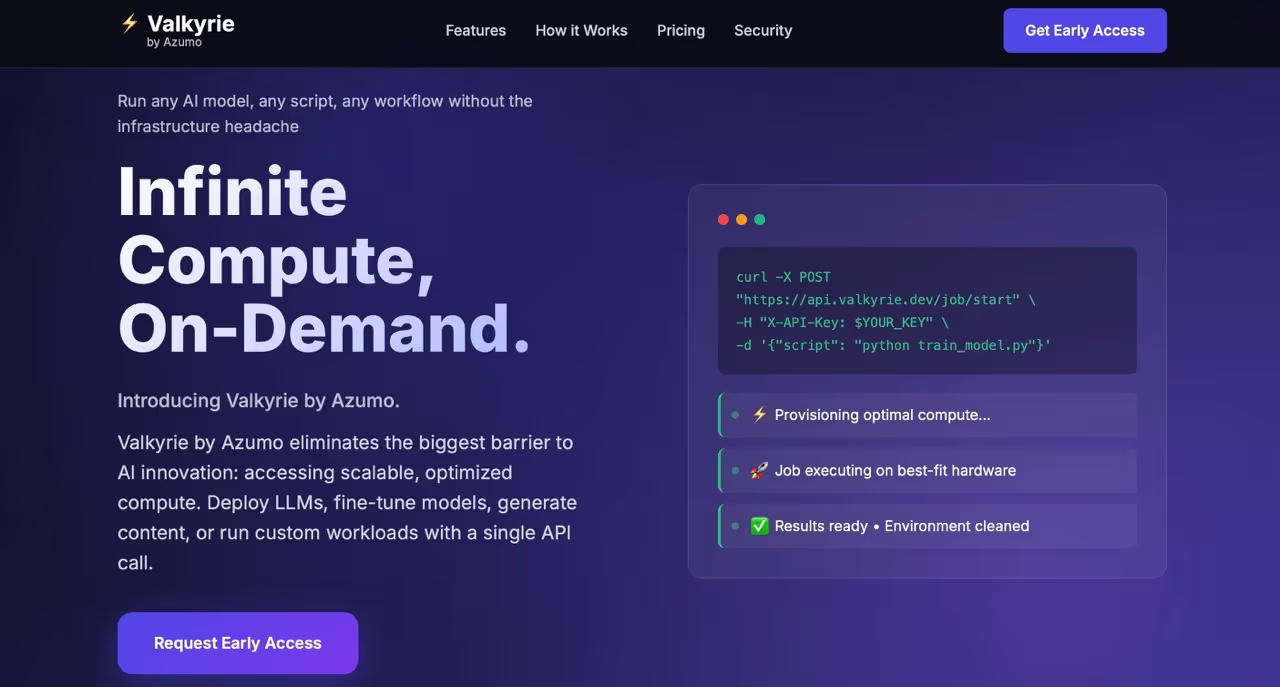
From the perspective of an application using the platform, GPU provisioning is simple. Request a certain amount of GPU capacity with certain characteristics. The platform finds available capacity, negotiates pricing across providers if cost is a factor, provisions instances, and makes them available. The application doesn't need to understand that it's using A100 GPUs at AWS some of the time and H100 GPUs at Google Cloud other times. The platform abstracts that variation. This abstraction eliminates much specialized expertise required to manage GPU infrastructure across multiple providers.
An organization with engineers understanding Kubernetes and containerized applications can likely work effectively with a GPU brokering platform without requiring deep expertise in each cloud provider's GPU offerings.
Optimized serving infrastructure removes another category of complexity. Building a serving system that can handle variable load, implement batching efficiently, manage model versioning, and maintain reasonable latency is non-trivial. Leveraging optimized serving frameworks or managed serving platforms allows organizations to focus on the specifics of their workload rather than reinventing serving infrastructure.
Platforms that provide both GPU infrastructure and serving optimization together can eliminate a substantial portion of infrastructure build work. An organization deploying a model using a platform that handles both infrastructure and serving needs to focus on application integration and operational monitoring rather than fighting with infrastructure basics.
Unified APIs enable portability and reduce the coupling between applications and specific infrastructure providers. An application written to use a unified GPU API can run on different infrastructure providers without modification or with minimal modification. This portability is not perfect and involves trade-offs, but it is meaningful.
An application that is tightly coupled to specific AWS infrastructure characteristics becomes harder to move. An application written to use a unified API can be moved more easily. This portability matters less if you're staying with a single provider forever, but it matters significantly if you value the flexibility to change providers or to use multiple providers for different purposes.
Valkyrie's integration with MCP standards, for instance, enables applications to communicate with GPU infrastructure through standard interfaces that are provider-independent.
Operational tooling and observability that work across infrastructure boundaries eliminates much fragmentation that makes multi-cloud infrastructure painful.
An organization deploying workloads across multiple providers faces a choice: maintain separate observability and operational tooling for each provider, or use a platform that provides unified tooling.
A platform that provides unified APIs, unified observability, and unified operational tools makes managing multi-provider infrastructure much more feasible. The operational burden is still present but it is significantly reduced. An engineer debugging a performance issue doesn't need to understand provider-specific tools and interfaces. They can use platform-provided tooling that works consistently across all providers.
The True Cost of AI Infrastructure Deployment
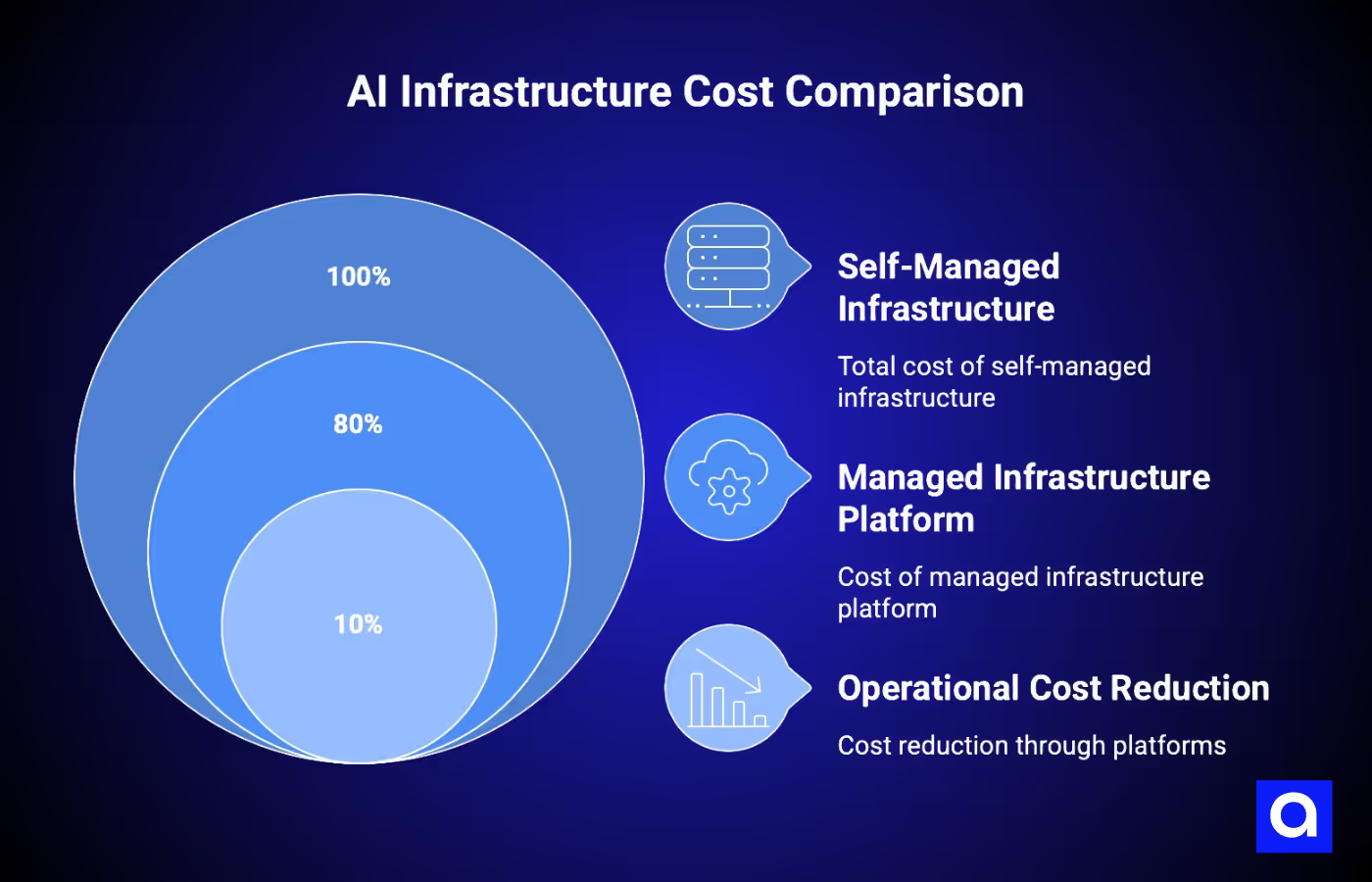
Understanding the true economics of infrastructure last mile requires accounting for categories of cost that are often invisible in spreadsheets but are very real in terms of resource allocation and opportunity cost. The hourly cost of GPU instances is visible and gets attention. The cost of building and maintaining infrastructure is often underestimated.
Fixed costs dominate infrastructure investment. Building GPU serving infrastructure is a fixed cost that doesn't scale linearly with the number of models served. The first model served requires substantial infrastructure investment.
The second model served on the same infrastructure requires significantly less incremental investment. Sharing infrastructure across multiple models, teams, and use cases increases the fixed cost recovery rate. This economics favors centralized infrastructure platforms over decentralized approaches where each team builds its own infrastructure.
A platform that serves model deployments for an entire organization can amortize infrastructure development cost across many teams and many models. Individual teams building their own serving infrastructure cannot capture that efficiency.
An organization deploying a single model might spend three months of engineering effort on infrastructure and then have one month of operational work per engineer per year to maintain it. That is a 37% operational cost on top of the infrastructure cost.
An organization deploying ten models using the same infrastructure platform might spend six months of engineering effort on platform development and then have two months of operational work per engineer per year to maintain it, split across the platform team. The platform cost per model is much lower. The difference between centralized and decentralized infrastructure investment is often the difference between sustainable and unsustainable economics.
Opportunity cost is perhaps the most important and most underestimated dimension of infrastructure investment. An engineer spending six months building serving infrastructure for a single model is not available to improve that model, integrate it with other systems, or work on other valuable projects.
The opportunity cost of that engineering time, in terms of features not built and improvements not made, often exceeds the cost of using a managed infrastructure platform that would have cut that timeline from six months to one month. A three month engineering effort has an opportunity cost in the form of deferred other work. For many organizations, that opportunity cost is real and substantial.
Platform cost comparison should account for true cost of ownership. Using a managed infrastructure platform incurs service fees. Those fees should be compared not just to the cost of self-managed GPU infrastructure but to the true cost of self-managed infrastructure including engineering effort, tooling, and operational overhead.
An organization might calculate that using a managed platform costs 20% more in service fees than self-managed infrastructure costs in compute. But that calculation ignores the engineering cost of building and maintaining the self-managed system. Once you account for engineering cost, the platform approach is often cheaper. For organizations that have already invested heavily in internal infrastructure and have that infrastructure well-optimized, the incremental cost of adding support for new requirements might be less than platform fees. For organizations starting from scratch, the platform approach almost always wins on total cost of ownership once you account for all the costs.
We've seen cost reduction achieved through platforms like Valkyrie reach 90% in operational costs because they eliminate much fixed and variable overhead of managing GPU infrastructure independently.
This is not achieved by cutting corners on infrastructure quality or availability. It is achieved by amortizing platform development and operational cost across many customers, by optimizing infrastructure utilization through pooling demand across customers, and by eliminating redundant infrastructure work that each customer would otherwise need to do independently.
How to Assess Your Organization’s Readiness for AI Infrastructure Deployment
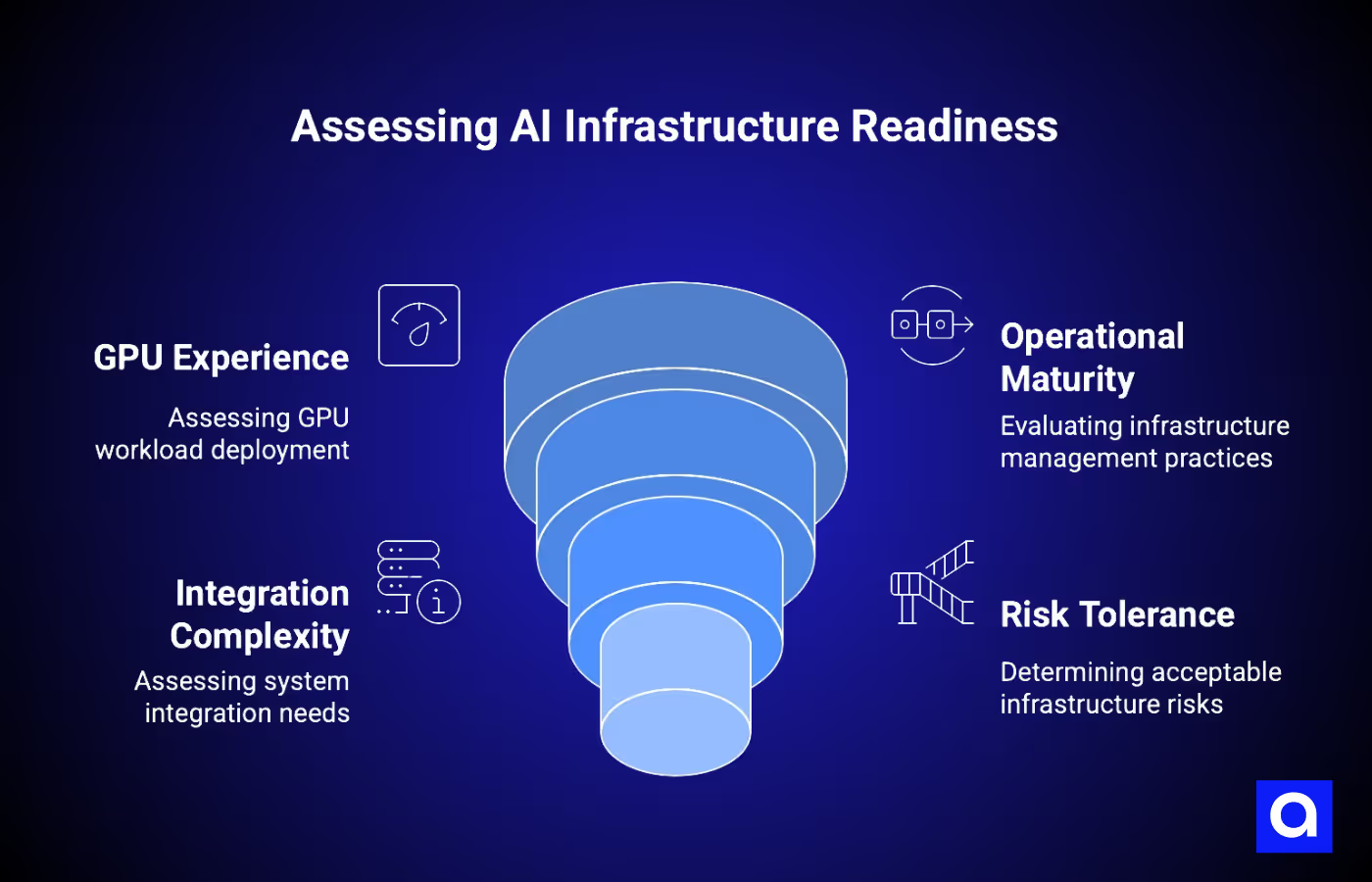
Not every organization should attempt to solve the infrastructure last mile by building comprehensive internal infrastructure platforms. Organizational readiness varies, and honest assessment of readiness is important for making good decisions about whether to build or buy infrastructure solutions.
GPU experience is a foundational element of readiness. Has your organization successfully deployed GPU workloads at any significant scale? If the answer is no, then your organization doesn't yet understand what is actually involved. Building infrastructure for unknown requirements is a recipe for failure.
Organizations with deep GPU experience understand the nuances and challenges. Organizations without that experience should probably gain some experience at smaller scale before attempting to build comprehensive infrastructure platforms. Starting with managed solutions that abstract much complexity allows you to gain experience without requiring you to solve all the complexity at once.
Operational maturity is another key dimension. Does your organization have infrastructure engineers experienced at designing and maintaining production systems? Do you have good practices around deployment automation, monitoring, incident response, and change management?
If the answer is no, then building GPU infrastructure will expose those gaps painfully. Building infrastructure before you have operational maturity results in infrastructure that is fragile and hard to maintain. Organizations should develop operational maturity around traditional infrastructure first, then apply those practices to GPU infrastructure.
Integration complexity varies based on what you're trying to do. Some organizations need to integrate GPU workloads tightly with other systems. Others can keep GPU workloads relatively isolated. Integration complexity is easier to manage if your other systems are well-architected and well-integrated with each other.
If you're struggling with integration across your existing infrastructure, adding GPU workloads will make things worse, not better. Organizations should achieve reasonable integration maturity with existing systems before attempting to integrate sophisticated GPU infrastructure.
Risk tolerance shapes reasonable infrastructure decisions. Organizations that depend on their infrastructure performing reliably and cannot tolerate extended outages need to invest in infrastructure reliability.
Organizations where some service disruption is acceptable can take more risks with experimental infrastructure approaches.
An organization running mission-critical inference needs redundancy and failover capabilities.
An organization running batch training that completes successfully eventually, even after interruptions, can accept more risk. Risk tolerance should shape infrastructure design rather than infrastructure design being decoupled from actual risk tolerance.
A Practical Path to Solving AI Infrastructure Deployment Challenges
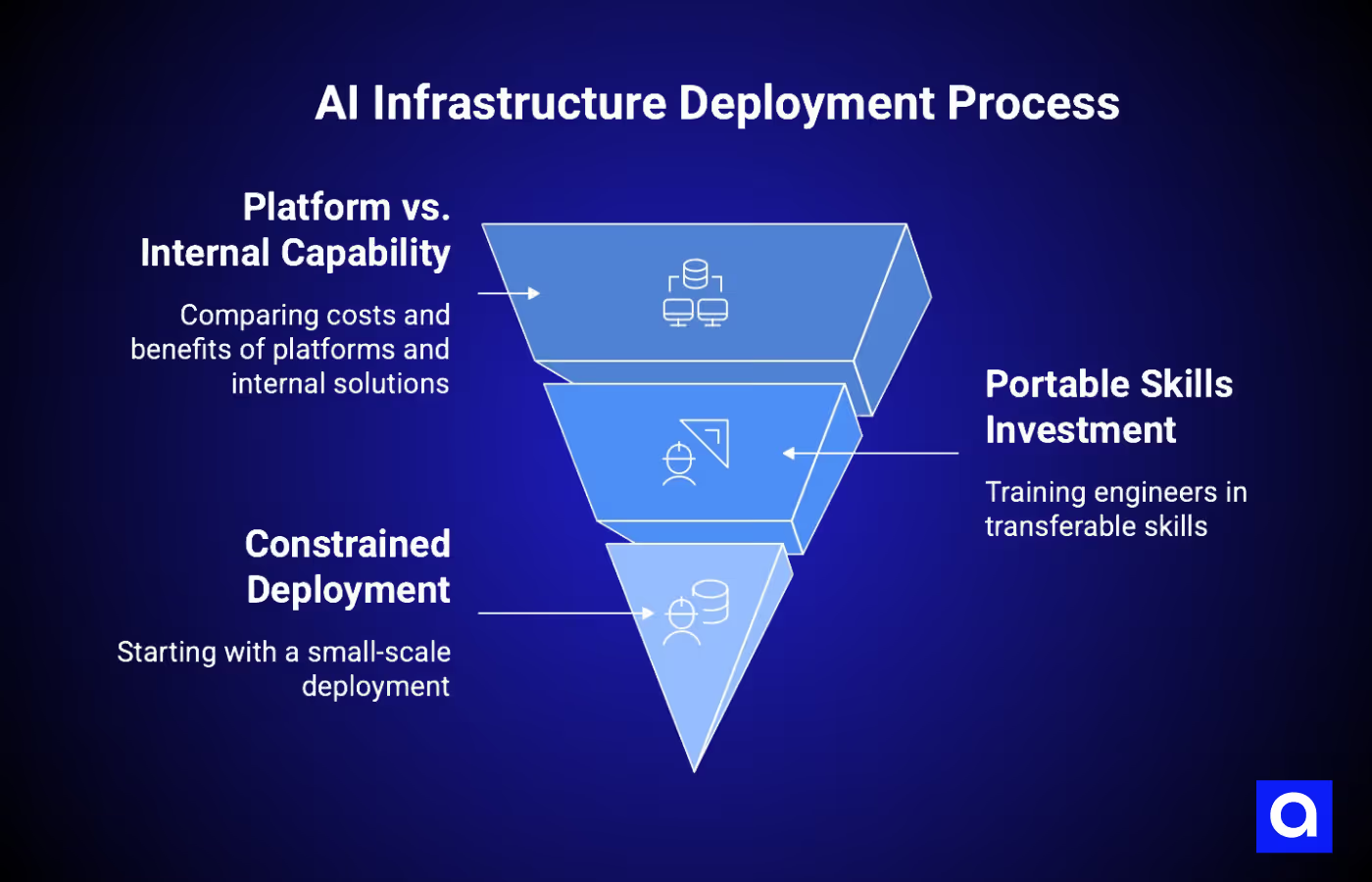
Moving from infrastructure assessment to actual deployment requires a structured approach that acknowledges complexity while remaining pragmatic about building what is actually needed.
Map your current state honestly. What infrastructure do you currently have? What are the gaps? What capability do you have to close those gaps? What capability would you need to acquire?
Honest assessment of your starting point prevents you from underestimating what it will take to reach your destination. Organizations often look at a platform's capabilities and calculate that it should take three months to achieve something similar.
The actual answer is often that it takes nine months because you don't understand all the edge cases, operational requirements, and integration challenges until you're building it.
Evaluate platforms versus internal capability. For the specific infrastructure gaps you identified, compare the cost and time to build an internal solution with the cost of using a managed platform. The comparison should include engineering cost and opportunity cost.
Often, the honest answer is that a managed platform is more cost-effective for most workloads, even if it means accepting less customization than an internal solution could provide. Some organizations have discovered that platforms make sense for standard workloads but they still maintain specialized infrastructure for unusual requirements.
This hybrid approach often balances cost, flexibility, and capability better than either pure internal infrastructure or pure platform dependence.
Invest in portable skills that transfer across platforms. Rather than training engineers exclusively in proprietary internal infrastructure, train them in foundational capabilities that apply regardless of the infrastructure platform.
Understanding how models are served, understanding containerization and orchestration, understanding observability and monitoring, understanding how to debug performance issues, these skills are valuable regardless of what specific infrastructure platform is being used.
Engineers with these foundational skills can work effectively with internal infrastructure, cloud provider infrastructure, or managed platforms. Skills that are highly specific to a particular proprietary system are expensive to acquire and don't transfer if you change platforms.
Start constrained. Do not attempt to solve the entire infrastructure last mile in a single project. Start by deploying a single model or a small set of models. Learn what actually matters for your use case. Build iteratively. As you deploy more models and gain more experience, expand your infrastructure.
This approach prevents you from over-engineering infrastructure for requirements that don't actually matter and allows you to learn what does matter before you've committed significant resources.
A constrained start also gives you a natural point to evaluate whether internal infrastructure or platform approaches are working and to adjust if needed.
Building a Sustainable AI Infrastructure Strategy
A sustainable approach to the infrastructure last mile requires recognizing that the bottleneck is not model intelligence or infrastructure technology. It is organizational capability, operational maturity, and building the right level of infrastructure abstraction for your circumstances.
Different organizations will make different choices about where to invest in internal capability and where to use managed platforms. These choices should be based on honest assessment of current state, realistic evaluation of cost and timelines, and clear understanding of what the organization is trying to optimize for.
For many organizations, the right approach involves recognizing that infrastructure is a means to an end, not the end itself. The goal is to deploy AI systems that deliver value. Infrastructure is the enabler.
Organizations that view infrastructure as a core competency and competitive advantage may choose to invest heavily in internal capability. O
rganizations that view infrastructure as a necessary but non-differentiating component should probably focus on using platforms and leveraging the expertise of organizations that have made infrastructure a core competency.
The infrastructure last mile is not inherently harder than traditional infrastructure last miles. It is just different. GPU workloads have different characteristics than traditional compute workloads. Serving requirements are different. Observability requirements are different. But the principles of building good infrastructure are the same. Start with clear requirements. Build iteratively. Invest in operational maturity. Leverage existing solutions where appropriate. Customize where differentiation matters. Build the level of abstraction that matches organizational capability.
Organizations that approach the infrastructure last mile thoughtfully, with realistic timelines and clear understanding of costs, tend to deploy AI systems successfully.
Organizations that expect infrastructure to solve itself or that attempt to build too much too fast tend to struggle.
The difference is not primarily technical. It is organizational.
At Azumo, we see these AI infrastructure deployment challenges repeatedly across organizations attempting to move from experimentation to production. The patterns are consistent, even when the models, industries, and use cases differ.
Contact us to make intentional infrastructure decisions that support long-term AI success.

About the Author:
Chief Technology Officer | Software Architect | Builder of AI, Products, and Teams
Juan Pablo Lorandi is the CTO at Azumo, with 20+ years of experience in software architecture, product development, and engineering leadership.



.avif)