AI Development Services
Build Intelligent Apps
We are an AI development services company. We design, implement, and ship custom AI solutions for computer vision, NLP, generative AI, RAG, and agents. Our engineers have built with AI to deliver production-grade systems since 2016.
.avif)
.avif)


.avif)

We are AI software development services project experts
Azumo is a SOC 2-certified AI development services company in San Francisco. Since 2016 we've shipped 100+ production AI projects for teams from startups to the Fortune 100.
Models & Platforms we build with
%2520(5).avif)







A vendor neutral approach has us build across the leading models and platforms
We stay independent at the model layer choosing the best fit frontier model among OpenAI, Anthropic, and Google Gemini and the open weight alternatives like Qwen, Mistral, and Deepseek. We deploy on AWS, Azure, and Google Cloud.
Our work includes:
Meta
We built a semantic search engine using FastText embeddings and named entity recognition
Omnicom
We created an automated RFP generation service
Discovery Channel
We developed AI voice assistants for its gaming division
Stovell
We designed a real-time generative forecasting for its financial platform
We build AI solutions and launch them into production
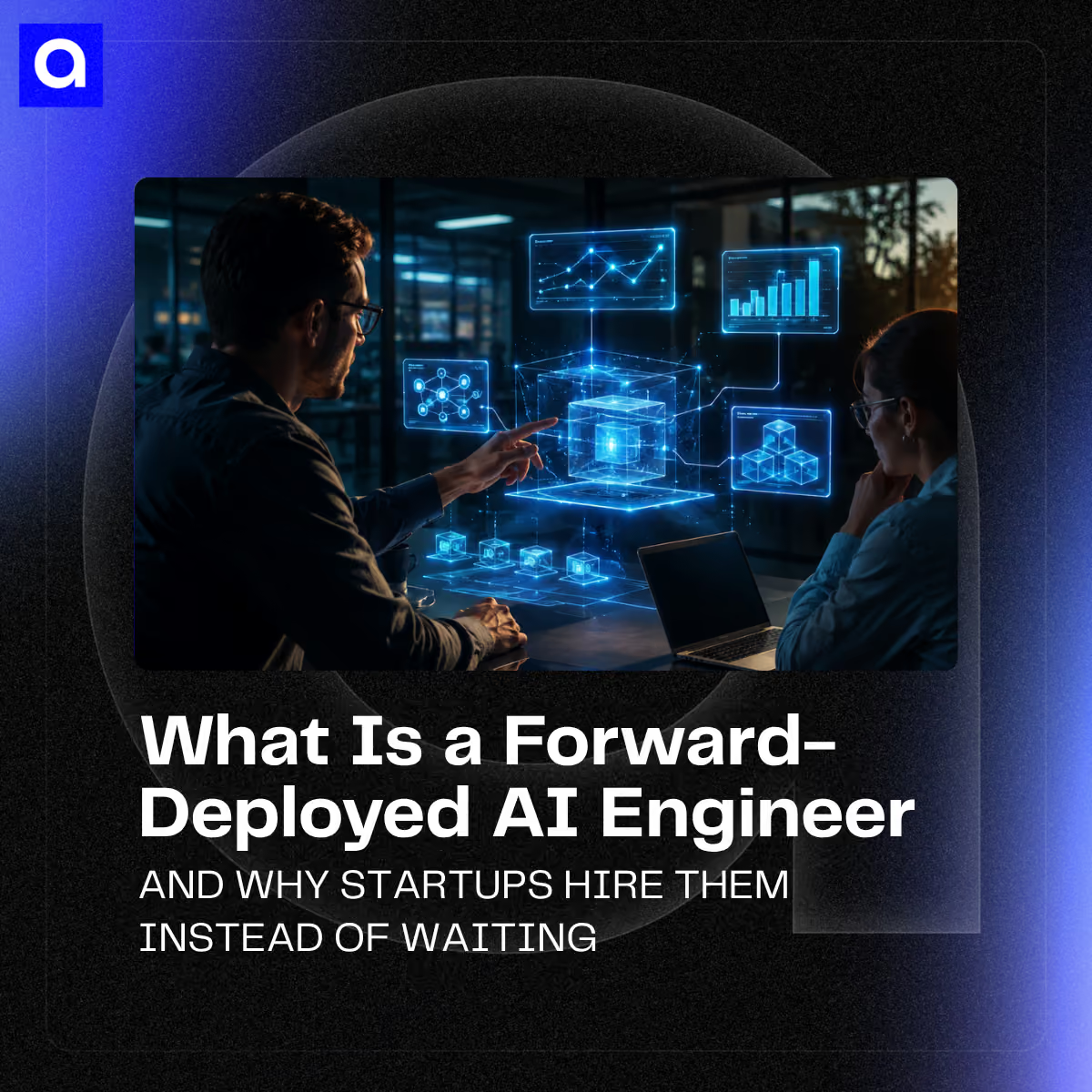
One team can own the whole path. The same team of AI augmented engineers who scope your project are the ones who can build, ship, and operate it. When you need them embedded, our forward-deployed AI engineering pods work inside your team. We retain context throughout the entire process.
Scope
We pressure-test the use case, data, and architecture before any code.
Build
Production-grade AI for agents, RAG, vision, and GenAI.
Ship
We integrate into your systems of record and get it live in production.
Operate
We run it in production and keep improving the models over time.
What we build
Our Artificial Intelligence Development Capabilities
AI Agents
Autonomous agents that work 24/7
RAG Development
AI-powered knowledge retrieval
NLP Development
Natural language processing
Computer Vision
Image and video solutions
Generative AI
Custom LLM solutions
LLM Fine Tuning
Tailor models to your data
LLM Eval
Optimize for the model that fits your use case
MLOps
Deploy and scale AI in production
AI use cases we build
Here are fourteen problems we have solved in production. Some we built from scratch against our customer's data. While others start from a system we already built, run and operate ourselves, which is faster, and can prove your application will work before you have to fund a custom build.
Customer Support Automation
An assistant that resolves common tickets end to end, escalates the rest with full context, and never invents an answer it cannot source.
We start by reading your ticket history to find what is actually repeatable, usually a smaller set than teams expect. The assistant answers from your help centre and past resolutions, not from the model's general knowledge, so every response traces to a document. Anything below its confidence threshold routes to a human with the conversation and retrieved sources attached. We instrument deflection and containment from day one, because an assistant nobody measures gets switched off within a quarter.
Start from CharliBot
Our own no-code chatbot platform trains on your website and PDFs and goes live in about fifteen minutes. Deploy it configured for you, or use it as the base layer for a bespoke build.
CharliBotWhat you get
Retrieval grounded in your help centre and ticket history
Confidence thresholds and human escalation paths
Deflection, containment and CSAT instrumentation
Integration with your existing ticketing system
Shipped for Facebook — an enterprise-ready chatbot delivered in eight weeks.
CharliBot
LangGraph
pgvector
ChatGPT
Claude
FastAPI
Zendesk
Salesforce
Voice Agents for Inbound Calls
A voice agent that answers a real phone line, handles the call, and hands off cleanly when the caller needs a person.
Voice is unforgiving in a way chat is not — latency above roughly a second reads as a broken system, and one mishear compounds across a whole conversation. We build for barge-in, partial transcripts and graceful recovery, then tune against recordings of your actual calls rather than clean test audio. Booking, routing and lookup happen through your systems during the call, not after it. We run one of these on our own line, which is why we know where they fail.
Start from Hello by Azumo
Our AI receptionist answers, routes, takes messages and books appointments, live in under thirty minutes. It runs Azumo's own phone line at a 1-second median response, P90 of 2 seconds when calling tools on commercial models.
AI receptionistWhat you get
Sub-second turn latency with barge-in support
Live calendar, CRM and lookup integration
Call recordings, transcripts and outcome tagging
Escalation to a human without losing context
Shipped by us, for us — our receptionist has run Azumo's live phone line since early 2026 with zero downtime.
Hello by Azumo
LiveKit
Whisper
Deepgram
ElevenLabs
Twilio
GPT-4o Realtime
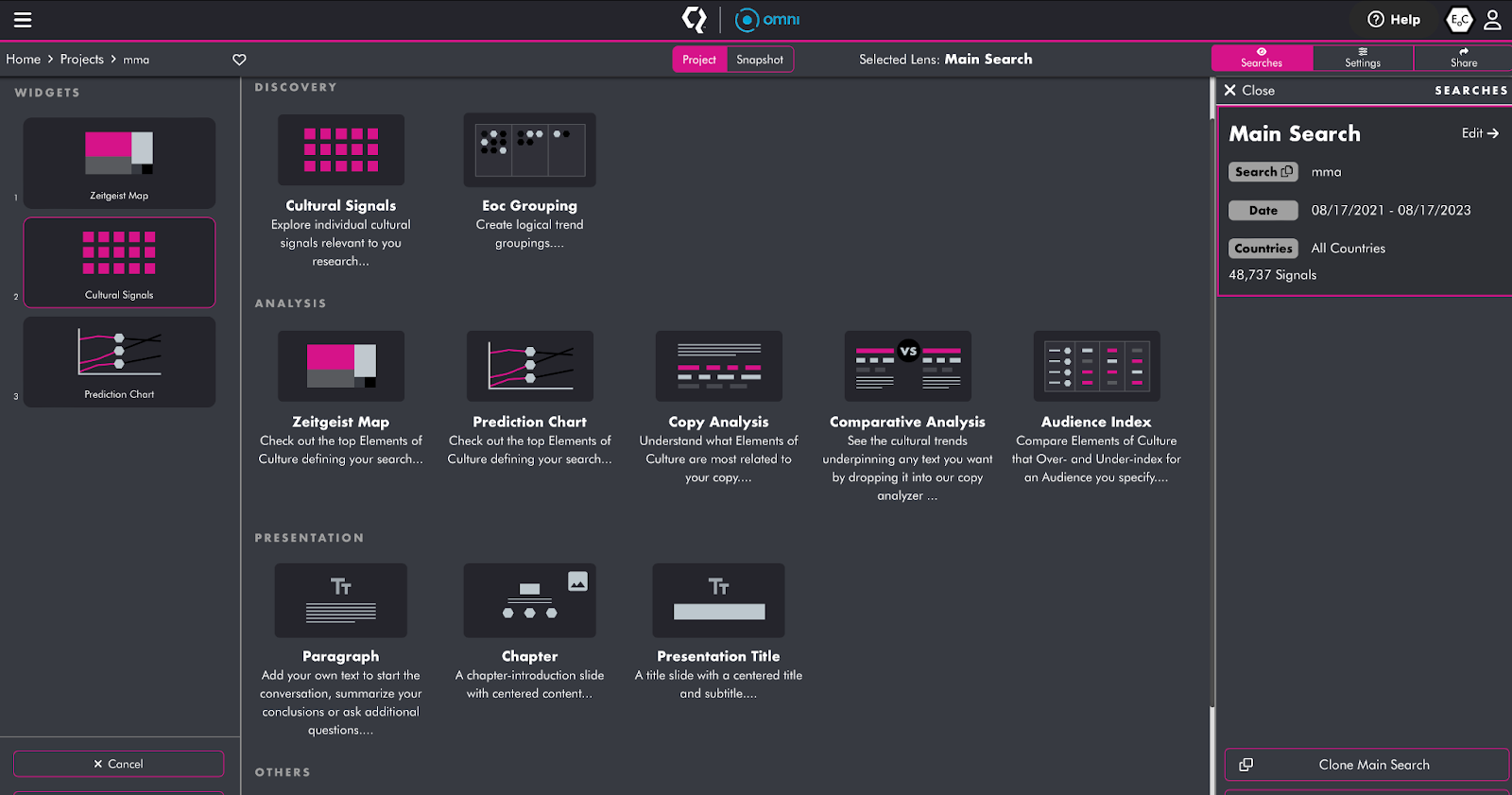
Knowledge Assistants Over Your Documents
A retrieval-augmented assistant that answers from your corpus, cites what it used, and says so when the corpus does not cover the question.
Most RAG systems fail at retrieval, not generation — the model was fine, the chunk it was handed was wrong. We spend the effort on chunking strategy, hybrid keyword-plus-vector retrieval and reranking, then evaluate retrieval quality on its own before touching prompts. Every answer carries its sources so a reader can check. Where the corpus changes daily we build the refresh pipeline into the system, because a stale index is the most common reason these get abandoned.
Start from our RAG pipeline
RAG Pipeline primitive — the retrieval stack behind CharliBot and Charli Live — gives you chunking, hybrid retrieval, reranking and citation out of the box, so the bespoke work is your corpus, not your plumbing.
What you get
Chunking and reranking tuned to your document shape
Hybrid keyword and vector retrieval
Citations on every answer, refusal when unsupported
Automated index refresh as the corpus changes
Shipped for Sparks & Honey — retrieval over a cultural-signal corpus behind live client briefings.
LangChain
LlamaIndex
pgvector
Pinecone
FAISS
Cohere Rerank
Claude
Airflow
Outbound Sales Automation
An agent that researches accounts, writes and sends the outreach, handles replies, and logs everything to your CRM without a rep touching it.
Outbound breaks at the research step — a rep spends most of the hour finding the reason to write rather than writing. The agent researches first and drafts against what it found instead of a template, then stops when a reply needs judgement. Everything lands in your CRM as it happens, so pipeline reporting does not depend on anyone remembering to log it. We run this on our own outbound, which is how we learned where the tone goes wrong.
Start from our AI SDR Agent
Research, outreach, reply handling and CRM logging as a managed service including build and operation. We can get your agent live in under a week. We run it on Azumo's own outbound.
AI SDR AgentWhat you get
Account research completed before any draft
Reply handling with escalation on judgement calls
CRM logging on every action, automatically
Deliverability and sending-limit controls
Shipped by us, for us — our autonomous SDR agent runs Azumo outbound with zero incidents.
Valkyrie
LangGraph
ChatGPT
Claude
Apollo
HubSpot
Salesforce
n8n
Research and Competitive Intelligence
An agent that gathers, reads and synthesises across sources on a schedule, and produces a brief a human can act on.
Research agents fail when they summarise instead of verifying. We build them to cite every claim back to a retrieved source, and to flag where sources disagree rather than averaging them into something confident and wrong. Scheduled runs mean the brief arrives before the meeting instead of being requested after it. Write access to systems of record stays behind a human approval step, always — an agent that files its own conclusions is how bad data enters a business.
Start from our research agent
AI SDR — a production lead-research agent we run in-house, which never writes to a system of record without human approval.
What you get
Every claim cited back to a retrieved source
Disagreement between sources flagged, not averaged
Scheduled runs delivered into channels you already use
No write access without a human approval step
Shipped by us, for us — a production lead-research agent and an operations assistant, both human-approved before any write.
LangGraph
CrewAI
Claude
ChatGPT
pgvector
Playwright
Apollo
Slack
Workflow Automation Across Systems
Agents that carry a process across the tools it actually spans, taking actions and stopping where a human decision is required.
The useful agent is not the autonomous one — it is the one with a tightly drawn boundary and an audit trail. We map the process first, decide explicitly which steps an agent may execute and which need approval, then build inside those limits. Every action is logged with its inputs so a failure can be reconstructed. Agents touching systems of record need rollback paths and rate limits from the first commit, not added after an incident.
Start from our agent runtime
The same engine behind our SDR agent already runs recruiting outreach, account monitoring, competitive intelligence and meeting prep. Reconfiguring it for your workflow is materially faster than rebuilding one.
AI SDR agentWhat you get
An explicit boundary between automated and approved steps
Full action logging with reconstructable inputs
Rollback paths and rate limits on write operations
Connections into Salesforce, SAP, ServiceNow and similar
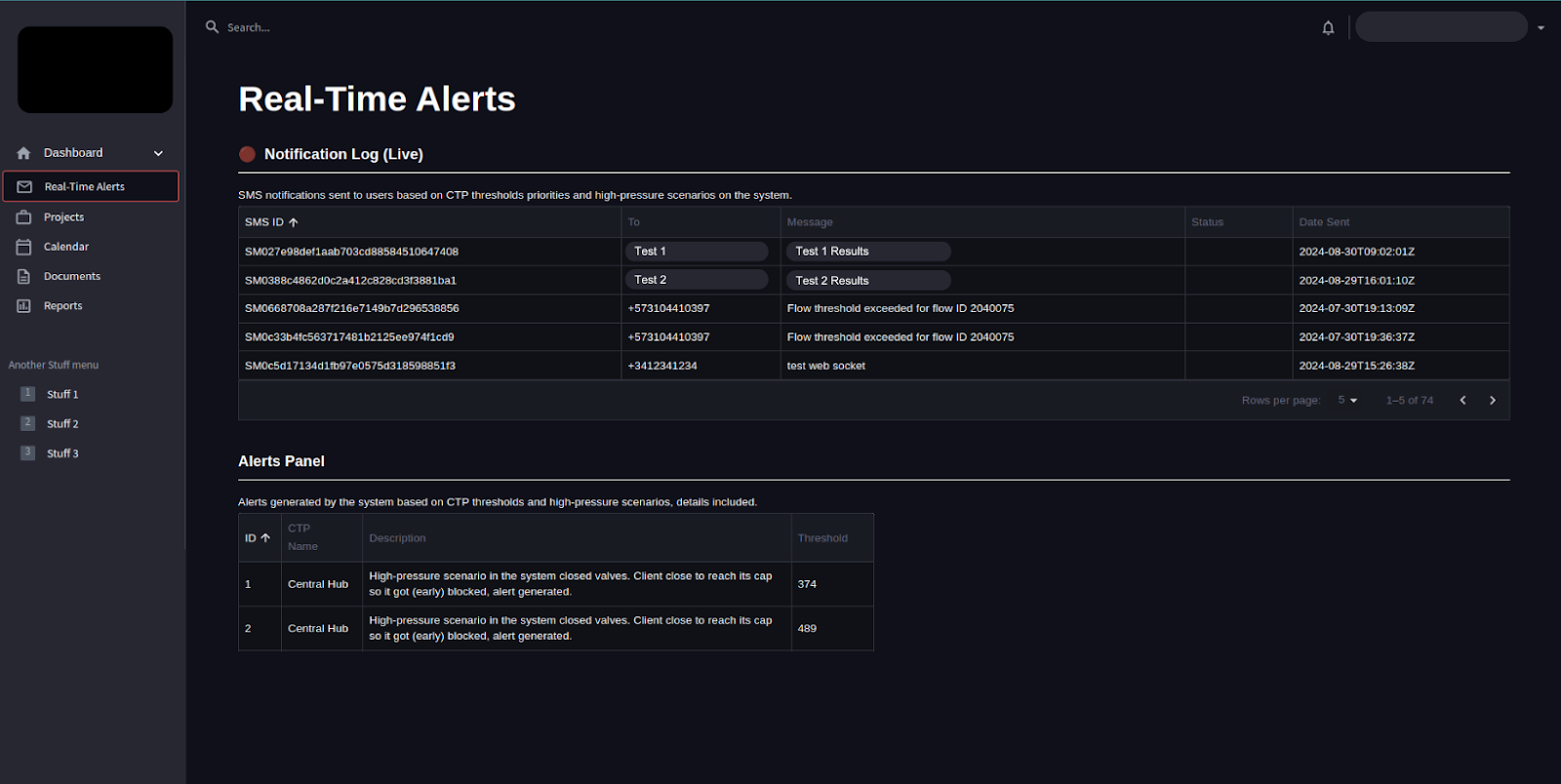
Shipped for NGL — an automated alerting loop that triggers notification and operator action in real time.
LangGraph
CrewAI
OpenAI Agents SDK
n8n
Salesforce
ServiceNow
SAP
webhooks
Document Data Extraction
Structured fields pulled out of scans, forms and photographs at an accuracy you can actually put into a workflow.
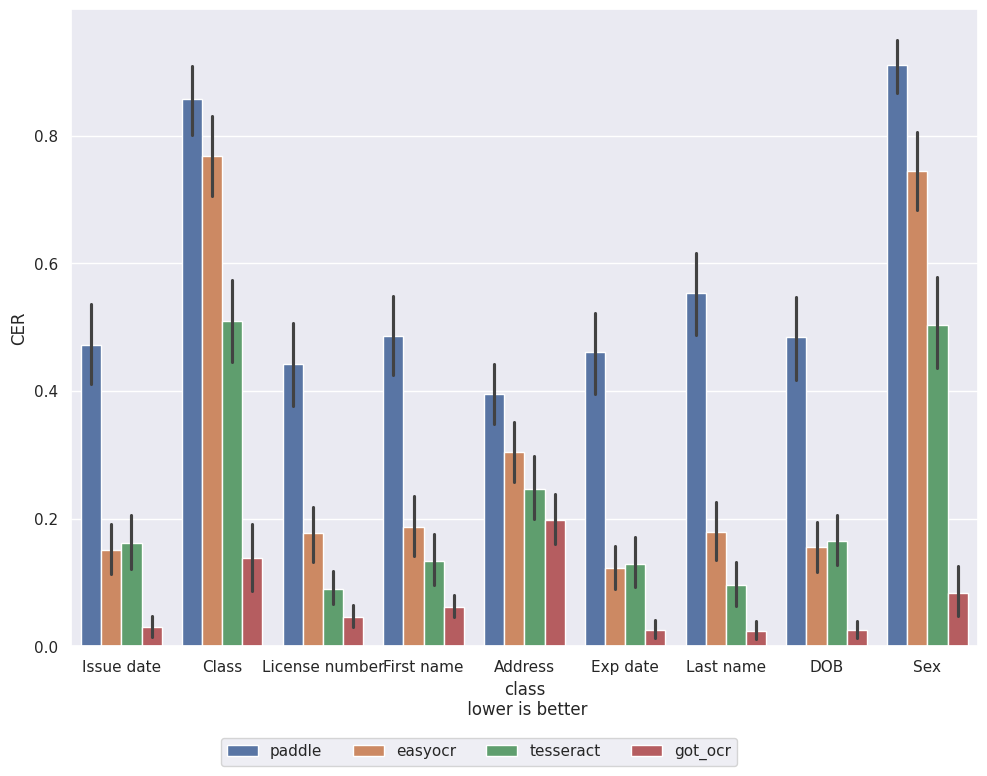
Extraction is two problems wearing one coat: finding the field, then reading it. We benchmark detection and OCR separately because the best pairing is rarely the obvious one, and the answer changes with image quality and document type. Where real documents are scarce or sensitive we train on synthetic sets — one engagement reached production accuracy from six hundred generated images. Every field returns a confidence score, so low-confidence values route to review rather than silently entering your system.
Built for you
No off-the-shelf starting point here. The detection and OCR pairing has to be benchmarked against your documents, because the right combination changes with image quality and form type.
What you get
Benchmarked detection and OCR pairing, not a default
Per-field confidence scores and review routing
Synthetic training data where real documents are scarce
Character error rate reporting by field type
Shipped for Centegix — YOLO11m reached mAP above 80% and GOT_OCR exceeded 80% field accuracy.
YOLO11
GOT_OCR
Tesseract
EasyOCR
PaddleOCR
OpenCV
PyTorch
Ultralytics
Enterprise Search Over Internal Data
Search that understands what a record means rather than which words it contains, across systems that were never designed to talk.
Keyword search fails on enterprise data because the same entity is written five ways across five systems. We replace exact matching with domain-based similarity: embeddings trained on your own vocabulary, entity recognition to normalise names, unsupervised clustering over the attributes that actually distinguish records. The hard part is rarely the model — it is reconciling identity across sources without a clean key. We measure precision against a human-labelled set before anything reaches users.
Built for you
Embeddings train on your own vocabulary and entity resolution follows your source systems, so there is nothing generic to start from. The corpus is the product.
What you get
Domain-trained embeddings, not off-the-shelf vectors
Entity resolution across mismatched source systems
Precision measured against a labelled benchmark
Search that runs on infrastructure you control
Shipped for Meta — 3.5 million supplier records indexed, search precision improved by over 40%.
FastText
Haystack
NER / NLU
pgvector
Weaviate
Kubernetes
Python
React
Demand and Risk Forecasting
Models that produce a forward view your team will actually act on, with the uncertainty stated rather than hidden.
A forecast nobody trusts is worse than no forecast, so we design for interpretability alongside accuracy — which drivers moved the number, and how confident the model is. We backtest against held-out history before anything goes live, and we build the retraining schedule into the system because a forecasting model degrades quietly. One platform we architected has run in production since 2017 with minimal daily operational input, producing a forward view every trading day.
Built for you
Forecasting is inseparable from your data's shape, seasonality and failure modes. There is no generic model worth starting from — the work is in feature selection and backtesting against your history.
What you get
Backtesting against held-out historical periods
Stated confidence intervals, not point estimates alone
Driver attribution so the number is explainable
Scheduled retraining and drift monitoring
Shipped for Stovell AI — a forecasting engine live in production for over eight years.
Keras
scikit-learn
XGBoost
Prophet
LSTM
Snowflake
Airflow
Azure
Anomaly and Alarm Triage
Separating the events that need a human from the noise, so operators stop ignoring the alerts that matter.
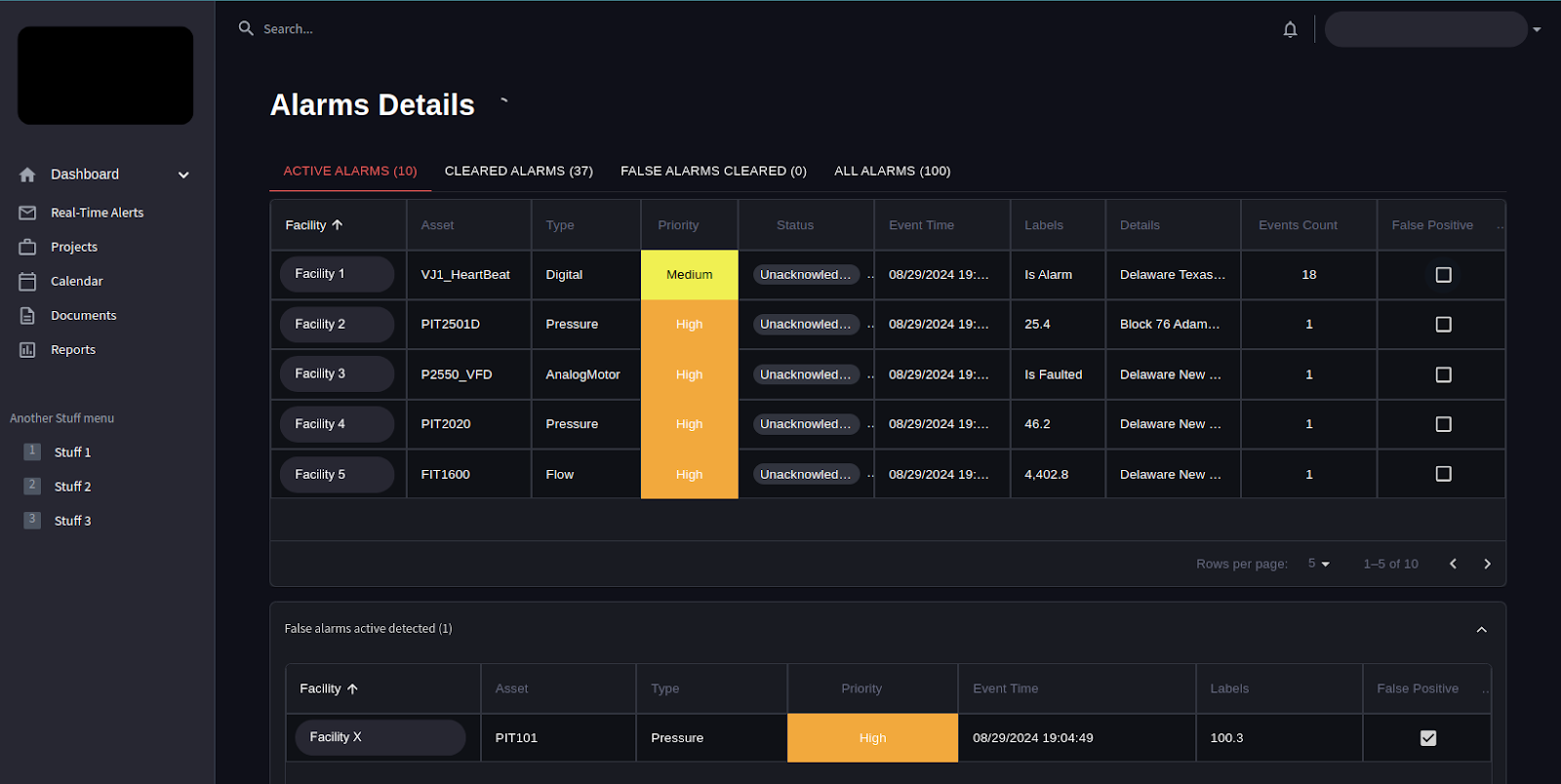
Alarm fatigue is a modelling problem disguised as a process problem. We train unsupervised detectors on your sensor or event history, then group duplicates and known nuisance patterns before anything reaches an operator screen. The important part is the feedback loop: when an operator flags a miss or a false positive, that judgement retrains the model rather than disappearing into a spreadsheet. Without that loop the system degrades back to noise within months.
Built for you
What counts as an anomaly is specific to your plant, your sensors and your operators' tolerance. The detector has to be trained on your history — a generic one produces exactly the noise you are trying to remove.
What you get
Unsupervised detection trained on your own history
Duplicate and nuisance grouping before operator display
Operator feedback wired back into retraining
Real-time alerting into the channels you already use
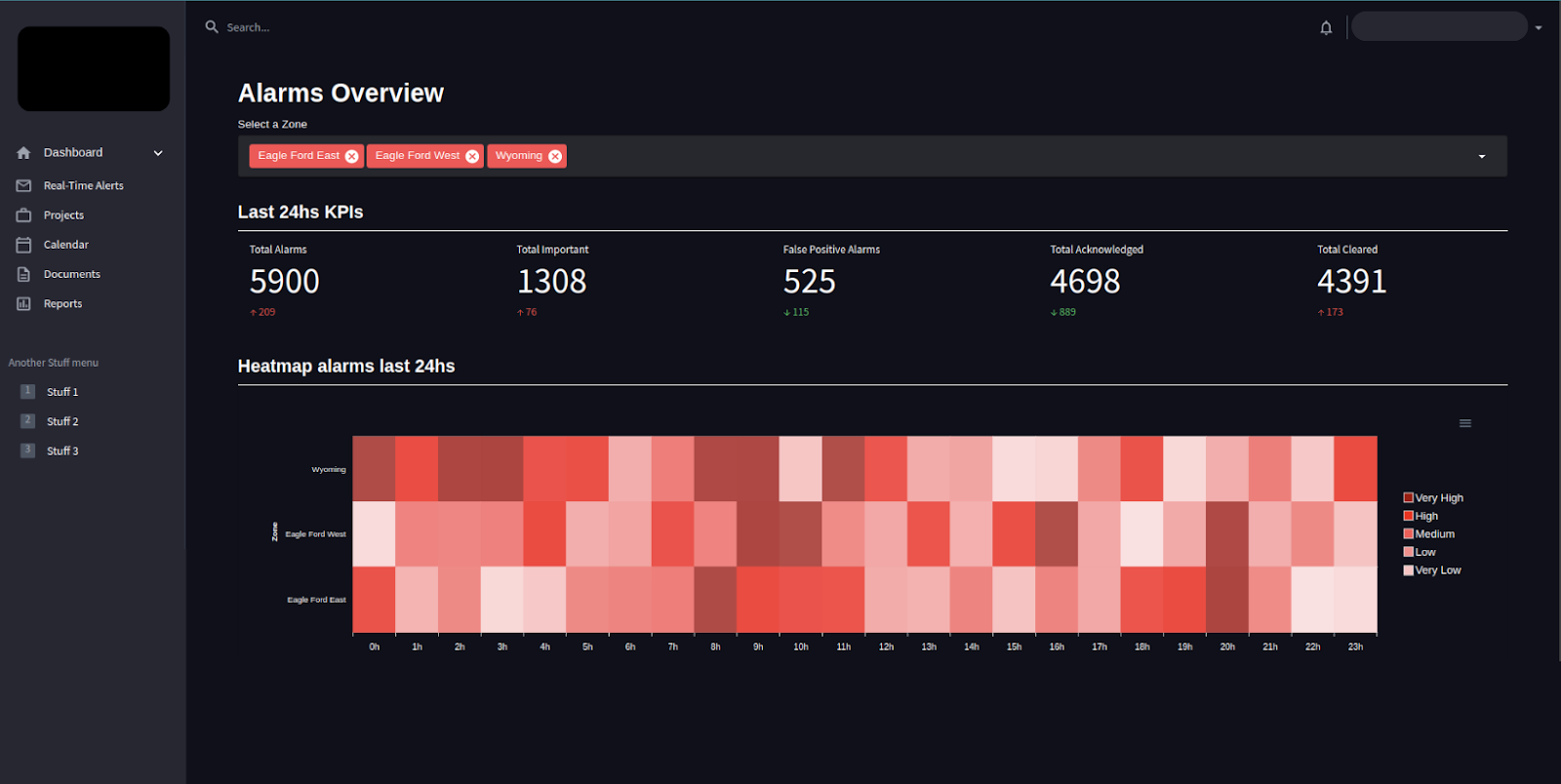
Shipped for NGL — false alarms cut by over 70%, operator response time improved by over 40%.
Isolation Forest
autoencoders
PyTorch
Airflow
PostgreSQL
Azure
Next.js
TypeScript
Visual Inspection and Detection
Models that find objects, defects or fields in images and video, benchmarked against your conditions rather than a public dataset.
Public benchmark scores tell you almost nothing about how a detector behaves on your camera, your lighting and your throughput budget. We benchmark several architectures against a labelled sample from your environment before committing, and we report the trade-off between accuracy and inference cost rather than only the headline metric. Where labelled data is thin, synthetic generation closes the gap. Deployment usually matters as much as detection — the edge device is the constraint.
Built for you
Detection quality is a function of your camera, lighting and throughput. We benchmark several architectures against footage from your environment rather than shipping a default.
What you get
Several architectures benchmarked on your own footage
Accuracy against inference cost, stated explicitly
Synthetic data generation where labels are scarce
Edge or cloud deployment sized to your throughput
Shipped for Centegix — four YOLO variants benchmarked from a training set of 600 synthetic images.
YOLO11
Ultralytics
OpenCV
Torchvision
Triton
ONNX Runtime
Docker
Proposal and Quote Generation
Turning an inbound request into a priced, compliant draft in minutes, with a human approving rather than authoring.
Quote and proposal work is high-volume, highly templated, and expensive precisely because it is done by expensive people. We extract requirements from the inbound document, match them against your product and pricing rules, and generate a draft in your approved language. The rules stay in your systems, not in a prompt — the model assembles and phrases, it does not decide price. Everything routes to a human for approval, and every generated clause traces to its source.
Built for you
Your pricing rules and contractual language are the whole system. They stay in your systems of record, which means this is assembled around you rather than configured from a template.
What you get
Requirement extraction from inbound documents
Pricing logic held in your systems, not in prompts
Output in your approved contractual language
Human approval step with clause-level traceability
Shipped for Angle Health — LLM-powered RFP-to-quote automation for a healthcare payer.
ChatGPT
Claude
LangChain
structured output
Salesforce
PostgreSQL
FastAPI
Model Evaluation and Selection
Deciding which model to build on, with evidence from your data instead of a leaderboard someone else optimised for.
Model choice is usually made once, early, on the wrong information, and then quietly costs money for years. We build an evaluation harness against your task and your data, run the candidates through it, and report accuracy against latency and cost per call. The harness outlives the decision — when a materially better model ships, re-testing becomes a config change rather than a project.
Start from Valkyrie
Our own model-serving fabric reaches any model through a single endpoint, so swapping a candidate in is configuration rather than integration work. It is what makes repeated re-testing cheap enough to actually do.
Valkyrie ↗What you get
An evaluation harness built around your task
Accuracy, latency and cost per call, compared directly
A repeatable re-test when new models ship
No lock-in to a single model provider
Shipped by us, for us — Valkyrie reaches any model through one REST call, with zero setup.
Valkyrie
MLflow
Weights & Biases
ChatGPT
Claude
Gemini
LLaMA 3
Qwen
DeepSeek
Real-Time Inference at Scale
Serving a model under production load, at a latency and cost per call the business case survives.
A model that works in a notebook and a model that answers ten thousand concurrent users are different engineering problems. We size the serving layer against your actual traffic shape, not an average, and treat cost per call as a first-class constraint alongside latency. Batching, quantisation, caching and autoscaling each buy something and cost something; we pick against your numbers. Load testing happens before launch, because the first real spike is a bad time to find the ceiling.
Start from Valkyrie
Provisioning, serving and autoscaling behind one endpoint, on multi-cloud infrastructure we operate ourselves. Deploy into our fabric, or into your own VPC.
ValkyrieWhat you get
Serving sized against your real traffic shape
Cost per call treated as a design constraint
Batching, caching and quantisation where they pay
Load testing and autoscaling verified before launch
Shipped for Sparks & Honey — a rebuilt platform running 24/7 on a fully decoupled architecture.
Valkyrie
Kubernetes
Triton
vLLM
Docker
AWS
Redis
Terraform
The AI stack expertise we build on
We are vendor neutral at the model layer. We choose per use case against your accuracy, latency and cost requirements, and revisit as models change.
Azumo builds production AI systems on both commercial and open-weight models, and is not tied to a single provider. Our own serving layer reaches any of them through one endpoint, so changing model is a config change rather than a rebuild. Selection follows your data, your latency budget and your cost per call. Classical methods still win more often than the market suggests.
We developed and deployed into production Isolation Forest and autoencoder models that cut false alarms by over 70% for a mid-stream pipeline operator.
How we choose
We fine-tune an LLM when the task needs a behaviour the base model does not have. We use retrieval when it needs facts the base model does not know. Most projects need retrieval, not fine-tuning, and we will say so when that is the case.
Commercial models
ChatGPT · Claude · Gemini · Grok · Command · Amazon Nova · Azure OpenAI Service
Open-weight models
LLaMA · Mistral and Mixtral · Qwen · DeepSeek · Kimi · Gemma · Phi · Falcon
Supervised
Linear and logistic regression · SVMs · decision trees · random forests · XGBoost · LightGBM · CatBoost · k-NN · naive Bayes · ridge and lasso
Unsupervised & anomaly
K-means · DBSCAN · hierarchical clustering · PCA · t-SNE · UMAP · autoencoders · Isolation Forest · one-class SVM · Gaussian mixture models
Deep learning
CNNs · RNNs · LSTMs · GRUs · transformers · attention · GANs · diffusion · graph neural networks · transfer learning
Fine-tuning & adaptation
LoRA · QLoRA · supervised fine-tuning · RLHF · DPO · quantisation · distillation
Azumo builds computer vision and document extraction systems covering detection, segmentation and OCR. Public benchmark scores say little about your camera, your lighting or your throughput budget, so we benchmark several architectures against a labelled sample from your environment and report accuracy against inference cost rather than the headline metric alone.
We developed and deployed into production a YOLO11m and GOT_OCR pipeline that reached mAP above 80% and over 80% field accuracy for a school-safety platform, trained on only 600 synthetic images.
How we choose
We run a fixed-cost proof of concept first when accuracy is unproven on your documents. And we go straight to build only when a comparable model has already been run on comparable inputs.
Classification & backbones
ResNet · EfficientNet · MobileNet · ConvNeXt · Inception · Vision Transformer (ViT) · transfer learning from ImageNet
Detection
YOLO8 and YOLO11 in nano, small and medium · RT-DETR · Faster R-CNN · SSD · Detectron2 · Ultralytics · bounding box regression · mean average precision
Segmentation
SAM and SAM 2 · Mask R-CNN · U-Net · DeepLab · FCN · semantic and instance segmentation · mask generation · object tracking across frames
OCR
GOT_OCR · PaddleOCR · EasyOCR · Tesseract · TrOCR · LayoutLM · Donut · docTR · OTSU binarisation · character error rate · Levenshtein ratio
Vision deployment
OpenCV · TensorRT · ONNX Runtime · edge inference · GPU versus CPU trade-offs · hybrid fast-then-accurate pipelines · synthetic augmentation
Multimodal & vision-language
CLIP · LLaVA · Qwen-VL · Florence-2 · GPT-4o vision · Claude vision · Gemini vision · image-text embedding · visual question answering

Azumo builds natural language processing and semantic search systems on domain-trained embeddings. Enterprise language work fails on vocabulary rather than on models, because the same entity is written five ways across five systems. We train embeddings on your own corpus and normalise entities before anything reaches a ranking function.
We developed and deployed into production FastText embeddings and named entity recognition that lifted supplier search precision by over 40% across 3.5 million records at a Fortune 100 technology company.
How we choose
We train embeddings on your corpus when your vocabulary is domain-specific and identity has to reconcile across systems. Use an off-the-shelf model when it does not.
Language tasks
Named entity recognition · intent classification · sentiment · topic modelling · summarisation · document classification
Embeddings
FastText · word2vec · GloVe · BERT · sentence transformers · domain-based similarity
Libraries
spaCy · Hugging Face · multilingual tokenisation · custom NLU libraries
At scale
Production-volume classification · multilingual routing · out-of-vocabulary handling · unsupervised learning on unlabelled corpora
Azumo builds retrieval-augmented generation systems covering chunking, hybrid retrieval, reranking, grounding and citation. Most RAG systems fail before generation, because the model was fine and the chunk it was handed was wrong. We evaluate retrieval quality on its own before touching prompts, and treat grounding failure as a retrieval bug rather than a model one.
We developed and deployed into production a retrieval layer over a cultural-signal corpus for a cultural intelligence platform, and we run our own research platform that ingests sources, grounds every claim against them and flags contradictions before anything is published.
How we choose
We choose retrieval when the model needs facts it does not have, and fine-tuning when it needs a behaviour it does not have. We choose both when the answer must be current and phrased a particular way.
Retrieval
RAG · chunking strategies · hybrid BM25 and dense · re-ranking · grounding and citation · index refresh
Vector stores
Pinecone · Weaviate · pgvector · Chroma · FAISS · Haystack · Elasticsearch
Prompting
Few-shot · chain-of-thought · structured output · function calling · context management
Safety & guardrails
Guardrails · prompt-injection defence · moderation · evaluation sets · fallback behaviour on every call
Web grounding
Perplexity Sonar · Exa · Tavily · Brave Search API · Bing Search API · Google Programmable Search · freshness and recency filtering
Azumo builds AI agents and Model Context Protocol servers that take actions inside the systems a business already runs on. The useful agent is not the autonomous one, it is the one with a drawn boundary and an audit trail. Every action logs its inputs, writes to systems of record sit behind approval, and cost ceilings are set before launch rather than after the first bill.
We developed and deployed into production our own voice agent and outbound sales agent on this stack, with human approval on every write to a system of record.
How we choose
We automate a step when it is reversible and auditable. We recommend you keep a human in the loop when the agent writes to a system of record, moves money, or contacts a customer for the first time. We believe the best agents are domain specific and purpose driven.
Agent frameworks
LangChain · LangGraph · CrewAI · AutoGen · ReAct planning · workflow state management
Tool calling & routing
Tool and function calling · multi-agent routing · retries and compensation · long-running task handling
Governance
Human-in-the-loop approval gates · audit logging · scoped permissions · cost ceilings
Protocols & surfaces
Model Context Protocol servers · API and webhook integration · voice and chat surfaces
Azumo builds the data pipelines and warehouse layer that keep a model fed after launch, including ingestion, scheduling, lineage and governance. A model degrades quietly when nothing maintains it, so we build these as part of the system rather than as a follow-on project.
We developed and deployed into production Airflow pipelines that ran alarm processing for a mid-stream pipeline operator, and a Snowflake backend for a quantitative forecasting platform.
How we choose
We assess data readiness before quoting the model work. Most AI projects that stall, stalled on the data rather than on the model.
Pipeline orchestration
Apache Airflow · dbt · Spark · Kafka · scheduled and event-driven pipelines
Storage & warehouse
Snowflake · Databricks · PostgreSQL · Parquet · feature stores · data lakehouse patterns
Quality & lineage
Lineage · drift detection · labelling workflows · synthetic augmentation · data readiness assessment
Security & compliance
SOC 2 · HIPAA · GDPR and CCPA · AES-256 in transit and at rest · daily automated code audit
Azumo deploys and operates AI systems in production, covering serving, monitoring, evaluation gates and retraining. A model that works in a notebook and a model that answers ten thousand concurrent users are different engineering problems. We size serving against your real traffic shape, gate deploys on evaluation rather than tests alone, and treat cost per call as a design constraint.
We developed and deployed into production a rebuilt platform running 24/7 on a fully decoupled architecture with independent deploys, and a forecasting engine that has been live for over eight years.
How we choose
We recommend to our customers to self-host when cost per call or data residency dominates. We will use a managed platform when speed to production dominates. We will run the numbers both ways before you commit.
Model platforms
AWS Bedrock · Azure AI · Google Vertex AI · SageMaker · self-hosted open weights
Containers & registries
Docker · Kubernetes · MLflow · model registries · experiment tracking
Reliability
Drift monitoring · canary deploys · rollback paths · evaluation gates in CI · latency budgets
Evaluation metrics
F1 · precision and recall · ROC-AUC · MSE · RMSE · MAE · confusion matrices · cross-validation · drift tests

How to choose between RAG, Fine Tuning and Prompting
Most teams ask for fine tuning when they need retrieval, and ask for retrieval when a better prompt would have done it. The three approaches solve different problems and cost different amounts to run. Getting this wrong is the most expensive decision on an AI project, because it is usually discovered late.
What does AI development cost
Azumo engagements range from $10,000 to $500,000 and above. Scope, data readiness and integration depth move the number more than model choice does. We dislike science experiments and will run rapid AI-coding assisted proof concepts to answer questions.
The Estimate Varies
Up to $10k+
AI Proof of Concept
Production AI System
Complex Builds
Enterprise AI Platform
How to engage our AI developers
Three engagement shapes, depending on whether you are testing a hypothesis, delivering a system, or building AI into your product permanently. All three run the same operating rhythm: daily standups, weekly reviews, and an automated daily code audit.
Project Delivery
We scope, build, ship and operate the system. You get a team, not a lone developer: VP Engineering, CTO, project management and customer success coverage, plus a backup engineer who already knows the application.
Forward-Deployed Pods
Our engineers work inside your team, in your repositories, on your roadmap. The right shape when the domain knowledge lives with you and the AI engineering capacity does not.
Staff Augmentation
Individual AI and ML engineers embedded in your existing team, drawn from our nearshore organisation across more than twenty Latin American countries and aligned to US working hours.
AI Development Staffing
Access top-tier AI developers to fill capability gaps fast. Our vetted engineers plug into your team and stack, helping you meet delivery goals without compromising quality or velocity.
Dedicated AI Development Team
Build an embedded AI Development team that works exclusively for you. We provide aligned, full-time engineers who integrate with your workflows and own delivery.
Virtual CTO Services
Our Virtual CTO guides your AI development strategy, ensures scalable architecture, aligns teams, and helps you make informed build-or-buy decisions that accelerate delivery.
AI development by industry
Regulated and data-sensitive industries change how a system has to be built, not just how it is documented. Six verticals where we have shipped production AI, each with a published case study behind it.
Financial Services
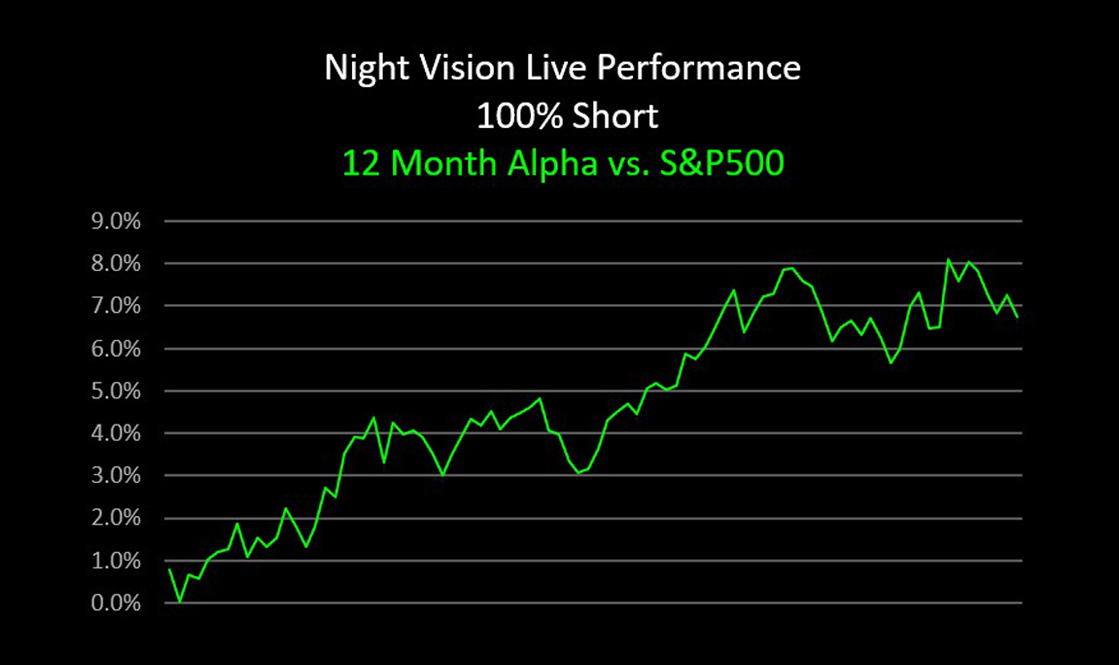
Latency and auditability bind before accuracy is discussed. Stovell AI's forecasting engine has run in production over eight years and outperformed the S&P 500 across a measured twelve-month period.
Healthcare
Engineered to HIPAA's technical safeguards for encryption, access control and audit logging. Document processing and clinical language work where the error cost is asymmetric.
Media and Entertainment
Content and voice systems at consumer scale. We rebuilt the Q™ Cultural Intelligence Platform for Sparks and Honey, delivering 24/7 availability and generative AI across three phases of every client briefing.
Oil and Gas
For NGL we built control-centre alarm triage using Isolation Forest and autoencoder models, cutting false alarms by over 70 percent and improving operator response by over 40 percent.
SaaS and Technology
For Centegix we benchmarked four YOLO variants and four OCR engines, reaching over 80 percent accuracy on both field detection and text extraction, delivered as a fixed-cost proof of concept.
Enterprise and Procurement
For Meta we built semantic search across 3.5 million supplier records using FastText embeddings and named entity recognition, improving search precision by over 40 percent.
AI and LLM Integration Services
Azumo provides LLM and AI integration services: connecting a working model to the data, the identity system and the systems of record a business already runs on.
Most AI projects fail here rather than at the model. A system that answers well in a notebook but cannot reach your data, respect your permissions, or hold latency under load has not been delivered, it has been demonstrated. Integration is where a pilot becomes a product, and it is the part almost every vendor quotes last and understands least.
Seven places integration breaks
Reaching your data without moving it
Permission-aware retrieval
Writing back to a system of record
Holding latency under real load
Where it runs, and what leaves your boundary
Cost and rate control
When the model changes underneath you
What we integrate with
Salesforce
SAP
ServiceNow
HubSpot
Microsoft Dynamics
NetSuite
Snowflake
Databricks
PostgreSQL
SharePoint
Google Workspace
Confluence
Jira
Zendesk
Slack
Twilio
REST and GraphQL
Webhooks
Model Context Protocol
SSO, SAML and OIDC
SCIM
row-level security
What to ask any integration partner
Can you run inside our VPC, and what does that cost compared with a managed endpoint?
How does retrieval respect the permissions our users already have?
What happens when a write to our CRM (for example) fails halfway through?
What is the cost per call at our expected volume, and what caps it?
Which model version are we pinned to, and what happens when it is deprecated?
Who is on call when it breaks at two in the morning?
We developed and deployed into production generative semantic search across 3.5 million records on enterprise infrastructure we did not control, and a forecasting platform that has held 24/7 availability for over eight years.
Highlighting Our AI Implementation Services Expertise:
Explore how our customized outsourced AI based development solutions can transform your business. From solving key challenges to driving measurable improvements, our artificial intelligence development services can drive results.
Our expertise also extends to creating AI-powered chatbots and virtual assistants, which automate customer support and enhance user engagement through natural language processing.
.avif)
NGL
Oil & Gas AI: Smarter Alarm Management for the Control Center
Talk to the AI Voice Agent We Built
Charli is a voice agent we built and trained on everything Azumo. It runs in production today.
Ask what we have built, who we work with, or whether we are SOC 2 certified. Charli answers you in real time, at the same standard of AI we ship for clients.


Their team consistently brings thoughtfulness, professionalism, and ownership, making them a valued extension of our internal team.
.avif)
Behind every huge business win is a technology win. So it is worth pointing out the team we've been using to achieve low-latency and real-time GenAI on our 24/7 platform. It all came together with a fantastic set of developers from Azumo.
.avif)
We’ve been working with Azumo since our founding. Their team has been great to work with. We built out a massive AI based data platform with their help. They can handle just about anything.

The work was highly complicated and required a lot of planning, engineering, and customization. Their development knowledge is impressive.

They know a lot about the products they build on and were very responsive. Their project manager broke down barriers and explained all the intricacies of the custom software development effort in a way that was easy to understand.

How to Evaluate an AI Development Partner
The security and compliance controls your AI data requires, paired with the delivery discipline that keeps the work moving, visible, and covered when plans change.
Security
Controls designed for enterprise buyers without turning every project decision into a compliance exercise.
SOC 2 Certified
Controls designed for enterprise buyers without turning every project decision into a compliance exercise.
GDPR & CCPA Compliant
GDPR and CCPA support for deletion, portability, and consent obligations.
HIPAA Ready
Systems engineered to HIPAA's technical safeguards for encryption, access controls, and audit logging.
Encrypted end to end
AES-256 protection in transit and at rest, across every environment.
AI Safety
Guardrails, evaluation, and audits that keep the AI dependable in production and catch problems.
Evals & fallbacks
Evaluation sets and fallbacks on every model call, so quality is measured and reported.
Grounding & guardrails
Answers grounded in your sources, with safety settings and moderation.
Injection defense
Prompt-injection defenses and data boundaries on user-facing surfaces
Daily AI code audit
An automated scan flags security, cost, and architecture risks before they reach production.
Delivery
Senior engineers who own delivery and keep it moving even as priorities change.
Senior oversight
VP Engineering, CTO, PM, and CSM coverage. You get a team, not a lone developer.
Proactive management
Daily standups and weekly reviews across priorities, tickets, and sprint health.
Built-in redundancy
A backup engineer already knows the application and can step in immediately.
Ownership without lock-in
Your code, your repositories, and documentation that stays usable after handoff.
Documented upfront
Security, compliance, access, and data handling addressed before work begins.
Evaluated before it ships
Behavior tested against eval sets, then monitored continuously in production.
Daily, Weekly Visibility
A consistent cadence for status, decisions, delivery risk, and engineering progress.
What to ask any AI Development partner
What will you show us before we sign, and is it running or is it a deck?
Who owns the model weights, the training data and the code when the engagement ends?
If we want to move off your model choice in a year, what breaks?
Do you run evaluations, and can we see the results rather than the summary?
What happens to our system when the model version changes underneath it?
Who is on the team, and who covers the work when that person is unavailable?

.avif)