.svg)
.png)


.avif)
Most AI projects do not fail because the model was wrong. They fail before the model is ever the question.
VentureBeat reports that 73% of AI pilots never reach production. The companies in that 73% rarely got there because their model underperformed on a benchmark. They got there because the foundation underneath the model was not ready, and nobody noticed until the work was already in flight.
We have shipped AI systems across healthcare, financial services, advertising, gaming, industrial IoT, and big tech. The pattern repeats. The projects that ship and the projects that quietly die start to look indistinguishable in the discovery phase. They diverge when the foundation gets tested. And the foundation has five parts.
This post explains what those five parts are, what going wrong looks like in each, and how to know where your organization sits before you commit a budget.
The pattern: it is rarely the model
McKinsey estimates AI could contribute up to $2.4 trillion annually to global output by 2030. The companies that capture a meaningful share will not be the ones with access to better foundation models. Frontier models are increasingly commoditized. Access is not a moat.
The moat is whether you can deploy them, maintain them, defend them, and turn their outputs into measurable business results. Each of those depends on infrastructure, judgment, and discipline that exist outside the model.
We have worked on engagements where the model selection took 4% of the timeline and 60% of the executive attention. The other 96% of the timeline, where data pipelines were rebuilt, integration patterns were figured out, change-management was wrestled, and risk controls were designed, was where the project actually got won or lost.
That misallocation of attention is the failure mode in plain English.
Pillar 1: Strategy
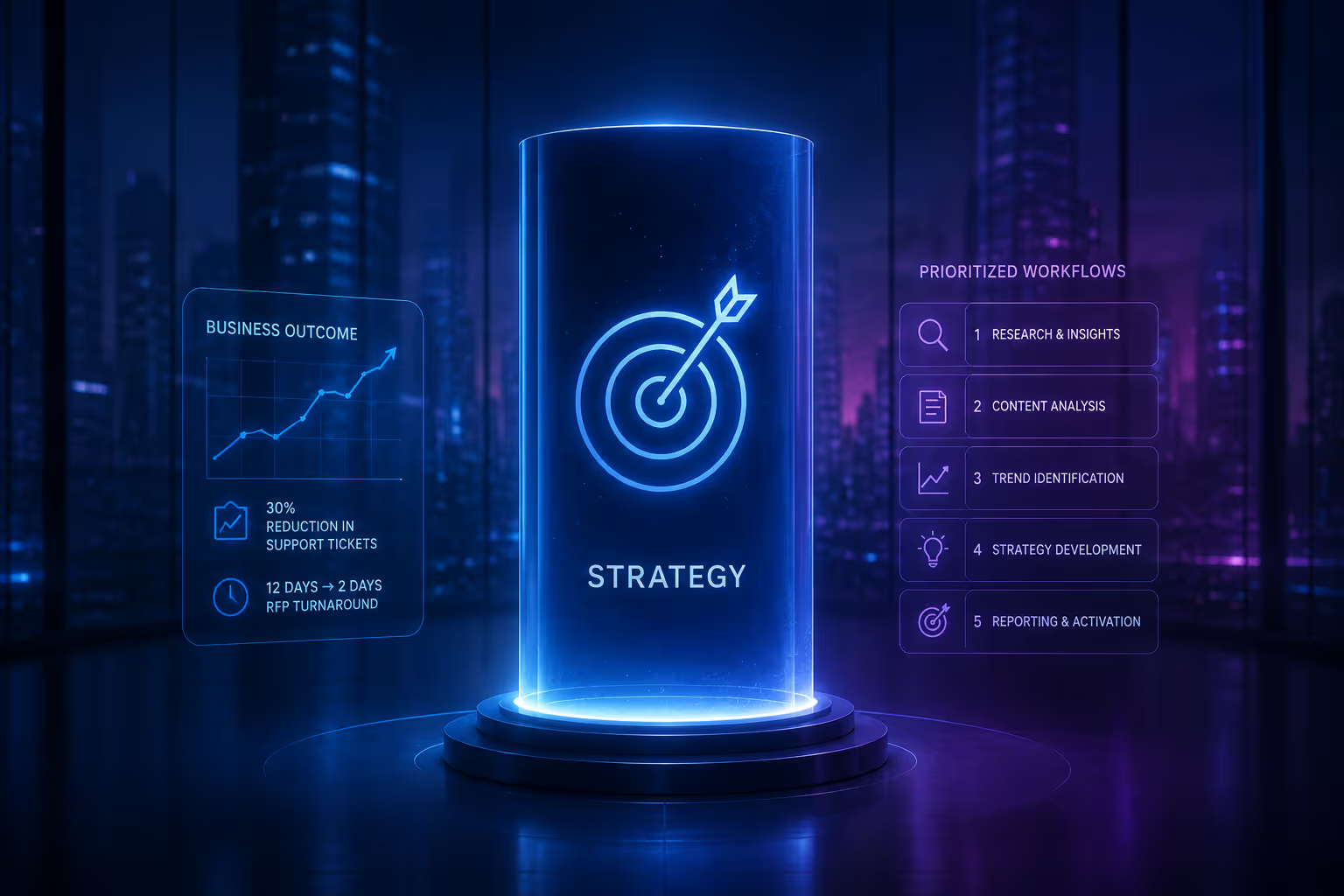
The question: Is the AI use case tied to a specific, measurable business outcome, or is it AI for AI's sake?
The fastest way to spot an AI initiative that will not ship is to ask the sponsor what changes if it works. If the answer is "we will have AI in our product" or "we will be using GenAI," the strategy pillar is weak. If the answer is "support tickets drop by 30%" or "RFP turnaround drops from 12 days to 2," the strategy pillar is doing its job.
The work we did with Sparks & Honey, the Omnicom-owned cultural intelligence unit, is a clean example. Their Q platform had a specific brief: integrate generative AI in multiple phases, each tied to a defined cultural-intelligence workflow. The strategy work was not "let's add AI." It was "here are the five workflows where AI removes a real bottleneck." That clarity is what made the multi-phase rollout deliverable.
What going wrong looks like: a portfolio of AI experiments where no single one has a named business owner accountable for an outcome.
Pillar 2: Data
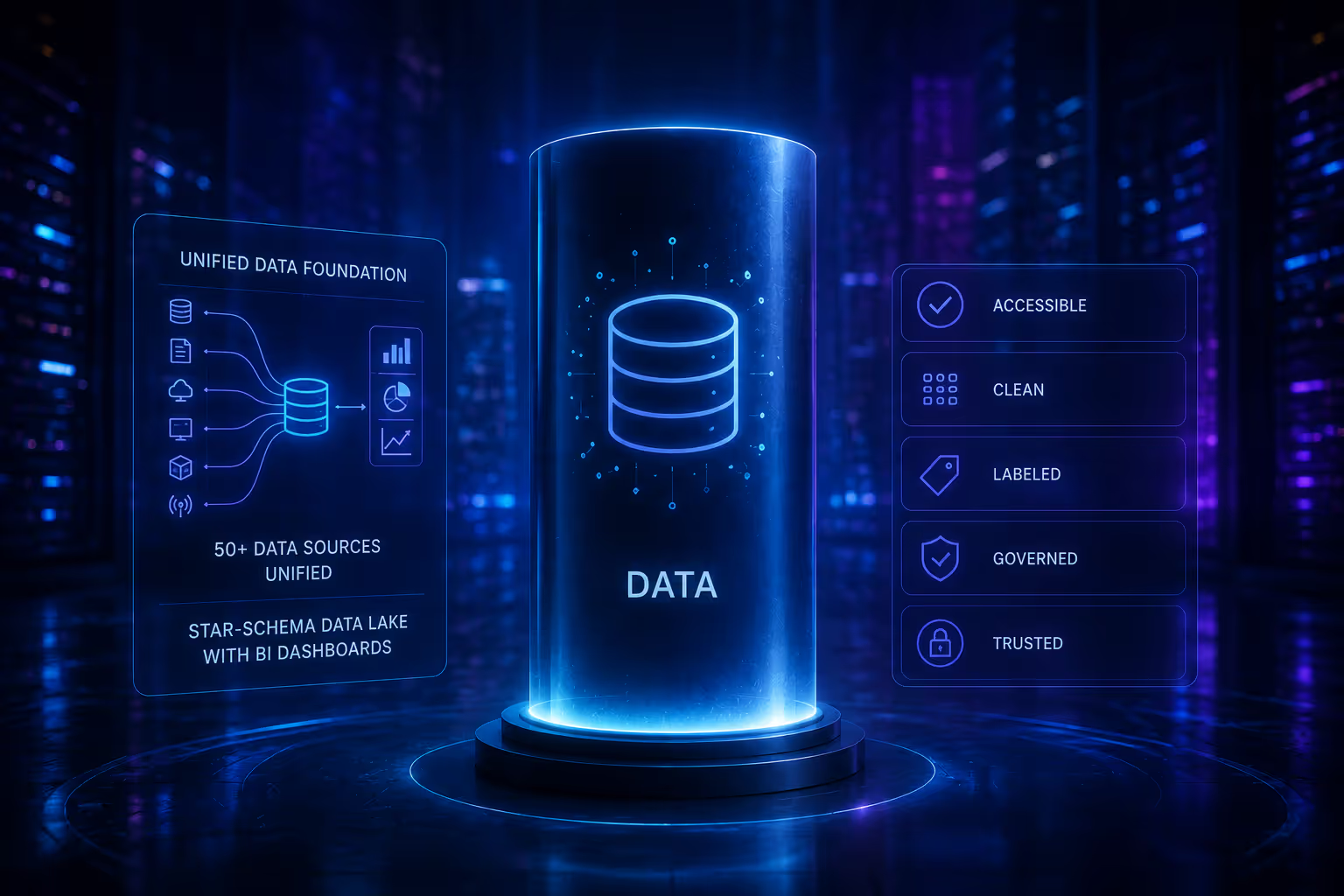
The question: Is the underlying data accessible, clean, and labeled enough to train or ground a model?
This is where most projects discover the timeline they planned was the timeline for the easy half. The hard half is the months of pipeline work that has to happen before the model can do anything useful.
Our engagement with Bento for Business is what data readiness done right looks like. Before any AI conversation, they unified 50+ data sources into a star-schema data lake with BI dashboards on top. That unified layer is what makes downstream AI possible. Without it, every model proposal becomes a debate about which version of the truth to feed it.
We have also worked with Franklin Park, where the data engineering work was the prerequisite for the application modernization that came after. Same pattern: get the data right, and the AI conversation becomes tractable. Skip the data, and AI is the loudest symptom of a foundation problem you have not yet named.
What going wrong looks like: a model that performs well on the cleaned sample dataset and poorly the moment it touches production data.
Pillar 3: Technology
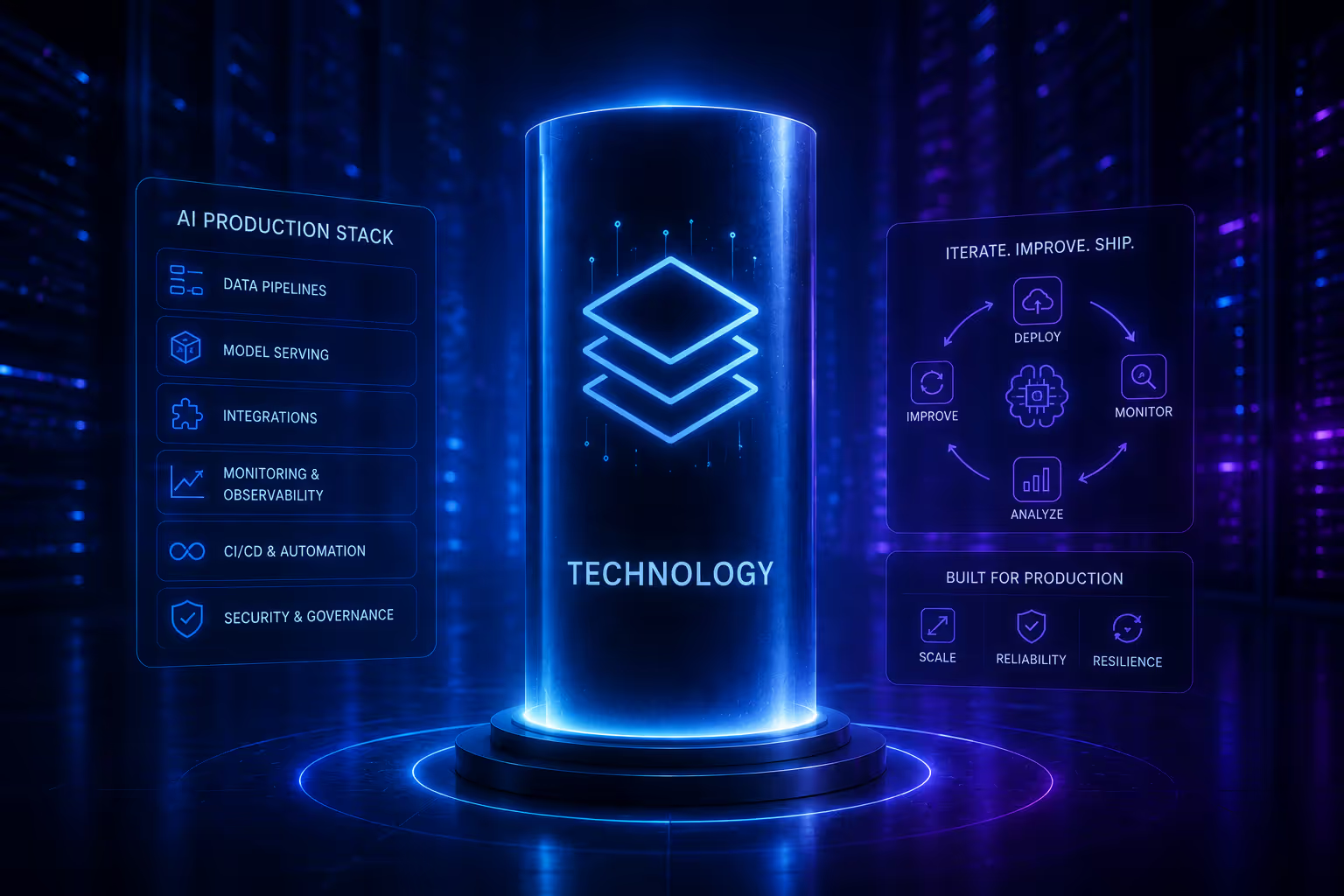
The question: Does our stack support deploying, monitoring, and iterating on AI workloads in production?
Production AI is not a notebook in a corner. It is a system that needs to handle real traffic, observe its own behavior, retrain or refresh, integrate with the rest of the company, and roll back when something goes wrong.
Our work with Meta on semantic search across 3.5 million supplier records is an example of the technology pillar at scale. The engineering challenge was not GPT-2.0 itself. It was making semantic search fast, reliable, and integrated across a database that was already in active use. That kind of work pre-dates the current AI cycle by years, which is part of why we cite it: the technology pillar is the same problem now as it was before the term GenAI existed.
A more recent example: our CENTEGIX work, where a YOLO and OCR computer vision pipeline ships embedded in a school safety check-in product. Production CV with real users, real latency requirements, real failure modes. That is what the technology pillar in motion looks like.
What going wrong looks like: a working prototype that takes a quarter to deploy because the underlying stack was not built for AI workloads.
Pillar 4: Talent
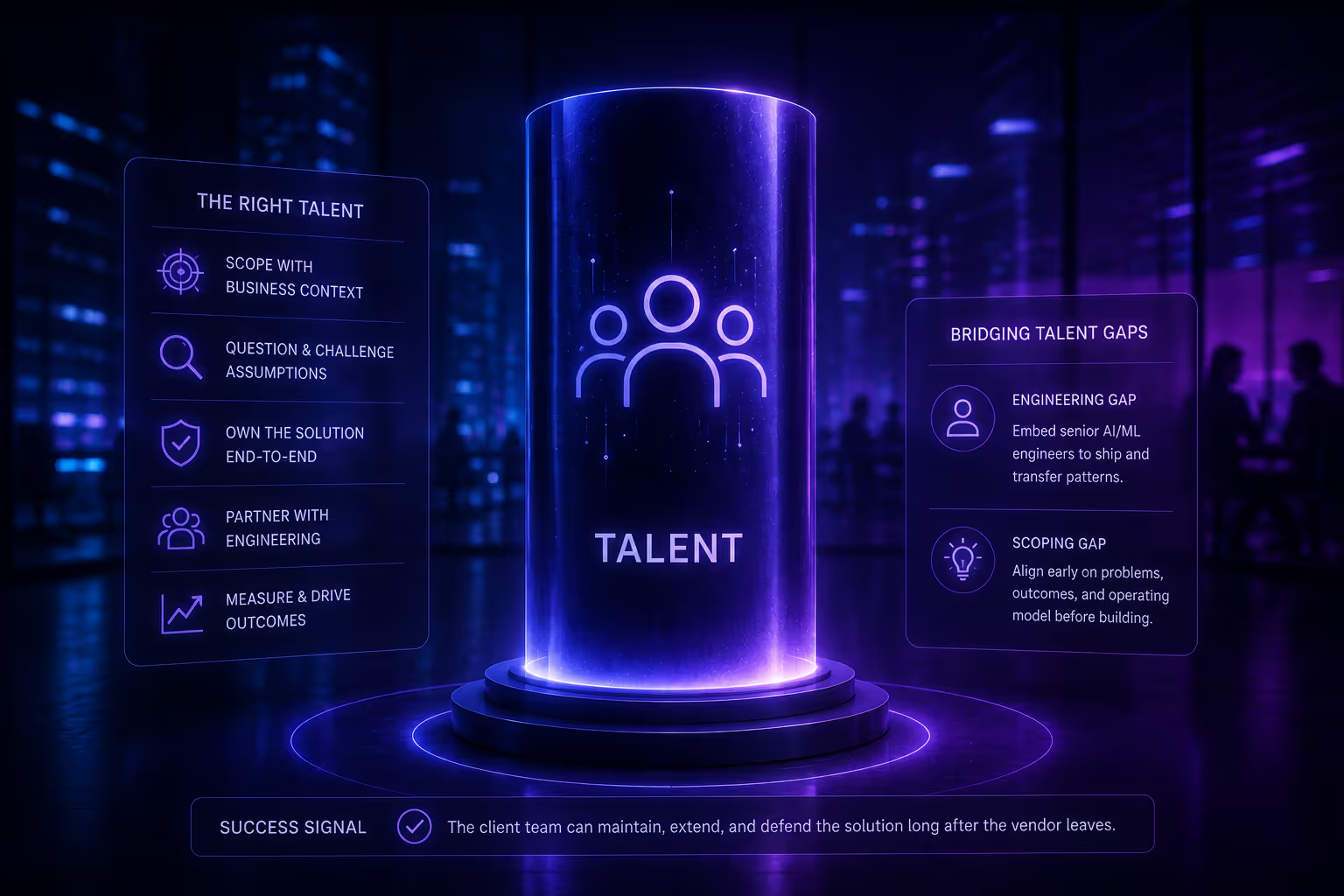
The question: Do we have in-house people who can scope, scrutinize, and own AI work, even if they are not doing the building?
This is the pillar most underestimated by buyers who think AI talent means hiring ML engineers. The talent that actually predicts success is the in-house judgment to scope the work well, push back on the wrong solution, and own the operating model after launch. The engineering bench can be ours. The judgment cannot.
We see two flavors of talent gap. The first is "we have engineers, but none of them have shipped AI in production." We bridge that with AI/ML engineer staffing, where senior engineers plug into the client team for the duration of the engagement, transferring patterns as they ship work. The second flavor is "we do not have anyone who can scope the work well, so the requirements keep shifting." That one needs to be addressed before the build, not during it.
What going wrong looks like: a successful pilot that nobody on the client side can maintain, extend, or defend in a steering committee meeting after the vendor leaves.
Pillar 5: Risk
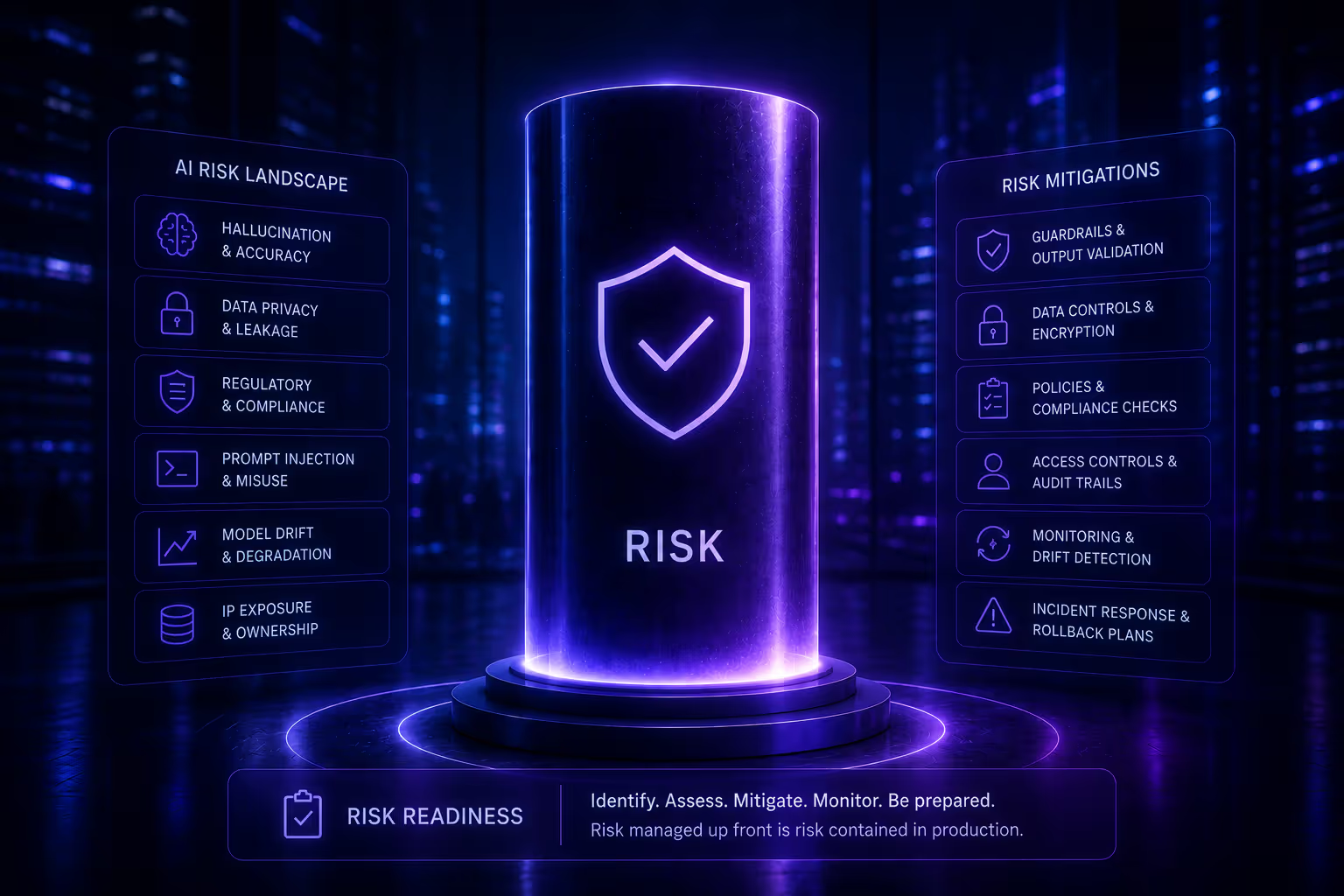
The question: Have we evaluated the AI-specific risks that apply to our use case, and do we have mitigations?
AI introduces failure modes the rest of the stack does not. Hallucination, IP exposure, regulatory drift, prompt injection, data leakage, model behavior drift. A risk pillar that has been thought through has a written answer to each of these. A risk pillar that has not, has none.
Regulated industries surface this pillar first. Our work with Angle Health on a GPT-powered RFP-to-quote pipeline in health insurance had to land the risk question before the model question. What happens if the model hallucinates a coverage line? What happens if PHI ends up in a prompt log? The strength of the engagement was that those questions had answers before the build started, not after.
We also see the inverse: an AI project that performs technically and ships, then triggers an audit six months later because the risk pillar was an afterthought. Unwinding that is more expensive than building it in.
What going wrong looks like: a working production AI system that none of legal, compliance, or security have signed off on, with no plan for what happens if the model misbehaves.
How to know where you stand
Five pillars, each scored 0 to 10. The overall score and the gap pattern across pillars predict more than any single answer.
We built an AI Readiness Assessment that returns a personalized PDF roadmap with your scores, peer benchmarks, and a prioritized 90-day plan. It takes 5 minutes. It is not a sales tool. It is a diagnostic, and the roadmap is useful regardless of whether you ever talk to us.
The pattern we see most often: high Strategy, mid Technology, low Data, mid Talent, neglected Risk. That profile predicts a project that will look like it is moving fast for the first 3 months and stall in months 4 through 8 when the data and risk pillars come due. We would rather you find out in 5 minutes than 5 months.
When you are ready
There are several ways we work with companies that find themselves in the 73%.
- A scoped strategic AI engagement to figure out which use case is worth funding before any build begins. Useful when the Strategy pillar is the dominant gap.
- A data engineering engagement to clean and structure the foundation so the AI work on top of it actually performs. Useful when Data is the dominant gap, which it often is.
- A RAG or grounded chatbot build for organizations whose data is in good enough shape and who want a high-leverage first ship.
- AI/ML engineer staffing when the team has the right judgment but not the production AI bench.
- Hello, our production AI receptionist, for customer-facing voice use cases. We run it on our own infrastructure. The phone number on our homepage routes to it.
We have been delivering AI and data engineering for years. We are rated 4.9 out of 5 across 376 client reviews on Clutch and G2. The clients above are a small slice of the portfolio. We pick from a larger menu based on what the engagement actually needs.
If you want a faster read on where to start, take the AI Readiness Assessment. The roadmap arrives in your inbox in under a minute.
Frequently Asked Questions

About the Author:
Founder & CEO | Azumo
Chike Agbai, Founder & CEO of Azumo, leads a nearshore software development firm that builds intelligent applications using top-tier Latin American talent.

.avif)