.svg)
.png)


.avif)
The AI SDR market is growing fast, reaching $4.39 billion in 2025 and expected to keep rising sharply through 2030. More B2B sales teams are now using AI tools to handle outbound work that used to take hours of manual effort.
At the same time, not every tool that calls itself an “AI SDR” is actually the same. Some platforms use real AI agents that can run parts of the sales process on their own. Others are just basic email automation tools with an AI layer added on top.
This makes choosing the right tool more difficult than it looks.
In this guide, we break down the best AI SDR tools for outbound sales in 2026. You will see where each tool fits, what it does well, and how to pick the right one for your team.
What Is an AI SDR Tool?
AI SDR software helps with the same work that human SDRs used to do manually. It finds leads, researches accounts, writes outreach messages, runs follow-ups, and passes qualified leads to sales reps.
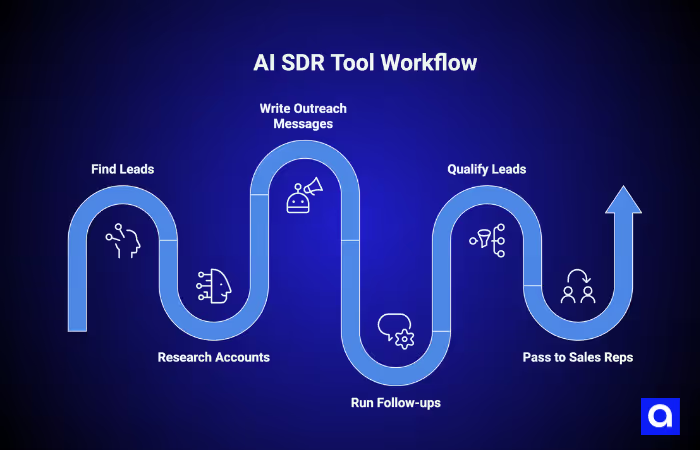
Today, not all AI SDR tools work the same way. Some are fully autonomous and can run outbound campaigns with little human input. Others are assistive tools that help sales reps write better messages and work faster inside existing workflows.
The main difference from traditional sales automation is flexibility. Older tools follow fixed if-then rules. AI SDR tools can understand context, respond to prospect behavior, and adjust outreach based on real-time signals instead of rigid sequences.
AI SDR vs Traditional Sales Automation Tools
Here is a simple way to understand the difference.
A traditional sales automation tool follows a fixed sequence. For example, it will send Email #3 on a set schedule, even if the prospect never opened the first two emails.
An AI SDR works differently. It looks at what the prospect is actually doing. If someone ignores emails but becomes active on LinkedIn, the AI can adjust and switch the outreach channel instead of continuing the same sequence.
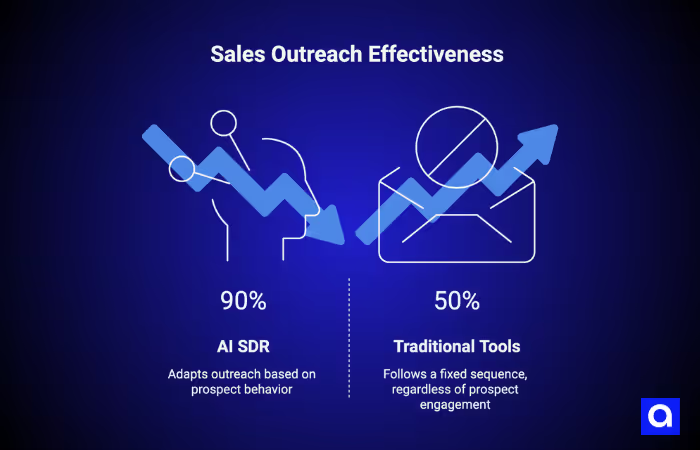
Traditional tools mainly execute pre-set steps. AI SDR software goes further. It analyzes signals, adapts the outreach in real time, and personalizes messages based on behavioral and company data.
Modern AI SDR platforms also handle compliance tasks like opt-outs in line with GDPR and CCPA rules, which is something many older automation systems do not manage well.
What Are the Key Benefits of AI SDR Software
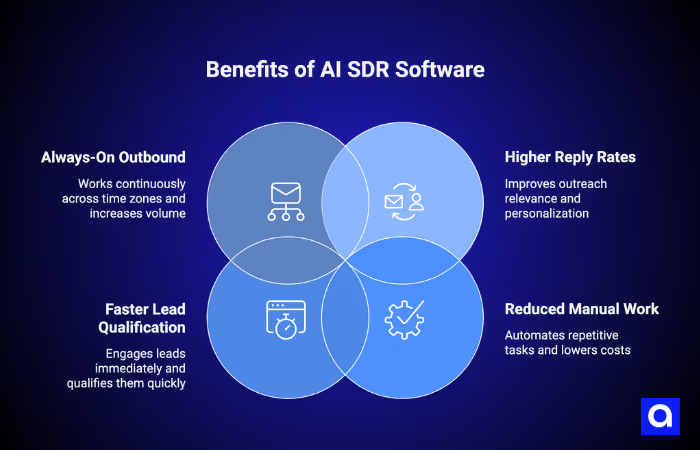
AI SDR tools change the results you can get from outbound sales. They also change how much time and effort your team needs to spend. Here are the main benefits.
Higher Reply Rates
AI SDRs help improve reply rates by making outreach more relevant. Signal-based outreach can reach 5 to 15% reply rates, compared to 1 to 2% for generic cold emails.
The improvement comes from better personalization. Instead of using the same template for every prospect, AI tools can reference things like company news, funding updates, or tech stack details. This makes messages feel more relevant and less like mass outreach.
Reduced Manual Work
AI SDR tools take over many repetitive tasks such as list building, data enrichment, writing emails, setting follow-ups, and updating CRM records.
This also impacts cost. According to DigitalApplied, the cost per qualified opportunity drops from $487 in human-only SDR teams to $224 in hybrid AI and human setups. That is a significant reduction in overall sales cost.
Faster Lead Qualification
Speed matters in sales. The average lead response time is around 47 hours, but responding within minutes can greatly increase conversion rates.
AI SDR tools can engage leads immediately after they come in. They ask qualifying questions in real time and then send only sales-ready leads to human reps. This helps teams focus on the right opportunities faster.
Always-On Outbound
AI SDRs work continuously without breaks, time zones, or downtime.
This also improves ramp-up speed. Data from DigitalApplied shows that the time to first meeting drops from 142 days for a new SDR hire to about 24 days with AI support. At the same time, outbound volume can increase from around 1,150 to 7,400 actions per month per rep when AI is used alongside humans.
Key Features to Look for in the Best AI SDR Tools for Sales Automation
Not all AI SDR tools deliver the same results. Before choosing a platform, it helps to understand which features actually improve outbound performance.
- AI-powered personalization: Uses real signals like LinkedIn activity, company news, funding, and hiring data to create relevant messages. Basic mail merge personalization is not enough.
- Multi-channel outreach (email, LinkedIn, voice): Runs coordinated sequences across multiple channels instead of relying on email alone. This improves reach and response rates.
- Lead enrichment and data accuracy: Keeps contact and company data up to date. Better data leads to higher deliverability and fewer wasted outreach attempts.
- CRM and API integrations: Syncs directly with tools like Salesforce or HubSpot. Automatically updates lead status and logs activity without manual work.
- Automation vs true AI capabilities: Some tools only follow fixed rules. Real AI tools adapt based on prospect behavior and improve over time using feedback.
- Analytics and performance tracking: Tracks key metrics like open rates, replies, and meetings booked. Helps teams understand what messaging and channels perform best.
How Azumo Helps You Build Custom AI SDR Agents
Off-the-shelf AI SDR tools work well for simple outbound workflows. But when a company has a specific ICP, complex qualification steps, proprietary data, or a sales process that does not fit a standard SaaS platform, a custom AI SDR agent can be a better fit.
At Azumo, we build and manage custom AI SDR agents designed around your sales process. Using AI agents, generative AI, and NLP (natural language processing), we create systems that can research leads, generate personalized outreach, manage follow-ups, qualify prospects, book meetings, and update your CRM automatically.
Our agents can connect with your existing tools through APIs or MCP, including CRMs, email platforms, calendars, and internal systems. They can also work across email, chat, and voice channels while adapting to your workflow and messaging style.
Unlike many self-serve AI SDR platforms, we also manage the system for you. Our team handles setup, integrations, updates, and ongoing support, so your sales team can focus on selling instead of managing software.
What Our AI SDR Agents Can Do
- Research and enrich leads
- Generate personalized outreach
- Run follow-up sequences
- Handle replies and qualification
- Book meetings automatically
- Sync activity with your CRM
If your team has outgrown standard AI SDR tools, contact us to see how we can build a custom AI SDR agent for your sales process.
11 Best AI SDR Tools for Outbound Sales in 2026
Below are 11 tools across the full spectrum of AI SDR capability. Each profile covers what the tool actually does, who it fits best, and the honest tradeoffs. So, what are the best AI SDR tools?
1. Regie.ai
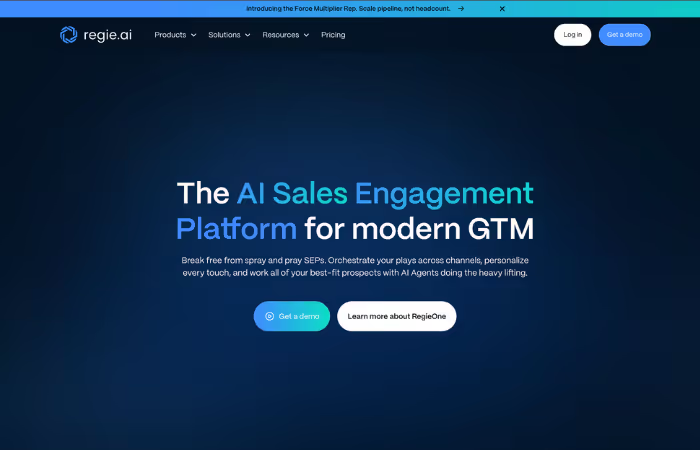
Regie.ai is a generative AI platform that improves outbound sales by helping teams create better messaging on top of existing sales engagement tools like Outreach and Salesloft. It does not replace these platforms. Instead, it makes them more effective by improving content quality and adding automation options.
Key Features
- AI-generated sequences for email, calls, and LinkedIn
- Integrations with Outreach and Salesloft
- “Auto-Pilot” mode for autonomous outreach (enterprise tier)
- Brand voice customization
- CRM integrations with Salesforce and HubSpot
Pros
- Produces scalable outreach content that stays on brand
- Strong integrations with major sales engagement platforms
- Advanced automation option for enterprise teams
Cons
- High pricing, mainly suited for larger companies
- Can be complex to set up and learn
- Works mainly with Outreach and Salesloft
Best For: It’s great for enterprise sales teams already running Outreach or Salesloft who want to add AI-assisted prospecting without replacing their existing SEP.
2. AiSDR
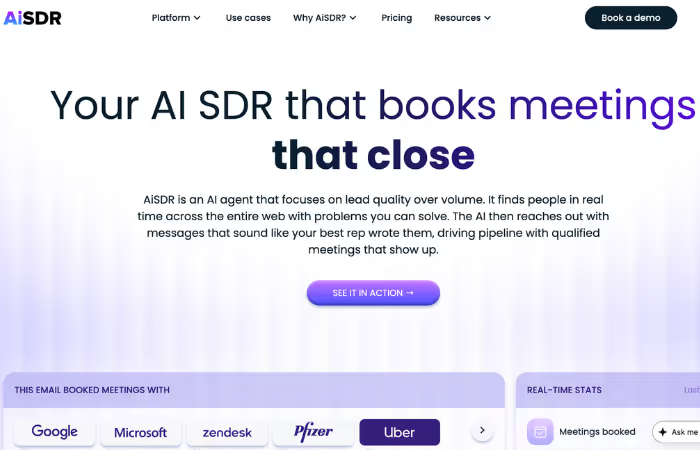
AiSDR takes a more transparent approach in a space where pricing is often unclear and focuses on email and LinkedIn outreach. Its main strength is reply handling, where the AI can continue conversations, respond to objections, and book meetings in simple cases without human input.
Key Features
- Access to 700M+ contact database
- AI-generated email and LinkedIn outreach
- Automated reply handling and meeting booking
- Bounce checking and inbox warm-up
- Integrations with HubSpot and Salesforce
- Volume-based pricing instead of per-seat
Pros
- Clear, transparent pricing that works for growing teams
- Strong HubSpot integration
- Can manage and continue basic conversations automatically
Cons
- No voice outreach or advanced research capabilities
- Limited market validation compared to larger tools
- Reply quality can drop in more complex or technical conversations
Best For: HubSpot-first B2B teams at the growth stage who want an affordable AI SDR layer with solid reply handling should definitely consider AiSDR.
3. Artisan AI
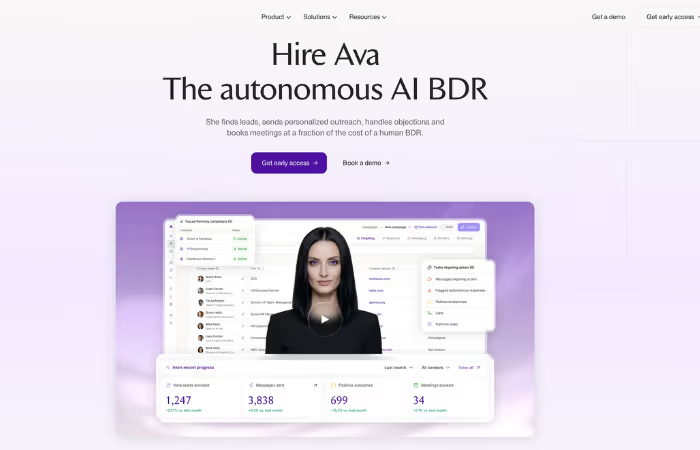
Artisan AI's “Ava” agent is designed as a full replacement for a human SDR. It can run the entire outbound process, from finding leads to sending outreach. Teams can use it in full autopilot mode or in a copilot mode where humans stay involved. It is positioned more as an autonomous sales agent than a traditional sales tool, which makes it one of the more aggressive AI SDR platforms in the market.
Key Features
- 300M+ contact database with intent-based targeting
- AI-generated email sequences by industry and role
- Autopilot and copilot operating modes
- Built-in email deliverability management
- CRM integrations for syncing data
Pros
- Built as a true agentic AI system, not a traditional tool with AI added on
- Large proprietary contact database
- Autopilot mode enables fully hands-off outbound workflows
Cons
- LinkedIn automation was restricted in early 2026
- High pricing compared to the feature set
- Fully automated outreach can convert less than human-reviewed campaigns
Best For: Artisan is perfect for enterprise companies with a validated outbound motion that want to experiment with fully autonomous prospecting.
4. Lavender
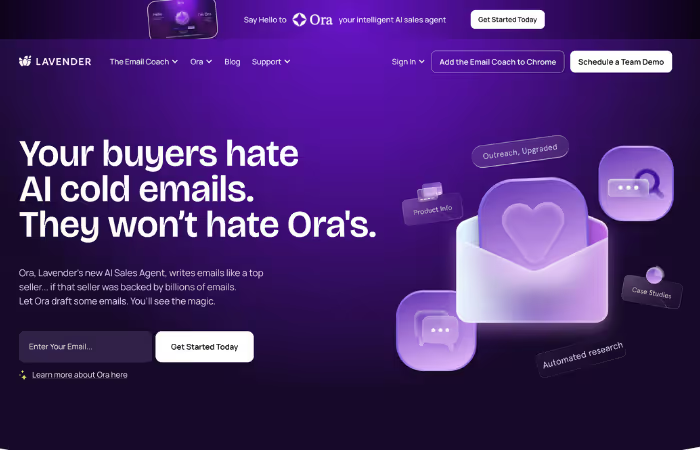
Lavender is the category leader in AI email coaching. It is not an autonomous SDR. It is an intelligent co-pilot that lives inside Gmail and Outlook, scoring your emails in real time and coaching reps toward higher reply rates as they write.
Key Features
- Real-time email scoring (0 to 100)
- Subject line optimization and spam detection
- Prospect insights (LinkedIn data, company news, job changes)
- Mobile email preview
- Team coaching and performance dashboards
- Works inside Gmail, Outlook, Salesloft, Outreach, HubSpot, and Apollo
Pros
- Reported 2 to 3x higher reply rates for users
- Affordable pricing plans per user per month
- Helps SDRs improve writing skills over time through live feedback
Cons
- Not a full AI SDR tool (no database or outreach sending)
- Needs to be used alongside other prospecting and sending tools
- Limited to email optimization only
Best For: SDR teams that want to measurably improve cold email effectiveness at low cost, especially during SDR onboarding, usually choose Lavender.
5. Smartlead.ai
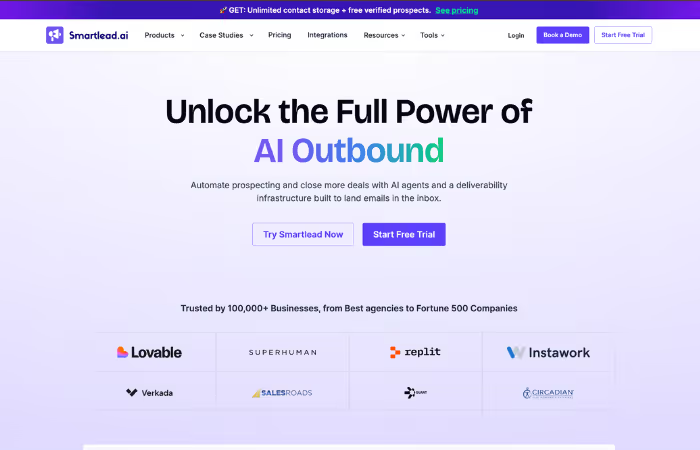
Smartlead is focused on one core goal: helping cold emails land in primary inboxes at scale. It is not primarily a prospecting or AI copywriting tool. Instead, it works as an infrastructure layer that supports high-volume outbound without damaging the domain reputation.
Key Features
- Unlimited mailbox support with automatic inbox rotation
- Built-in email warm-up system
- AI-based sending logic that adjusts timing and volume
- Unified inbox for replies across multiple accounts and clients
- SmartAgents layer for automated outreach
- SmartProspect data add-on
- CRM sync and webhooks (available on Pro plans and above)
Pros
- Strong email deliverability performance
- Supports unlimited inboxes at a low monthly cost
- Flexible setup for agencies running multiple campaigns
Cons
- AI-generated emails can feel generic
- Mainly email-focused with limited multi-channel support
- Not designed for lead generation or prospect discovery
Best For: If you’re an agency or have high-volume outbound teams that already have lead lists and need infrastructure to send at scale, consider this option.
6. Apollo.io
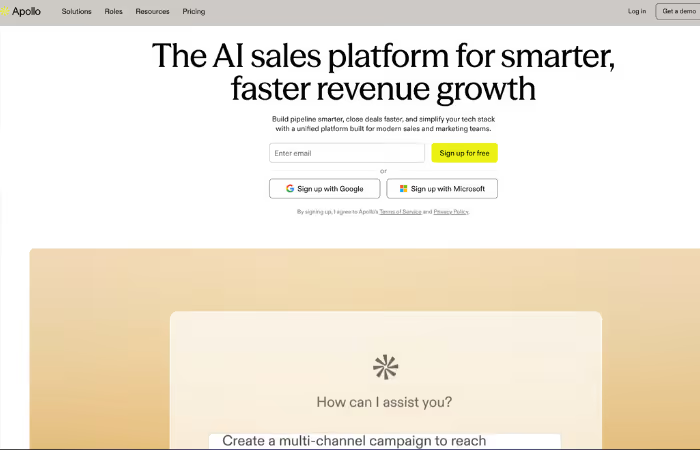
Apollo.io is a data-first outbound platform that combines a large contact database with built-in email sequencing. It is often used as an entry point for SMB and mid-market teams that want an all-in-one solution for prospecting and outreach at a relatively low cost. It also helps teams move faster by removing the need for separate data and sequencing tools, which simplifies the outbound stack.
Key Features
- 265M+ verified contact database
- AI-powered email sequence builder with personalization
- Multi-channel outreach (email, LinkedIn, and calls)
- Intent signals and lead scoring
- Chrome extension for LinkedIn prospecting
- Native integrations with Salesforce and HubSpot
Pros
- Strong value for data plus sequencing
- Combines multiple tools into one platform
- Easy to set up and simple for new teams to adopt
Cons
- Data quality can be inconsistent in some segments
- Deliverability is weaker compared to specialized email tools
- Analytics depth is limited for enterprise-level reporting
Best For: Apollo is great for SMB and mid-market sales teams that want data + sequencing in one affordable platform.
7. Outreach
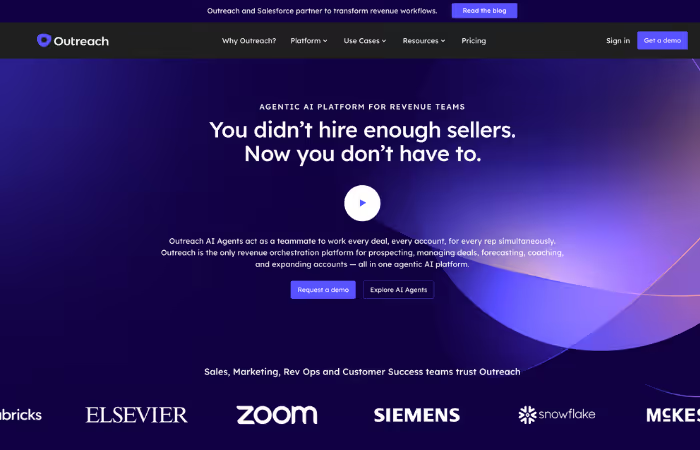
Outreach is a leading enterprise sales engagement platform built for large, structured sales teams. It focuses on managing outbound at scale with strong workflow control, reporting, and team visibility. It is most commonly used by organizations with dedicated RevOps and complex sales processes. It also acts as a central system where SDR activity, communication, and performance are managed in one place.
Key Features
- Multi-channel sequencing (email, LinkedIn, calls, tasks)
- AI-powered email drafting (Smart Email Assist)
- Kaia AI conversation intelligence for call insights
- Smart Account Planning tools
- Advanced pipeline and performance analytics
- Enterprise-grade security and compliance (SOC 2, GDPR, role-based access)
Pros
- Very strong governance and analytics for large teams
- Deep CRM integration built for enterprise environments
- Built-in AI insights for conversations and performance tracking
Cons
- Expensive and complex for small teams
- AI features feel layered on top of older architecture
- Requires 2 to 4 weeks of setup with RevOps support
Best For: This is perfect for 100+ seat enterprise sales organizations with dedicated RevOps teams.
8. Salesloft
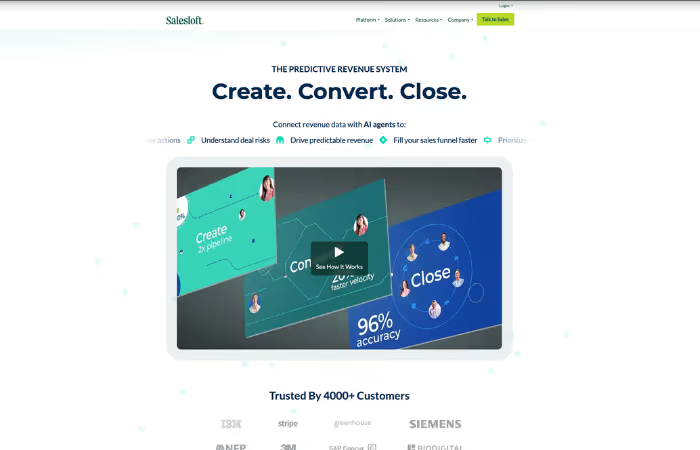
Salesloft is best known for cadence management and structured outbound execution. After its December 2025 acquisition by Clari, it has been moving toward a combined revenue intelligence and sales engagement platform. Its AI feature, “Rhythm,” helps prioritize seller actions based on buyer engagement signals so reps know what to do next.
Key Features
- Multi-channel cadences (email, calls, LinkedIn, direct mail)
- AI Rhythm for next-best-action recommendations
- Conversation intelligence with call recording and transcripts
- Pipeline forecasting (enhanced after Clari acquisition)
- Manager coaching and team performance dashboards
Pros
- Strong cadence management at enterprise scale
- Built-in conversation intelligence for coaching and analysis
- Widely used by large companies like IBM, Google, and LinkedIn
Cons
- AI features are added on top of a legacy system, not built AI-first
- High pricing for small teams
- Some uncertainty around product direction after acquisition
Best For: If you have mid-to-large teams that want structured cadence management with coaching insights, consider Salesloft.
9. Gong
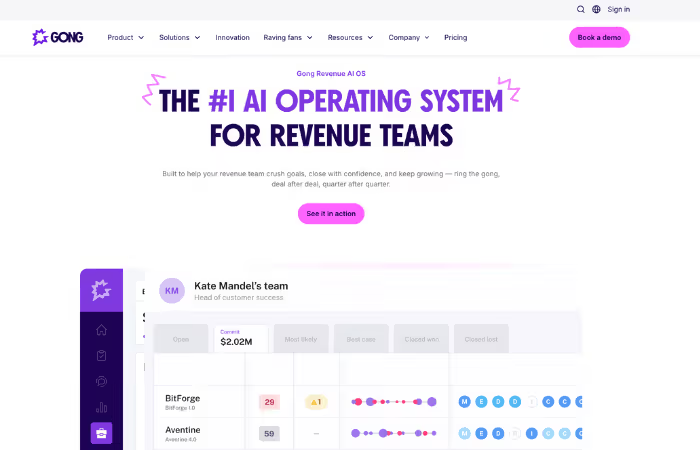
Gong is a revenue intelligence platform rather than a traditional AI SDR tool. It does not handle prospecting or outreach directly. Instead, it records, transcribes, and analyzes sales conversations to help teams understand what is working and improve overall performance. It is typically used alongside outbound tools, not as a replacement for them.
Key Features
- AI-powered call recording and real-time transcription
- Conversation analytics (talk time, keywords, sentiment)
- Deal intelligence and risk detection alerts
- AI coaching dashboards for reps and managers
- Revenue forecasting tools
- Gong Agents for follow-ups and pipeline updates
- Gong Engage for outbound sequencing
Pros
- Best-in-class conversation intelligence and coaching insights
- Strong visibility into deal risk and pipeline health
- Integrates with most major CRMs and sales engagement platforms
Cons
- Expensive for smaller teams (platform fee + per user fee)
- Not designed for prospecting or lead generation
- Gong Engage can be harder for teams to fully adopt
Best For: Mid-to-large sales organizations prioritizing rep coaching, deal visibility, and forecasting, best paired with a dedicated engagement tool, can consider this one.
10. Exceed.ai
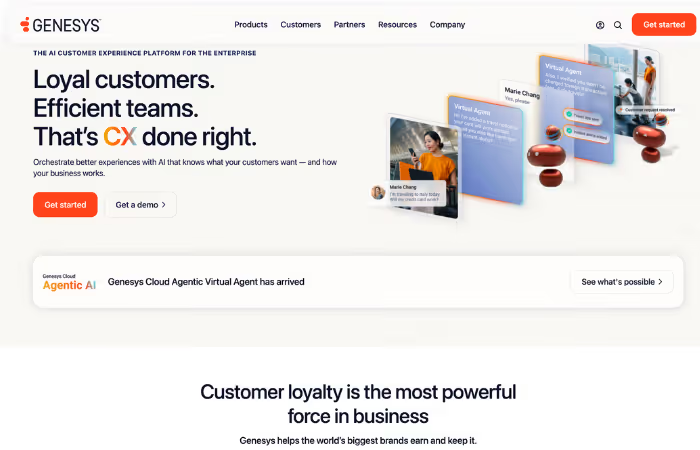
Exceed.ai (by Genesys) is a virtual AI sales assistant built for a specific, high-value use case: making sure every inbound lead gets an immediate, intelligent response around the clock. Among the AI SDR best chat tools, Exceed.ai stands out for its natural two-way conversations across email, webchat, and SMS.
Key Features
- AI-powered two-way conversations via email, webchat, and SMS
- Intelligent response processing (handles objections, FAQs, out-of-office replies)
- Automated lead qualification based on user-defined criteria
- Meeting scheduling directly on rep calendars
- CRM auto-updates (Salesforce, HubSpot, Marketo)
- Lead reactivation and dynamic nurturing
Pros
- Responds to inbound leads in seconds
- Handles objections and qualifications naturally
- Users report ~40% engagement rate improvement
Cons
- Not designed for cold outbound
- Can struggle with complex technical questions
- Enterprise pricing (~$2,000/month+) limits SMB accessibility
Best For: Marketing and sales teams with significant inbound lead volume who lose conversions due to slow response times.
What Are the Limitations of AI SDR Tools to Look Out For?
AI SDR tools can improve outbound performance, but they also come with real limitations. Before investing, it is important to understand where they can fall short.
- Deliverability risk at scale: AI makes it easy to send much higher volumes of email. This can damage the domain's reputation if not managed carefully. Many teams see a performance drop within a few months because emails stop reaching inboxes.
- Lower quality with full automation: Fully autonomous outreach can become repetitive and easy to spot. Buyers can recognize generic AI messages, which leads to lower reply rates over time.
- Struggles with complex ICPs: AI works best with clear, consistent target audiences. When your ICP includes very different personas or niche segments, personalization becomes less effective.
- LinkedIn automation risk: Tools that rely heavily on LinkedIn automation can face restrictions or account limits. This can remove a key outreach channel without warning.
- Compliance and legal requirements: Regulations like GDPR and CCPA require proper consent and opt-out handling. Poor setup can create legal and operational risks.
- Heavy reliance on data quality: AI output depends on the quality of your data. If your contact or company data is outdated or incorrect, your outreach will miss the mark and reduce conversions.
Human SDR vs AI SDR: Key Differences, Use Cases, and Which One Is Better for You
AI also brings consistency. It can run outreach at the same level every day, while human performance can vary due to workload, fatigue, or turnover.
The best results come from combining both.
AI SDRs handle high-volume tasks like research, prospecting, and first outreach. Human SDRs focus on deeper conversations, complex objections, and building relationships across multiple stakeholders.
This way, AI takes care of the repetitive work, and human reps can spend more time where it actually makes a difference.
Future Trends in AI SDR and Sales Automation
AI SDR tools are evolving quickly. Here are the main trends shaping outbound sales in 2026 and beyond.
- Agentic AI becomes the standard: The shift is moving from rule-based automation to AI that can make its own decisions. These systems choose who to contact, when to reach out, which channel to use, and what message to send based on real-time data.
- Multi-agent systems are emerging: Instead of one AI doing everything, teams are starting to use multiple specialized agents. One handles lead generation, another handles qualification, and another focuses on outreach. This improves performance and flexibility.
- More consolidation across the market: Larger platforms are starting to acquire AI SDR tools and build their own solutions. This is leading to fewer standalone tools and more all-in-one platforms that combine data, outreach, and analytics.
- Signal-based outreach becomes the baseline: Data like intent signals, job changes, and tech stack insights are now expected. The teams that win will be the ones that combine accurate targeting with the right timing.
How We Chose the Best AI SDR Tools for Sales Teams in 2026
To build this list, we reviewed and compared 30+ AI SDR and sales automation tools across the market. The goal was to focus on real-world performance, not just feature lists or marketing claims.
We evaluated each tool based on:
- Real-world use cases: How well the tool supports prospecting, outreach, reply handling, and lead qualification in actual sales workflows
- Pricing transparency and total cost: Clear pricing models and realistic long-term cost, not just entry-level plans
- Integration depth: Compatibility with major platforms like Salesforce, HubSpot, Outreach, and Salesloft
- Deliverability and compliance: Email infrastructure, inbox health, opt-out handling, and support for regulations like GDPR and CCPA
- User reviews and market feedback: Insights from platforms like G2 and Gartner Peer Insights to understand real strengths and weaknesses
- True AI vs rule-based automation: Whether the tool actually adapts and learns, or just follows fixed sequences labeled as AI.
Frequently Asked Questions

About the Author:
Head of Customer Success | Account Manager & Account Executive
Matias Margossian, Account Executive and Customer Success Manager with a finance background and tech expertise, blending business strategy, analytics, and client success.


.avif)