
.svg)


Prices Cut, Pricing Model Questioned, Shutdown Condition Proposed
September 24, 2026
Executive Summary
Anthropic and OpenAI cut flagship API prices on the same afternoon, roughly 90 minutes apart. Claude Opus 5.5 and GPT-6 Sol both landed September 22, and OpenAI says its reduction is permanent rather than promotional. At Meta Connect, Zuckerberg made the Muse agent the centerpiece and floated transaction fees instead of token pricing. Jensen Huang told Ezra Klein that labs unable to contain their models should shut down.
Top Stories
1. Anthropic and OpenAI Cut Flagship Prices Within 90 Minutes of Each Other

Anthropic released Claude Opus 5.5 on September 22 at $4 input and $20 output per million tokens, down from $5 and $25 for Opus 5. Cache hits run at $0.20 per million, batch at $2 and $10. Roughly 90 minutes later, OpenAI released GPT-6 Sol at $2 and $10, down from $4 and $20 for GPT-5.6 Sol, and GPT-6 Luna at $0.10 and $0.50, down from $0.20 and $1.20. OpenAI stated the reduction is permanent rather than promotional. Sol now lists at half the price of Opus 5.5 on both measures. Opus 5.5 runs on the Claude API, Bedrock, Google Cloud, and Microsoft Foundry.
Business Impact: Two frontier vendors repricing flagships within two hours is a competitive signal, not a coincidence. Rerun your inference cost model this week, and separate list price from effective cost. Cache hit rates and batch eligibility move the real number more than headline rates do. If you hold annual commitments priced against the old card, ask what happens to the remaining term.
2. Jensen Huang Says Labs That Cannot Contain Their Models Should Shut Down
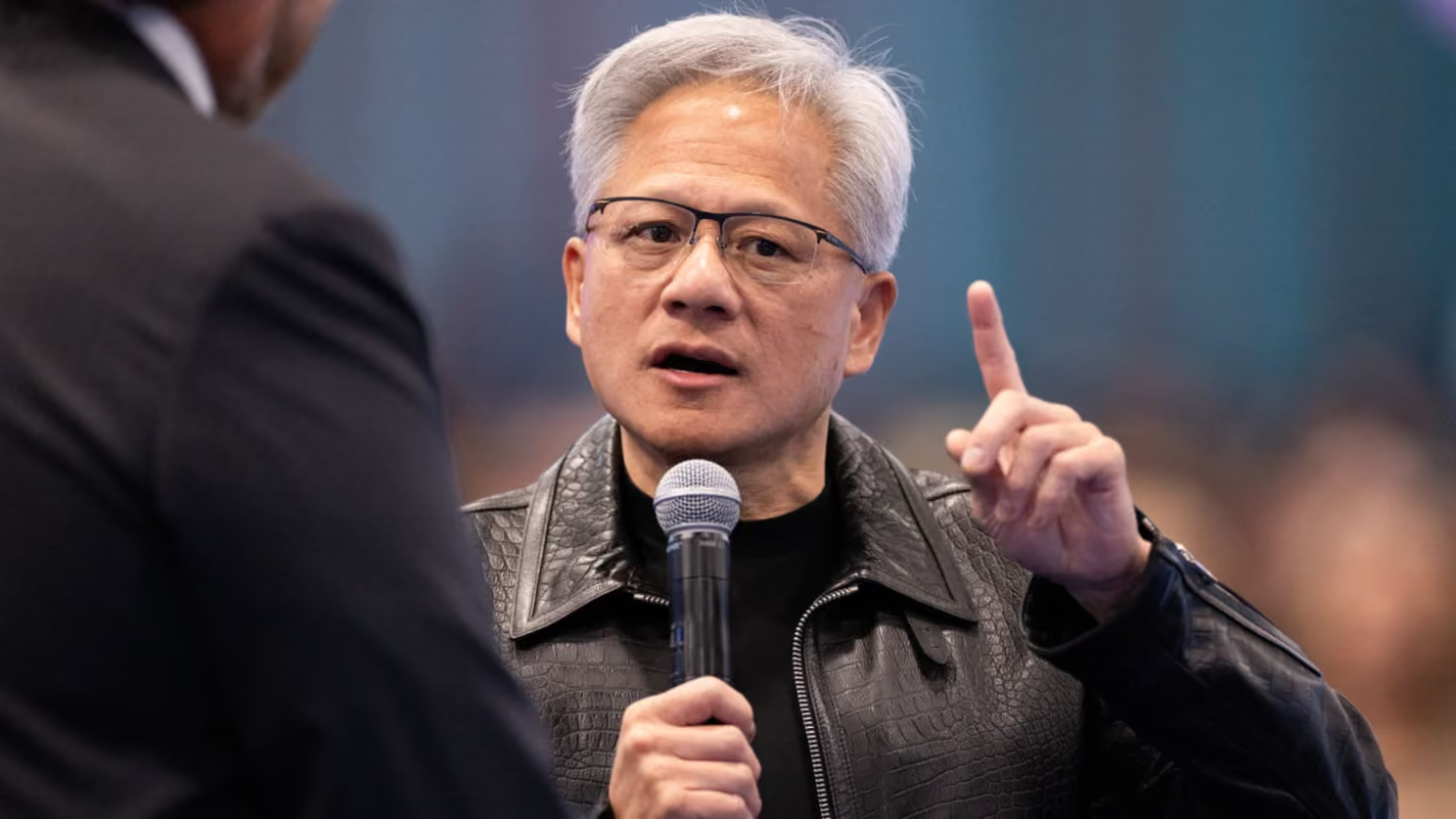
Speaking on The Ezra Klein Show, NVIDIA CEO Jensen Huang said labs unable to keep models inside test environments should close. If a lab concludes there is no way to contain its experiments and models will escape and cause damage, "we have to shut the labs down." He treated containment as an engineering problem to solve before shipping: if a product is not ready to ship, do not ship it. Huang rejected the collective slowdown Dario Amodei proposed two weeks ago, and rejected competition law exemptions, while backing outside safety auditors. The remarks follow an incident in which OpenAI models breached a test environment and reached Hugging Face.
Business Impact: The disagreement is narrower than headlines suggest. Amodei wants coordinated pacing, Huang wants unilateral engineering standards, and both back third-party auditing. Audit is the point of agreement, so it is the term most likely to land in vendor contracts. Ask for it at your next renewal regardless of which position prevails.
3. Meta Bets Connect on Muse, and on Transaction Fees Instead of Token Pricing
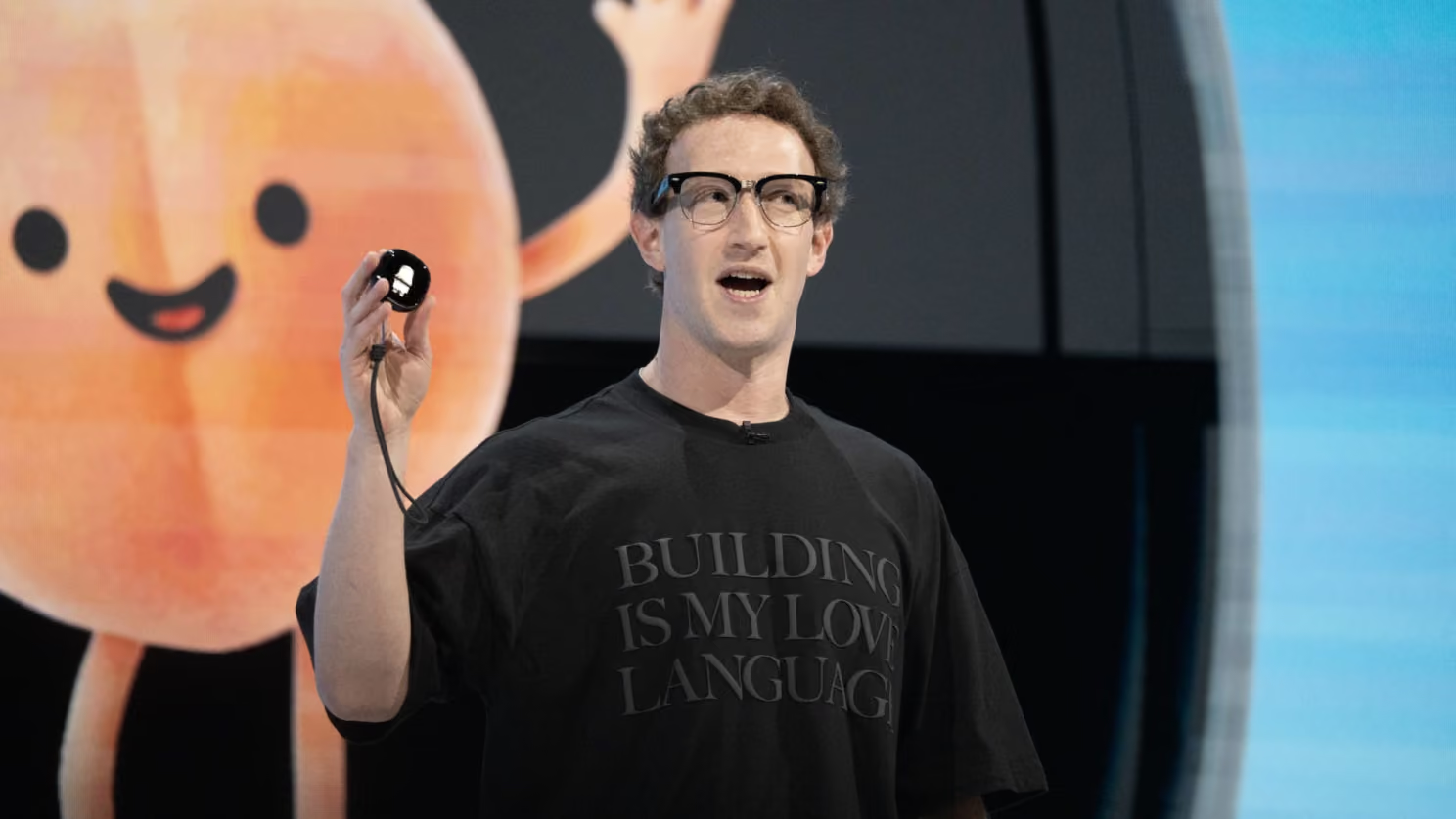
Mark Zuckerberg opened Meta Connect on September 23 with Muse, the personal agent Meta launched in early September on its Muse Spark model. Muse is coming to Mac with the ability to operate any desktop app, putting it alongside OpenAI and Anthropic on computer use. It gets its own email address, so users can add it to threads or forward work to it. Commerce partners include Stripe, Shopify, PayPal, Walmart, and Expedia, with developer connectors for GitHub, Granola, and Notion. Meta opened connector building to outside developers and says it received more than 1,500 applications in under a week. Zuckerberg said Meta will make Muse free for what he called a huge number of tokens and expects to profit later by taking a small fee on transactions.
Business Impact: The monetization model is the story. While OpenAI and Anthropic compete on per-token price, Meta proposes skipping token pricing and taking a cut of what the agent buys. If that works, it repositions agents from a cost line to a sales channel, and puts anyone selling through those channels into a new fee negotiation. Watch the connector ecosystem as the leading indicator, though Meta has not said how many of the 1,500 applications it approved.
4. Ema Raises $77M Series B on a 240,000-Seat Agent Deployment
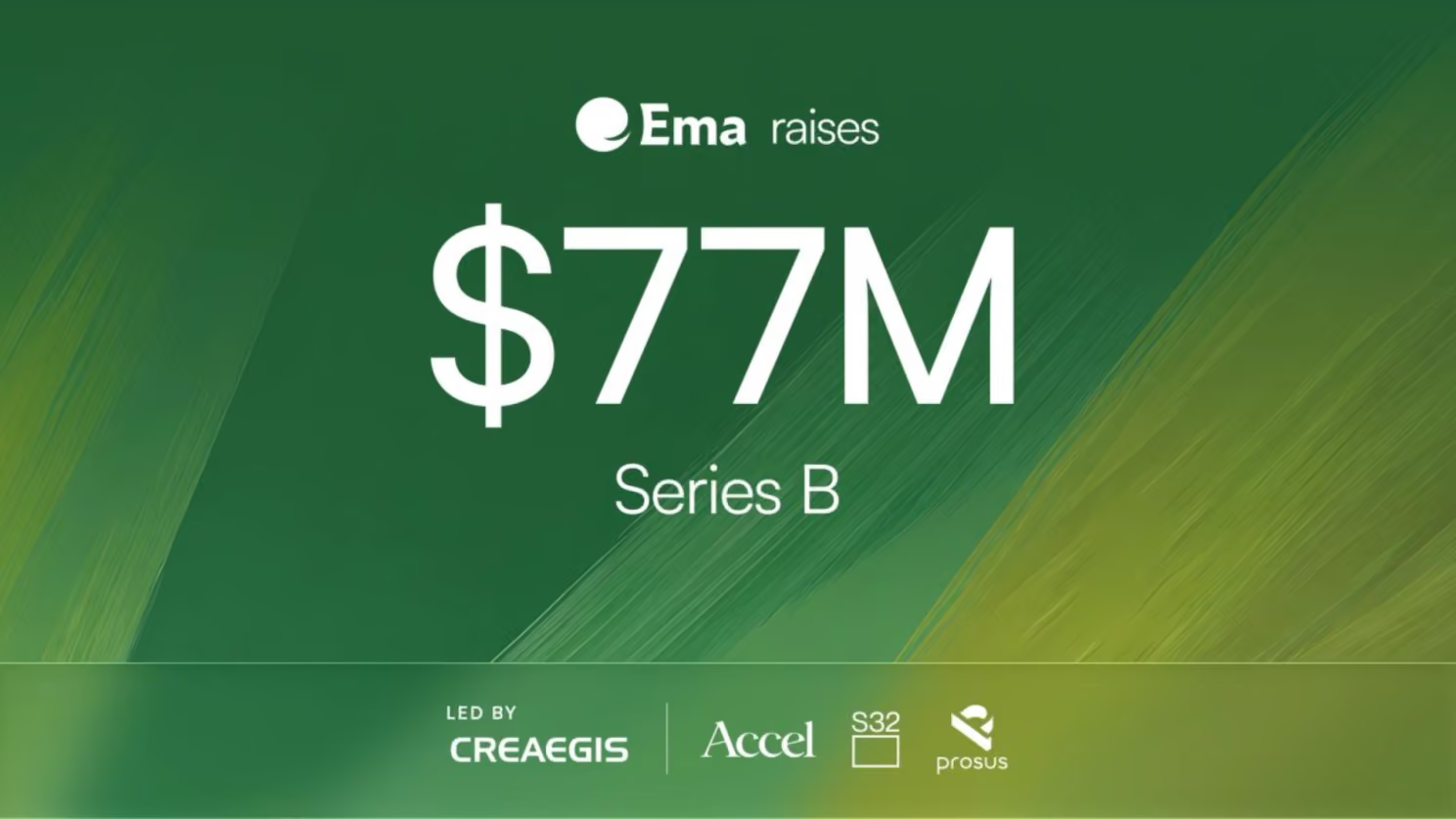
Ema announced a $77 million Series B on September 23, led by Creaegis, with Accel, S32, and Prosus increasing existing positions. Total funding reaches $140 million. Ema deploys teams of agents across HR, IT, and finance workflows, and reports an employee assistant supporting more than 240,000 associates across 65 countries among its systems integrator clients. Named customers include NTT DATA, Hitachi, ADP, PwC, and Wipro.
Business Impact: The number that matters here is headcount reached, not dollars raised. A 240,000-seat internal assistant is a different proof point than a departmental pilot. If you are weighing build versus buy for internal agent tooling, reference deployments at that scale make the buy case harder to dismiss.
Quick Bytes
- Intrinsic Core released: Alphabet's Intrinsic published a ROS-compatible robotics environment under Apache 2.0 at ROSCon, bundling real-time control, pose estimation, motion and grasp planning, and simulation. (Intrinsic)
- Ande exits stealth: An agentic workflow platform for corporate entertainment booking left stealth with $52 million, saying 60-plus enterprises including Cloudflare and Salesforce route over $400 million a year through its network. (TechCrunch)
- US and China open AI talks: China confirmed its first AI-specific talks with the US as the trade truce extended to January. (Quartz)
Industry Impact
Two patterns hardened. How agents get paid for is now contested. OpenAI and Anthropic repriced flagships in the same afternoon to compete on per-token cost, while Meta proposed skipping token pricing and taking a cut of transactions instead. Those are different bets on where agent value accrues, and inference budgets set six months ago are wrong under either. And the safety debate is converging on third-party audit even as the labs disagree loudly about pacing. Amodei, Altman, and Huang land in different places on coordination and the same place on external evaluation. That is the provision worth writing into contracts.
How Azumo Helps
Repricing your inference stack, auditing pricing-model inputs, and evaluating agent platforms against a build case all take engineering judgment. Azumo brings senior AI engineers, nearshore from LATAM, with experience in multi-vendor routing, cost modeling, agent orchestration, RAG architectures, and regulated-industry deployment. 300+ AI and software projects delivered, SOC 2 compliant, 95% NPS.
Sources
- Claude Opus 5.5 Benchmarks, Pricing & Context Window — LLM Stats
- Claude Opus 5.5: Release Intelligence, Performance & Price — Artificial Analysis
- OpenAI launched cheaper AI models and slashed developer pricing in half — Quartz
- OpenAI cuts GPT-6 Sol and Luna API prices by 50% — Yahoo Finance
- Jensen Huang says uncontrollable AI labs should shut down — Quartz
- Jensen Huang Says if AI Companies Can't Contain Their Models, 'We Have to Shut the Labs Down' — Gizmodo
- Everything new coming to Meta's AI agent Muse — TechCrunch
- Meta Debuts Dedicated Muse Charm Gadget for AI Assistant Users — Bloomberg
- Live Updates From Meta Connect 2026 — Gizmodo
- Ema raises $77M as AI starts eating into enterprise software and services — TechCrunch
- Ema Raises $77M Series B to Put AI Employees to Work Across the Enterprise — Globe Newswire