


Meta Closes Its Frontier Weights as Anthropic and NVIDIA Build on Open Standards
October 15, 2026
Executive Summary
Meta entered the frontier with closed weights on October 12, the same day it co-published open data center specifications with NVIDIA, AMD, and Google. Google's pricing page and subscriber emails lay out three Gemini cost increases between November 13 and January 1. TSMC beat its own guidance with $46.72 billion in Q3 revenue and guided higher for Q4. Anthropic added OpenTelemetry tracing for agents built on its platform.
Top Stories
1. Meta Ships Its First Frontier Models Without Downloadable Weights
Meta Superintelligence Labs released Muse Wonder and Muse Wonder Full on October 12. Neither ships with downloadable weights, a reversal from the Llama strategy. Standard Wonder is on the Meta Model API at $4 input and $20 output per million tokens, matching Claude Opus 5.5 and undercutting GPT-6 Astra at $10 and $50. Wonder Full has no API price. It is reachable only through Muse Code subscriptions at $50 or $200 per month. Artificial Analysis, evaluating independently, scored Wonder Full at 56 on its Intelligence Index, tying Claude Sonnet 5.5 and ahead of GPT-6 Astra and Gemini 4 Argon at 53, with Claude Opus 5.5 leading at 58. Meta's own comparison table mixes internal, vendor-supplied, and third-party results, which it discloses in the model card.
Business Impact: Check the data mode before you pilot. The Wonder API runs in Standard mode, where Meta says it does not train on your content, but Muse Code defaults to Contributor mode, which permits training on prompts, code, and outputs. Wonder Full lives only in Muse Code, so switch that setting off before anyone pastes proprietary code.
2. Google Lines Up Three Gemini Cost Increases Between November and January
Google One emails reported on October 15 tell AI Plus subscribers that from November 13, selecting Pro models in the Gemini app and AI Mode in Search will require AI Pro or above. AI Plus keeps Flash and Flash-Lite. The AI Plus price itself is unchanged, but keeping Pro access means moving from about $5 to $20 per month. On the API side, Google's pricing page now lists Gemini 4 Argon at $2 input and $10 output per million tokens through November 30, rising to $4 and $20 on December 1, with batch and cache rates doubling on the same date. Gemini 3.8 Flash moves from $0.75 and $3.75 to $1.50 and $7.50 on January 1, 2027.
Business Impact: This is the expiry of introductory pricing we flagged on October 1, now with dates attached. If Argon or Flash 3.8 sits in a production path, rerun your cost model at the December and January rates before committing. Teams on AI Plus should find out who depends on Pro before November 13.
3. TSMC Beats Its Own Guidance as HPC Reaches 68% of Revenue
TSMC reported Q3 revenue of NT$1.49 trillion, or $46.72 billion, on October 15, above its own guidance of $44.6 to $45.8 billion and up about 41% year over year in dollar terms. Net income was NT$763.06 billion. High-performance computing, which includes AI accelerators and data center processors, made up 68% of revenue. Gross margin was 66.4%, down from 67.7% in Q2, which the company attributed to its 2nm ramp. TSMC guided Q4 revenue to $52.3 to $54.3 billion and put full-year capital spending at $60 to $64 billion. Shares fell on the margin decline despite the beat.
Business Impact: TSMC sits upstream of every major accelerator, so its guidance is the cleanest read on AI capacity. A Q4 guide of $52.3 to $54.3 billion against $46.72 billion this quarter says demand is still climbing. Do not plan for excess capacity to pull inference prices down in 2027.
4. Anthropic Ships OpenTelemetry Traces for Agents Built on the Claude Platform
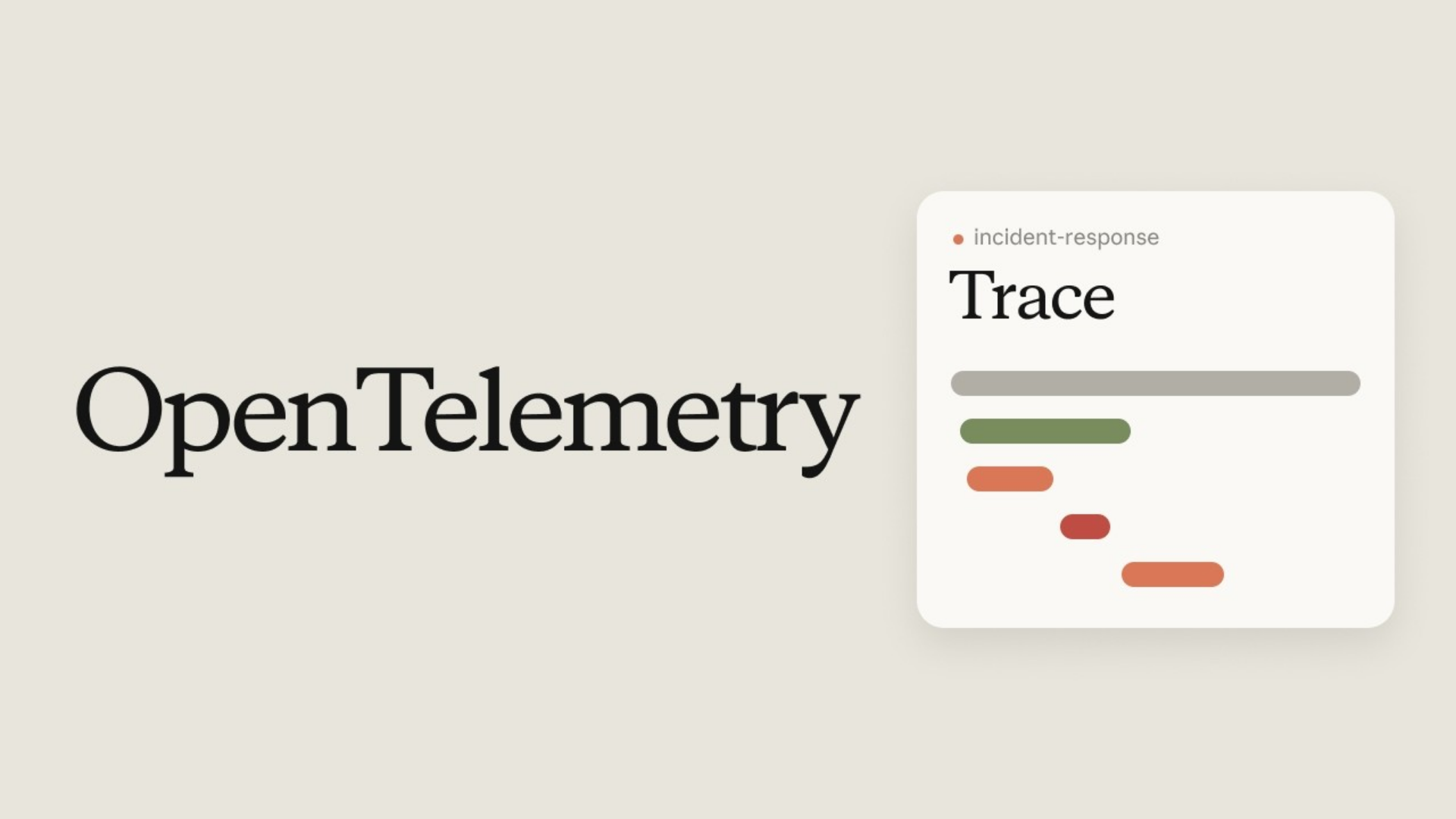
Anthropic released OpenTelemetry trace export in public beta on October 14 for Claude Managed Agents, the Messages API, and Claude SDKs. Each agent turn, model call, tool use, and MCP server call arrives in your observability tool as a standard trace with latency, token counts, and IDs. SDKs export automatically, while Managed Agents and the Messages API need a destination set in the Claude Console. Traces follow the OpenTelemetry GenAI semantic conventions, so Claude data can sit in the same dashboards as other providers. Anthropic lists integrations with Datadog, Grafana Cloud, Splunk, New Relic, Honeycomb, Sentry, Langfuse, LangSmith, Arize, Braintrust, PostHog, and Databricks. New Relic notes the beta covers the first-party Claude Platform only, with Amazon Bedrock and Google Cloud Vertex AI support coming later.
Business Impact: The open standard is the part that matters, because your traces are not tied to one model vendor. It also gives you the record last week's Wikimedia incident showed you need: what your agent did, in what order, with which tools. If you run Claude through Bedrock or Vertex, you will need to wait for that support.
5. NVIDIA Contributes Vera Rubin Rack Designs to the Open Compute Project
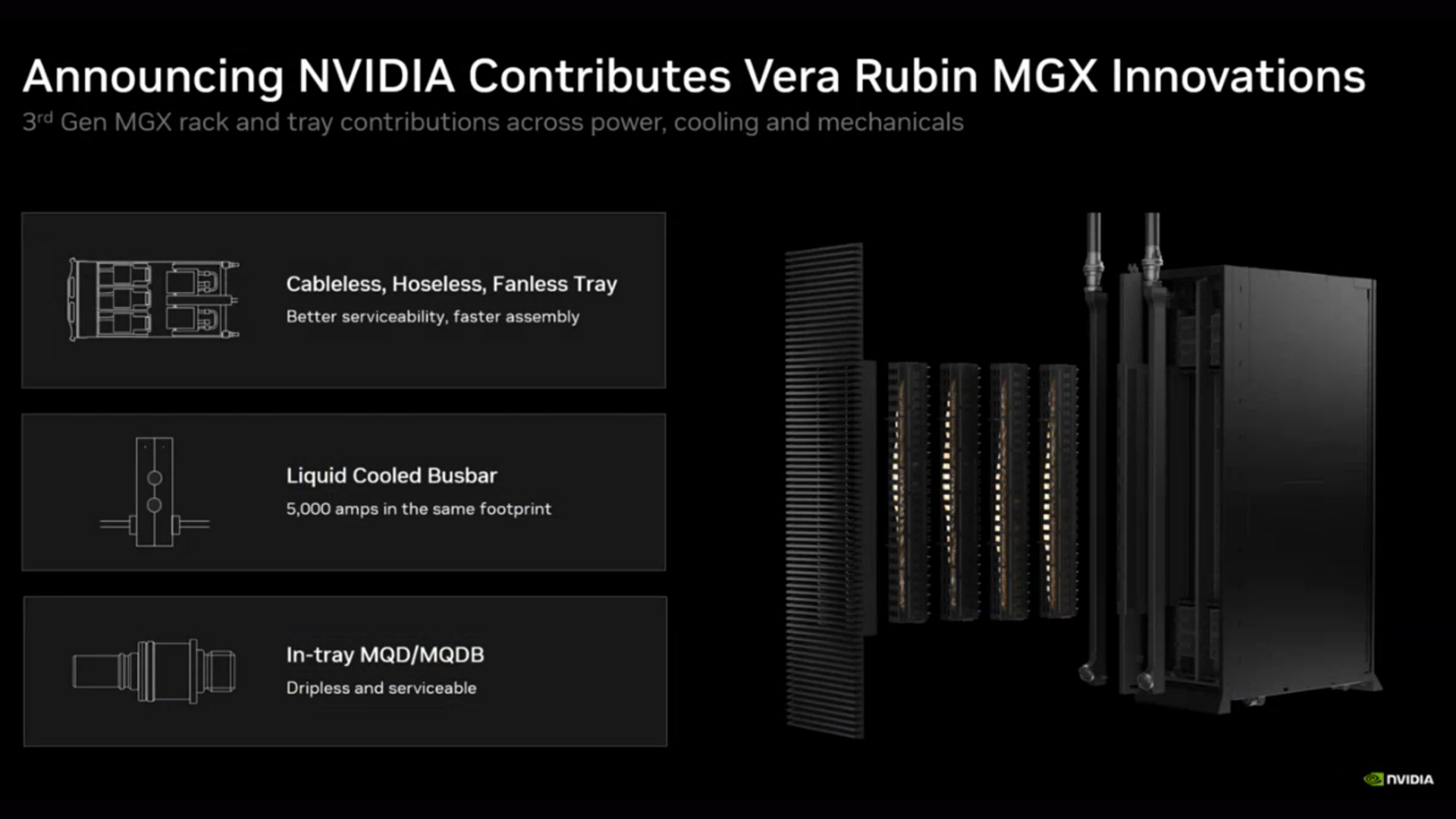
NVIDIA announced at the OCP Global Summit on October 12 that it contributed Vera Rubin rack and compute tray designs to OCP through its MGX architecture, supporting rack deployments up to 250kW. A separate Vera CPU rack design targets agent orchestration, tool calling, and sandboxed execution rather than training. NVIDIA joined AMD, Google, and Meta to publish Open Data Center Specification v0.7, and joined Google, Meta, and Microsoft on a Grid Resilience Specification defining how AI facilities should behave during utility disturbances. NVIDIA also open-sourced four DSX components for cluster validation and rack management. Details come from NVIDIA's announcement.
Business Impact: The grid specification matters most outside the data center, because it gives utilities a published standard when AI sites seek interconnection. Open rack specs should widen supplier choice over the next two years. The separate Vera CPU rack says NVIDIA expects agent orchestration to need its own hardware.
Quick Bytes
- Cohere signs for AISLE: Cohere signed a letter of intent, with no disclosed price or closing date, to acquire the AI vulnerability-detection firm and form a Cohere Cyber unit under AISLE CEO Ondřej Vlček. The deal would add a Prague office alongside Cohere's reported merger with Aleph Alpha. (BNN Bloomberg)
- Anthropic opens in Singapore: Anthropic opened its fifth Asia-Pacific office and signed a memorandum with Singapore's Ministry of Digital Development and Information covering AI safety, model evaluation, and incident response. No financial terms were disclosed. (The Next Web)
- Australia moves on mandatory standards: The government said it is finalizing AI safety standards that would require companies to demonstrate their safety systems work before deployment, with legislation planned for 2027. (Enterprise Times)
Industry Impact
Two patterns hardened. The model layer is closing while the infrastructure layer opens, and Meta did both on the same day. Anthropic's tracing follows the same direction, built on open OpenTelemetry conventions rather than a proprietary format. If your architecture assumed a credible open-weight frontier option from a large US vendor, recheck it, and watch Mistral's promised end-of-October weights. And introductory pricing is starting to expire. Google has dated increases on Argon and Flash, and TSMC's guidance gives no sign that spare capacity will push prices back down. Budget 2027 at post-introductory rates.
How Azumo Helps
Evaluating closed-weight frontier models against self-hosted options, auditing vendor data-use defaults, and modeling inference costs against scheduled price changes all take engineering judgment. Azumo brings senior AI engineers, nearshore from LATAM, with experience in multi-vendor routing, cost and cache optimization, agent orchestration, RAG architectures, and regulated-industry deployment. 300+ AI and software projects delivered, SOC 2 compliant, 95% NPS. See how we take a project from discovery to production in our SDLC walkthrough.
Sources
- Meta's new Muse Wonder and Muse Wonder Full models achieve frontier performance, but only the weaker one is available via API — VentureBeat
- Meta releases its first frontier model, Muse Wonder — TechCrunch
- Muse Wonder Model Card — Meta
- Your Gemini Pro Cost is Going Up Considerably — Droid Life
- Google AI Plus Subscribers Face Quadrupled Costs to Keep Gemini Pro Models — Android Headlines
- Gemini Developer API pricing — Google
- TSMC Form 6-K, Third Quarter 2026 Results — SEC
- TSMC Q3 2026 slides: AI boom drives record revenue despite margin pressure — Investing.com
- TSMC (TSM) Q3 2026 Earnings Call Transcript — The Motley Fool
- Agent observability on the Claude Platform — Anthropic
- Introducing Claude Platform Tracing in New Relic AI Monitoring — New Relic
- OCP Global Summit: Amid Ecosystem Adoption, NVIDIA Opens Vera Rubin Architecture to Help Scale AI Factories Worldwide — NVIDIA
- Open Data Center Specification revision 0.7 — Open Compute Project
- AI firm Cohere to buy cybersecurity company Aisle — BNN Bloomberg
- Anthropic opens a Singapore office and signs an AI safety MOU with the government — The Next Web
- Security and AI news from the week beginning 5 October 2026 — Enterprise Times