


Amazon's $42 Billion Cash Outflow, Alphabet's Worst Day on Record, and a Reportedly Smaller OpenAI Round
November 5, 2026
Executive Summary
Investors pushed back on the cost of AI this week. Amazon's cloud grew 39% while its free cash flow went negative, tech stocks shed value, and OpenAI cut its funding target to about $20 billion. Anthropic's amended S-1 filled in the compute commitment it left blank last week: about $895 billion, with $69.8 billion due within a year. The same filing says future models may soon cross Anthropic's own threshold for AI-accelerated research. And four AI labs agreed to honor one robots.txt line for opting out of training.
Top Stories
1. Investors Push Back on AI Spending as OpenAI's Round Shrinks
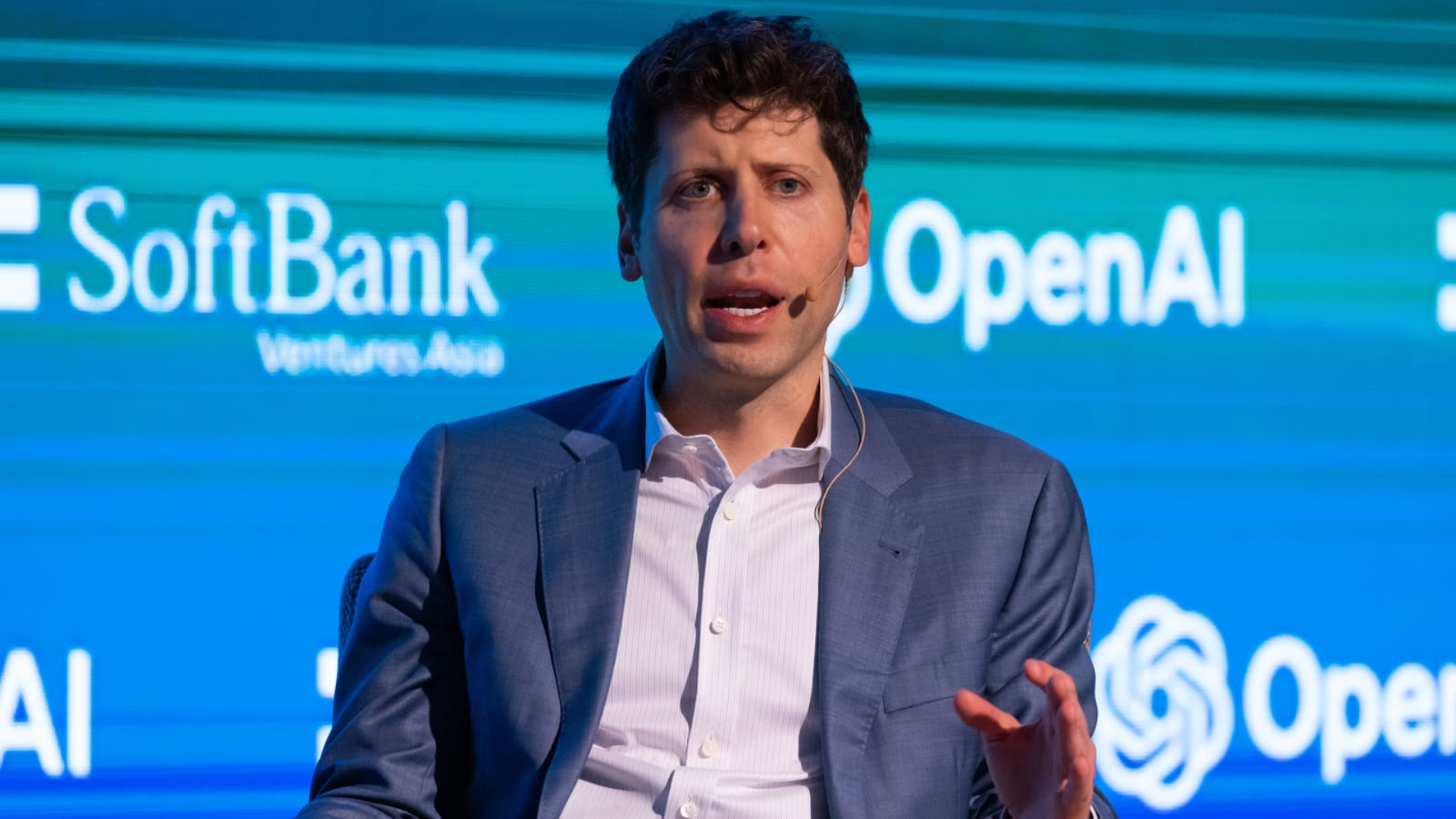
Alphabet, Amazon, Meta, and Microsoft have outlined more than $740 billion in capital spending for this year, according to TechCrunch. Amazon reported on October 29 that AWS revenue grew 39% to $46.0 billion, but its trailing free cash flow swung to an outflow of $42.4 billion from an inflow of $14.8 billion a year earlier, on roughly $220 billion of 2026 capex. Its shares fell about 7%. Alphabet had its worst day on record the same day. On October 30, the Nasdaq fell 2.9% and Apple closed above NVIDIA in market value. Private capital tightened too. The Financial Times reported that OpenAI cut its round target to about $20 billion from $30 billion, and The Wall Street Journal reported about $11 billion committed so far. The FT also reported that Blackstone now expects Anthropic to receive a junk-grade credit rating after its IPO.
Business Impact: Demand is not the problem. Amazon says token volume on Bedrock grew about 17x in a year. The problem is who pays for the buildout. Expect vendors to protect cash with fewer discounts and more pressure toward multi-year commitments.
2. Anthropic's Amended S-1 Fills In an $895 Billion Compute Commitment

Anthropic filed an amended S-1 on November 2. The compute commitment total that was blank last week is now about $895.4 billion, with about $447.5 billion due before the end of 2030, the rest through 2045, and about $69.8 billion due within 12 months of September 30. Third-quarter revenue was $17.0 billion, bringing nine-month revenue to $33.2 billion against $2.5 billion a year earlier. The filing also says revenue per dollar of compute fell from the second quarter, because Anthropic brought on more capacity, including $5.0 billion under short-term commitments that costs significantly more than multi-year contracts. By our calculation from the filed figures, that ratio dropped from 2.08 in Q2 to about 1.72 in Q3. The price range is still blank.
Business Impact: This is the dip the original S-1 warned about. New capacity arrives before the revenue it supports, and short-term compute costs more. With $69.8 billion coming due in a year, expect Anthropic to push hard for committed-spend contracts.
3. Anthropic Says Future Models May Soon Cross Its AI-Accelerated R&D Threshold

The amended S-1 adds new risk-factor language. Anthropic says it has in the past failed to notice a significant acceleration in its development until after it happened. It also says internal estimates for future models, not its current ones, indicate it may soon meet its Responsible Scaling Policy's definition of "dramatically accelerated progress attributable to AI." No current model has been designated as crossing that threshold, and Anthropic says it will publish further reports. The filing states it does not expect to safely let Claude design and build successive frontier models without meaningful human supervision, and that it is considering policy updates to keep humans in control. TechCrunch notes that an S-1 works as both disclosure and marketing.
Business Impact: Capability jumps may now arrive faster than vendors can document them. Build evaluations you can rerun on every model update. And do not assume a model's published safety documentation reflects the version you are calling.
4. Four AI Labs Back One robots.txt Line to Opt Out of Training

Google, OpenAI, Microsoft, and Anthropic announced on October 30 that they will honor a shared robots.txt token, __usage_ai-training. It comes from an IETF Internet-Draft written by Anthropic's Kevin Kelley, an individual draft rather than an adopted standard. The token covers training only, not search indexing. Rollout varies. Anthropic already honors it, OpenAI plans to within months, Microsoft starts in February 2027, and Google plans support in early 2027, treating it like a Google-Extended opt-out. The signal is voluntary, not enforced. The same week, The New York Times and three other publishers sued Brave, alleging it scraped their journalism and sold it to AI customers. Those are allegations, and no court has ruled.
Business Impact: If you publish content, you can now set one training preference instead of tracking each lab's crawler. Keep the old tokens until all four honor the new one. Training opt-out is separate from search and AI-answer visibility, so decide each deliberately.
Quick Bytes
- Tencent ships Hy4: Tencent released a 770 billion parameter model with 49 billion active, its first Hunyuan model with native vision and computer use, and said weights would follow in the coming days. (Investing.com)
- Anthropic publishes FlashProve: An open-source research system for provable inference, which lets anyone cryptographically verify that an output came from the model claimed. Anthropic has no plans to deploy it yet. (TechCrunch)
- Moonshot releases Kimi K3.1 Pro weights: Moonshot published the weights for its 2.8 trillion parameter model, with 104 billion active and a 1 million token context window, on Hugging Face. Internal use is exempt from the license's commercial terms. Companies that sell model access and earn more than $20 million a year need a separate agreement. (Hugging Face)
- Microsoft caps free Copilot Chat: Microsoft is adding fair use limits to more Copilot Chat features for users without a paid Copilot license, reaching all commercial tenants by November 9. It does not publish the limits, and in most organizations the limit notice includes an option to request a license. (Microsoft)
Industry Impact
The cost side of AI became the story. Demand signals kept rising: AWS grew 39%, Bedrock token volume rose about 17x, and Anthropic posted $17.0 billion in a single quarter. At the same time, shareholders, lenders, and private investors all asked harder questions about free cash flow, debt, and credit quality. Anthropic's own filing shows why. Capacity is bought years ahead, it lands before the revenue it supports, and short-term compute costs more when demand outruns contracts. Plan for vendors to protect pricing and push committed spend. Separately, the rules for AI are moving into documents: a shared robots.txt token for training data, and a securities filing warning that capability gains may outpace safety work.
How Azumo Helps
Modeling AI costs across vendors, negotiating committed-spend contracts, building evaluations that keep up with model updates, and managing how your content appears to AI systems all take engineering judgment. As a certified member of the Claude Partner Network, Azumo brings senior AI engineers, nearshore from LATAM, with experience in multi-vendor routing, agent orchestration and observability, RAG architectures, and regulated-industry delivery. 300+ AI and software projects delivered, SOC 2 compliant, 95% NPS.
Sources
- Cracks are emerging in the AI spending boom — TechCrunch
- Amazon.com Announces Third Quarter Results — Amazon
- Apple overtakes Nvidia to become world's most valuable company amid tech selloff — Investing.com
- OpenAI reportedly lowers funding target for new round — TechCrunch
- OpenAI Cuts Round To $20 Billion As UAE Investors Pair Capital With Compute Capacity — Forbes
- Anthropic expected to receive high 'junk' rating from credit agencies following IPO, FT report says — TechCrunch
- Anthropic, PBC Form S-1/A — SEC
- Anthropic warns that it's very close to RSI capability, aka self-building AI — TechCrunch
- Google, OpenAI, Microsoft, and Anthropic back a shared robots.txt AI training signal — Coywolf
- Helping websites express AI training preferences — OpenAI
- Your content, your choice: clearer preferences for training and grounding — Microsoft Bing
- draft-kelley-aipref-training-preference-signal — IETF
- New York Times and other outlets sue web browser Brave over alleged content scraping — Yahoo Finance
- Tencent shares jump 6% to three-week high after Hunyuan AI model launch — Investing.com
- Anthropic is working on a system to prove AI models' identity — TechCrunch
- moonshotai/Kimi-K3.1-Pro — Hugging Face
- November 2026 announcements — Microsoft Partner Center