


An IPO Range, a Cheaper Top Model, and an NVIDIA CEO Exit Five Days Before Earnings
November 12, 2026
Executive Summary
Anthropic had the busiest week. It set an IPO price range that Fortune reports values it at up to $1.4 trillion, upgraded its top models at a lower price, and added meetings, whiteboards, and spreadsheets to Claude. OpenAI's quarterly revenue reportedly passed $10 billion for the first time. And NVIDIA founder Jensen Huang resigned as CEO, with CFO Colette Kress stepping in five days before the company reports earnings.
Top Stories
1. Anthropic Sets Its IPO Range at $70 to $78 a Share

Anthropic launched its IPO roadshow on November 10. It is offering 825 million Class A shares at $70 to $78 each, about 801 million from the company and 24 million from existing stockholders, on Nasdaq under the ticker ANT. Fortune reports the offering would raise up to $64.4 billion at the top of the range and value Anthropic at up to $1.4 trillion on a fully diluted basis, below the $2 trillion some outlets had floated weeks ago. Seven strategic partners, including Google and NVIDIA, have agreed to buy $26 billion of non-voting stock at the IPO price. The amended filing puts Anthropic's annualized revenue run rate at about $81 billion at the end of October, up from about $71 billion in late September. Fortune reports trading could start as early as next week.
Business Impact: A listed Anthropic will report revenue, margins, and compute costs every quarter. That gives buyers real data for vendor risk reviews and price negotiations. Public investors will also push for margin gains, so expect fewer discounts and more committed-spend deals.
2. Anthropic Releases Claude Fable 5.2 at a Lower Price

Anthropic released Claude Fable 5.2 and Claude Mythos 5.2 on November 9. They are the same underlying model. Fable carries cybersecurity and biology safeguards and is available to all users, including on AWS, Google Cloud, and Azure. Mythos is reserved for vetted organizations through Anthropic's cyber and life sciences verification programs. Both cost $8 per million input tokens and $40 per million output tokens, lower than the 5.1 models, and Anthropic says they generate output up to 30% faster. An optional fast mode costs twice as much. On FrontierCode, which measures whether code changes would be merged by open-source maintainers, Fable 5.2 at High effort roughly matched Opus 5.5's best score at about half the cost per task. Anthropic says Fable's safeguards blocked about 55% fewer requests than Fable 5.1 in early testing. It still recommends starting most work on Opus 5.5 and moving up only when a task demands it.
Business Impact: Anthropic's own advice is the takeaway: route work by difficulty. Keep Opus 5.5 as the default and send only the hardest coding, research, and analysis tasks to Fable. That keeps costs predictable as the top tier keeps improving.
3. Anthropic Brings Claude Into Meetings, Whiteboards, and Spreadsheets
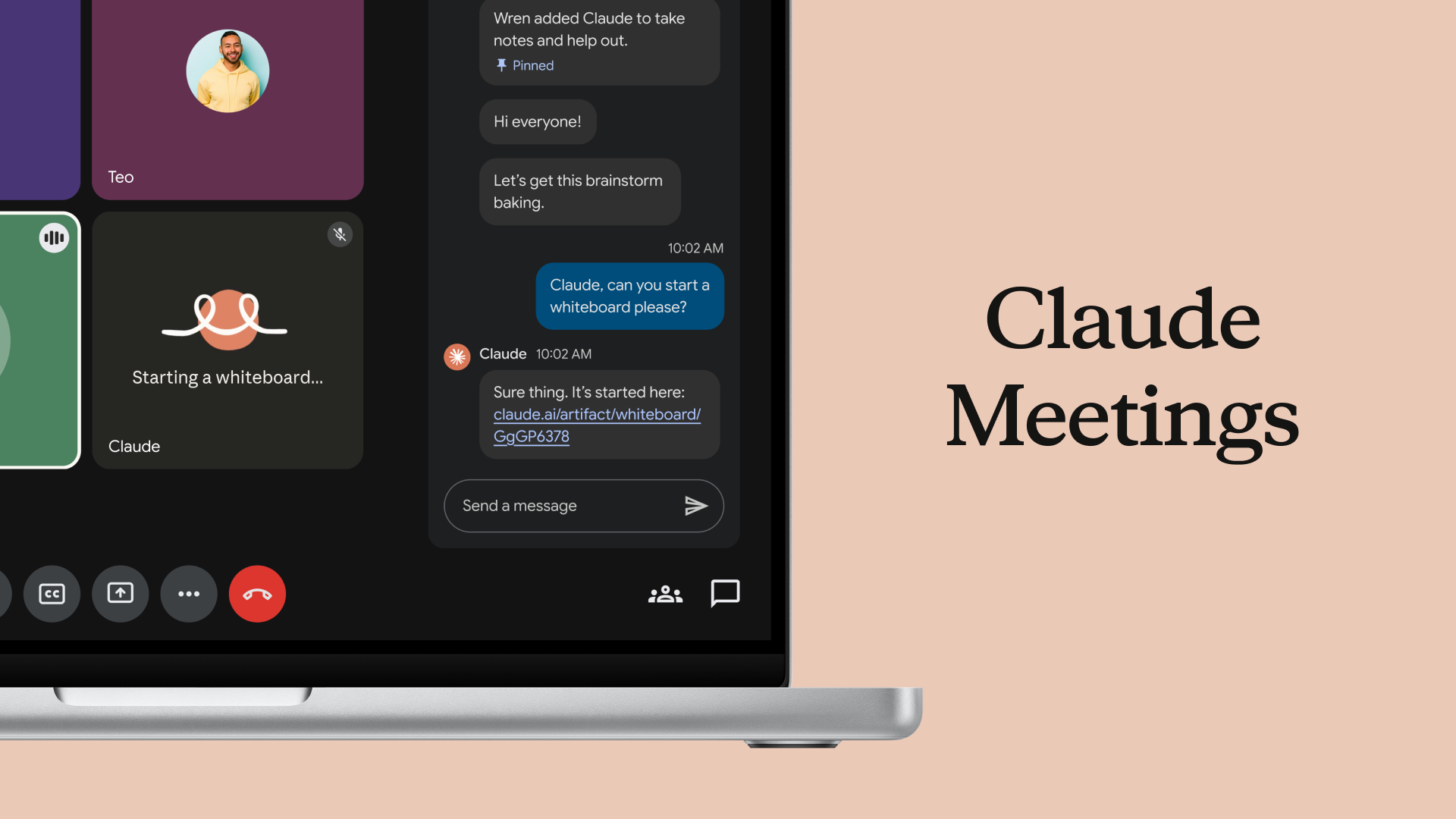
On November 10, Anthropic added workplace features that TechCrunch frames as part of a race with OpenAI and Meta to take on Microsoft and Google. Claude Meetings joins video calls as a visible participant and can draft plans, build timelines, answer questions in chat, and pull figures from connected apps while people talk. It launches in beta on Team and Enterprise plans, works with Google Meet first, and will not join calls with external guests unless an admin allows it. Claude Whiteboards and Claude Sheets, both in beta on paid plans, let teams build boards and spreadsheets with Claude in real time. Claude Data, formerly Claude Dashboards, is now generally available and connects to data warehouses and CRMs. New interactive connectors open apps such as Adobe, Atlassian, and HubSpot inside Claude.
Business Impact: This is the headless-software shift we described in our October 29 brief, in product form. When HubSpot or Atlassian opens inside Claude, the assistant becomes the place work happens. Check which of your core systems have connectors, and what access to them will cost.
4. OpenAI's Quarterly Revenue Reportedly Passes $10 Billion

Bloomberg reported, citing anonymous sources, that OpenAI's third-quarter revenue topped $10 billion, up almost 50% from $6.7 billion in the second quarter. Its adjusted operating margin reportedly improved from negative 150% to negative 109%, and its annual revenue run rate reached $50 billion. TechCrunch credits a mix of tighter pricing, discounts, better models, and more enterprise products and agents. Anthropic, by comparison, reported $17.0 billion in third-quarter revenue and now cites an $81 billion run rate. The two count revenue differently. Anthropic includes sales made by its cloud partners, while OpenAI reports only its share of some partner sales. Bloomberg also reported that OpenAI has raised $11 billion of a round that values it at $1.25 trillion and could reach about $20 billion.
Business Impact: OpenAI is growing again but still runs deep operating losses, which makes steep price cuts unlikely. Compare vendors on cost per completed task in your own workloads, not on headline token rates, and keep a second provider ready.
5. Jensen Huang Resigns as NVIDIA CEO, and CFO Colette Kress Steps In

On November 8, NVIDIA's board opened an independent investigation after reports that founder and CEO Jensen Huang had been the target of a foreign intelligence effort. The board said it had no reason to believe national security or NVIDIA secrets were compromised. On November 12, NVIDIA announced that Huang had resigned as president, CEO, and board member, effective immediately. Kress is interim CEO and keeps the CFO role. Harvey Jones, former CEO of Synopsys, becomes the board's first-ever chair. The board will consider internal and external candidates for the permanent role and says operations, customer commitments, and the product roadmap will continue without interruption. NVIDIA still reports third-quarter results on November 17. Even before this week, its forward earnings multiple was the lowest since 2015, according to LSEG data cited by Reuters in late September.
Business Impact: NVIDIA supplies the GPUs behind much of the AI capacity you buy. Nothing changes for buyers today. The investigation is still open, so watch the November 17 earnings call for any shift in supply guidance or roadmap timing before you lock in long capacity commitments.
Quick Bytes
- ChatGPT adds business profiles: OpenAI launched a Business Hub in beta where companies can verify and update their product and service information, launch a business agent that answers user questions, and see profile views, mentions, and website clicks from ChatGPT.
- AI usage rises while spend stalls: Ramp data shows token spend grew 1.5% across August and September, after 42% growth in July, even as token volumes kept rising. Ramp's lead economist points to price cuts, discounts, and tighter cost controls such as routing work to cheaper models. Spend picked up 8.9% in the month to October 23.
- New York opens AI developer registration: New York opened a registration portal for its RAISE Act ahead of the law taking effect on January 1, 2027. Frontier developers with more than $500 million in annual revenue must register by then, publish safety frameworks, report critical safety incidents within 72 hours, and issue model transparency reports. Fines reach $1 million for a first violation and $3 million after that.
- Fireworks AI widens its breach disclosure: The inference provider said attackers accessed billing information and, for some customers, secrets, datasets, and incomplete model weights, partly through a breached third-party cloud provider. Fireworks says it has found no impact so far on its inference and training products that keep no customer data by default.
Industry Impact
The largest AI companies faced public-company scrutiny this week. Anthropic set terms for public investors, OpenAI's numbers reached the press through leaks, and NVIDIA's founder resigned four days after his board opened an investigation. Product work kept moving underneath. Anthropic shipped a stronger top model at a lower price and pushed Claude further into everyday work tools, with other apps opening inside it. For buyers, plan around three things: more financial disclosure from your vendors, model routing by task difficulty as the top tier keeps improving, and assistants that host your other applications.
How Azumo Helps
Routing work across model tiers, connecting Claude to the systems your teams already use, and comparing vendors on real cost per task all take engineering judgment. As a certified member of the Claude Partner Network, Azumo brings senior AI engineers, nearshore from LATAM, with experience in multi-vendor routing, MCP and connector development, agent orchestration and observability, RAG architectures, and regulated-industry delivery. 300+ AI and software projects delivered, SOC 2 compliant, 95% NPS.
Sources
- Anthropic launches roadshow for proposed initial public offering — Anthropic
- Anthropic sets IPO range valuing it at up to $1.4 trillion amid AI stock sell-off — Fortune
- Introducing Claude Fable 5.2 and Claude Mythos 5.2 — Anthropic
- Anthropic launches Claude Meetings to turn workplace discussions into plans and tasks — TechCrunch
- OpenAI's quarterly revenue reportedly crosses $10B for the first time — TechCrunch
- OpenAI reportedly raises an additional $11 billion at a $1.25 trillion valuation — TechCrunch
- Statement From NVIDIA Board of Directors — NVIDIA
- NVIDIA Announces CEO Transition — NVIDIA
- Nvidia Just Put a Record $150 Billion Behind Its Own Stock — GuruFocus via Yahoo Finance
- OpenAI rolls out new business profiles, making ChatGPT just a little bit more like Google — TechCrunch
- Ramp data shows AI spending stalling just as Anthropic nears its IPO — TechCrunch
- OpenAI, Anthropic face new oversight as New York's AI safety law takes effect — TechCrunch
- Update on October 2026 security incident — Fireworks AI