
.svg)


GPT-5.6 Goes Global as Chinese Open-Source Takes Nearly Half of US API Traffic
July 9, 2026
Executive Summary
OpenAI opens GPT-5.6 Sol, Terra, and Luna to global public access today. CNBC confirmed Chinese open-source models now handle 30 to 46% of US enterprise API traffic. Anthropic moved Claude Cowork to the cloud with web and mobile clients, and published J-Space, a new interpretability tool for inspecting Claude's silent reasoning.
Top Stories
1. OpenAI Opens GPT-5.6 Sol, Terra, and Luna to Global Public Access
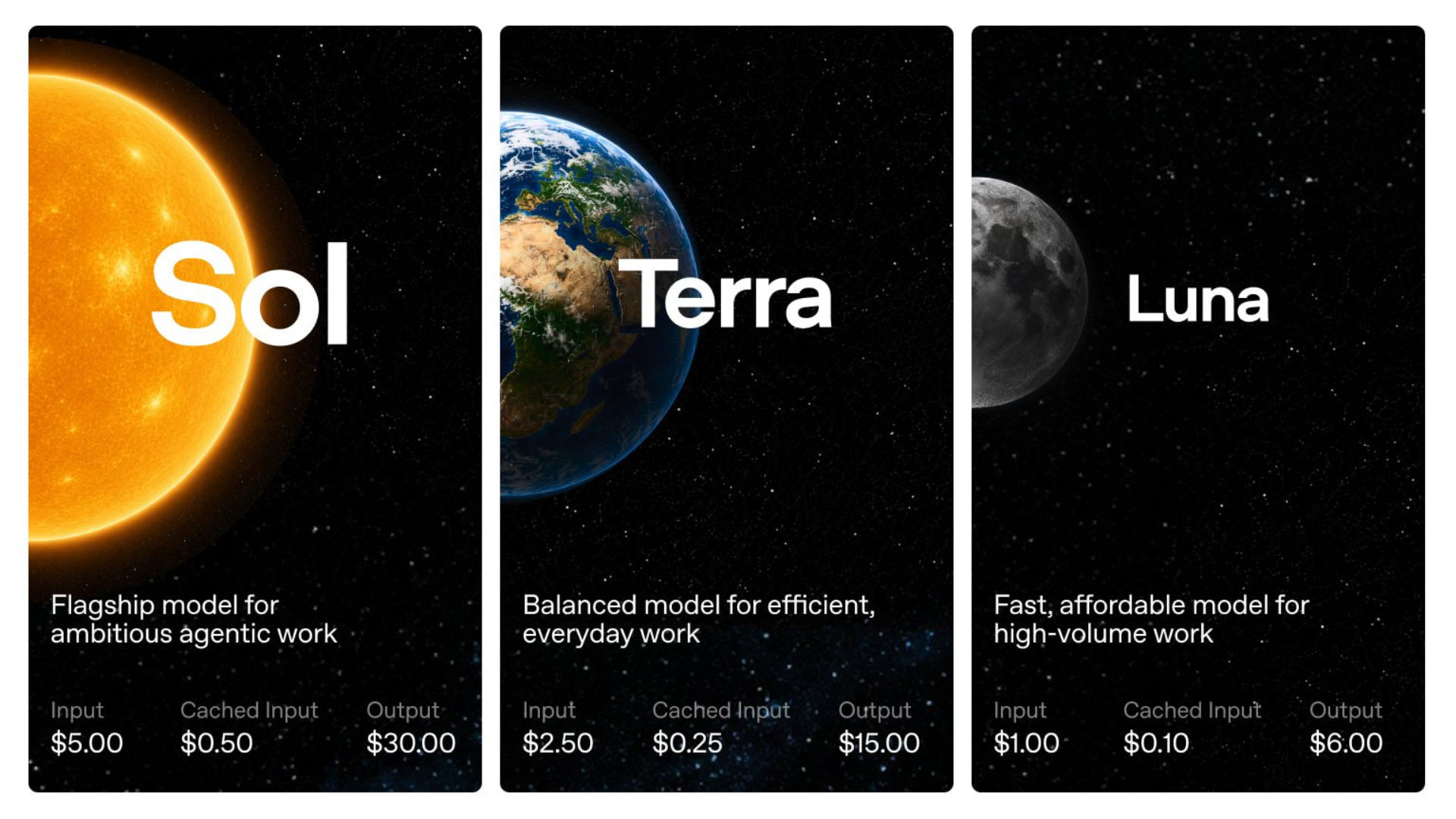
OpenAI is releasing GPT-5.6 Sol, Terra, and Luna to global users today after two weeks of limited preview with about 20 partners. Sol scores 88.8% on Terminal-Bench 2.1, or 91.9% in Ultra mode with orchestrated subagents. Sol is tuned for biology, chemistry, and cybersecurity. Pricing per million tokens is $5 input and $30 output for Sol, $2.50 and $15 for Terra, $1 and $6 for Luna. GPT-5.6 adds explicit prompt cache breakpoints and a 30-minute minimum cache life.
Business Impact: The tier structure is yours to route across. Terra approximates GPT-5.5 quality at half the price. Luna suits high-volume classification and light reasoning. Sol is the option for scientific and security workloads that need frontier capability. Rerun your production cost model this week.
2. Chinese Open-Source Models Take 30-46% of US Enterprise API Traffic
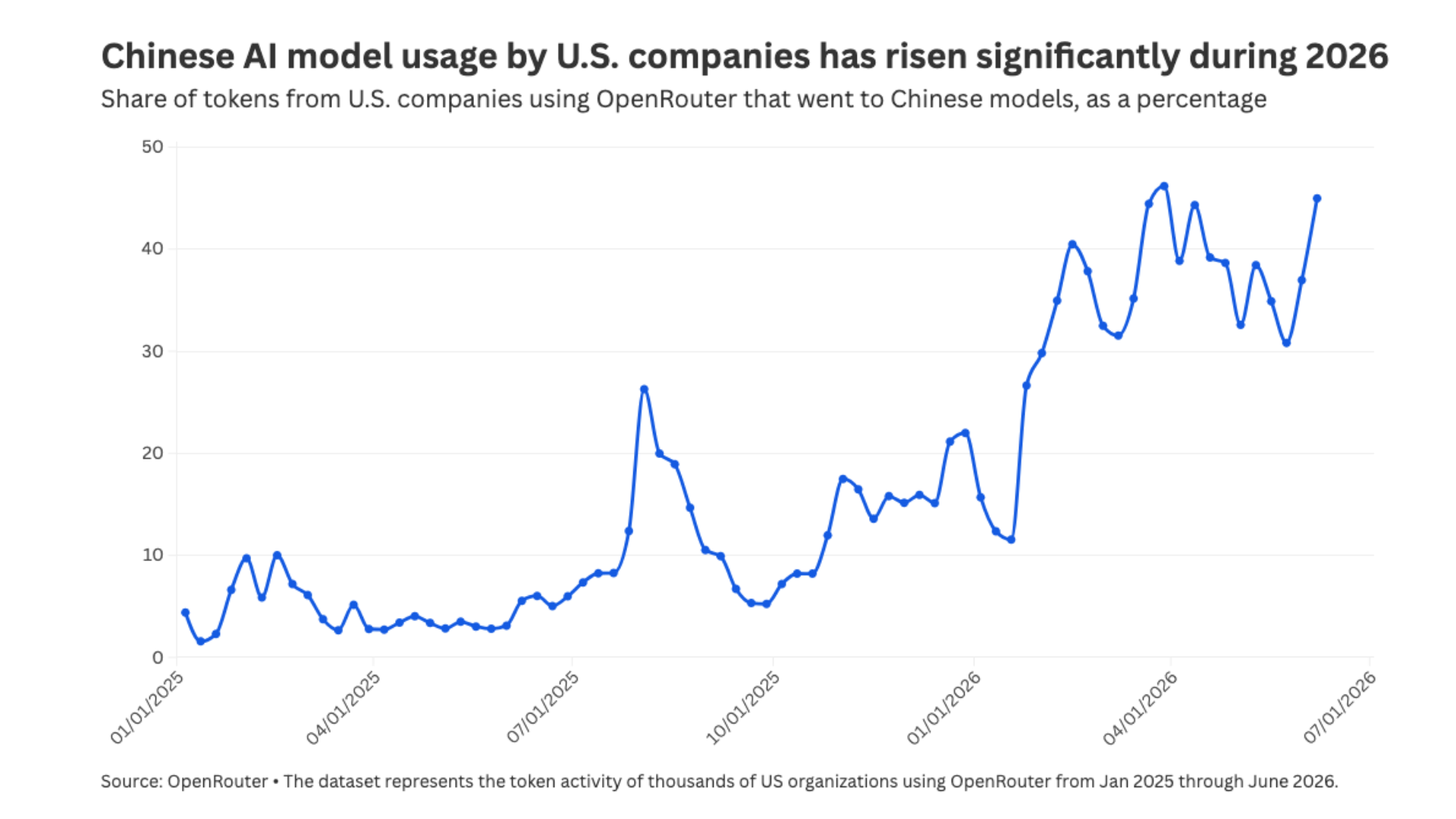
CNBC published an investigation showing Chinese open-source AI models now account for 30 to 46% of enterprise API token traffic on US developer platforms. The share has held above 30% every week since February 8, peaking at 46%. Z.ai's GLM 5.2 saw 80x customer growth and 27x daily token volume in its first full week on Vercel, the fastest single-model adoption on the platform this year. GLM 5.2 lands within a point of Opus 4.8 on a common agentic benchmark at roughly a fifth of the cost. Chinese open-source models run 60 to 90% cheaper than US frontier models on comparable tasks.
Business Impact: Model routing is now a competitive advantage. If your team runs GPT-5.5 or Opus for every task, you are overspending. Build a router that dispatches routine work to a cheaper model. GLM 5.2, Qwen, and DeepSeek variants deserve an eval slot. Data residency and export control posture are live questions here.
3. Anthropic Moves Claude Cowork to the Cloud, Web, and Mobile

Anthropic expanded Claude Cowork from a laptop-only tool to a cloud-hosted service with iOS, Android, and web clients. Sessions can start on one device and continue on another, even when the original is offline. Cowork keeps running in the cloud between check-ins and alerts the user when it needs permission. Chat and Cowork now share one home for projects and artifacts. Beta access starts for Max subscribers, with wider tiers to follow. Doubled usage limits extend through August 5.
Business Impact: Persistent, device-independent agent execution is now table stakes. The competitive lane against OpenAI Operator, Google Spark, and SpaceX-Cursor tightens. If your team piloted Cowork before, retest the mobile handoff pattern this quarter.
4. Anthropic Publishes J-Space Research, a New Interpretability Tool
Anthropic published research on a small internal workspace inside Claude, named J-Space for the Jacobian technique used to detect it. The J-lens identifies internal activity patterns that predict what Claude is likely to say later, exposing reasoning held silently rather than in the chain of thought. Anthropic draws a functional parallel to global workspace theory in neuroscience, while explicitly not claiming Claude has subjective experience. Practical applications include detecting when Claude notices it is being tested, spotting fabricated data, or surfacing hidden goals.
Business Impact: Mechanistic interpretability is moving from research toward operational tooling. If you run Claude in regulated workflows, ask about J-lens access for audit and safety review. Inspecting what a model reasons about internally, not just what it outputs, changes governance posture materially.
Quick Bytes
- OpenAI voice update: gpt-realtime-2.1 and 2.1-mini shipped with 25%+ lower p95 latency, better noise handling, and stronger tool use.
- Alberta cybersecurity case: Anthropic published a case study on Alberta's provincial government using Claude to find and patch cybersecurity vulnerabilities.
- Fable 5 billing live: Every Claude user accessing Fable 5 now consumes usage credits, effective July 8.
Industry Impact
The default vendor stack is fragmenting. OpenAI's tier split, Chinese open-source penetration, and Anthropic's mobile-and-interpretability push are three sides of the same trend. Enterprise AI is moving from single-vendor commitment to routed, multi-model architecture. The team that ships a working router this quarter buys back 40 to 60% of inference cost. The team that does not will be defending its bill by year end.
How Azumo Helps
Model routing, agent orchestration, and interpretability tooling all take engineering. Azumo brings senior AI engineers, nearshore from LATAM, with experience in multi-vendor routing, RAG architectures, agent orchestration, and regulated-industry deployment. 300+ AI and software projects delivered, SOC 2 compliant, 95% NPS.
Sources
- OpenAI to Roll Out Top AI Model Globally After Limited Preview — Bloomberg
- OpenAI gets permission to roll out GPT-5.6 to the public on July 9 — Engadget
- OpenAI Gains Approval To Release GPT-5.6 Globally On July 9 — Dataconomy
- OpenAI's advanced GPT-5.6 models to be publicly released — Nextgov
- Chinese AI models are gaining ground with U.S. companies as OpenAI, Anthropic costs surge — CNBC
- Anthropic will make Claude Cowork available to users via the cloud — NBC News
- Claude Cowork expands to mobile and web — TechCrunch
- Anthropic expanding Claude Cowork to mobile and web, details here — 9to5Mac
- A global workspace in language models — Anthropic Research
- Anthropic's new "J-lens" reveals a silent workspace inside Claude that mirrors a leading theory of consciousness — VentureBeat
- Anthropic says Claude has carved out its own space to ponder — Axios